


Hi friends,
When people think about hydration, they often think about water.
But inside the body, hydration isn’t just about fluid. It’s about electrolyte balance.
Three minerals quietly regulate much of this system:
Sodium
Potassium
Magnesium
These minerals control how water moves in and out of cells, how nerves send signals, and how muscles contract and relax.
When one shifts too far without the others, symptoms can appear even if total intake seems adequate.
The body rarely works in isolated nutrients.
It works in ratios and relationships.
Before increasing any one electrolyte, it helps to understand how these three minerals interact.
In Less Than 10 Minutes, We’ll Cover:
Why electrolytes regulate hydration at the cellular level
How sodium and potassium control fluid movement
Why magnesium stabilizes nerve and muscle signaling
What symptoms sometimes appear when these minerals fall out of balance
Practical ways to support electrolyte stability
Before We Begin…
If you value clear, research-informed explanations that focus on physiology rather than trends, consider upgrading to the paid subscription.
Your support allows us to continue publishing long-form guides, structured protocols, and practical checklists designed to help people understand how their bodies work.
You’ll also gain access to our growing premium library.
Here are our most recent premium articles:
We expand our premium library every week. Thank you for supporting the work.
Hydration Happens Inside the Cell
Water follows electrolytes.
Sodium primarily operates outside the cell, while potassium is concentrated inside the cell. Together they create the electrical gradient that allows cells to regulate fluid movement.
This gradient is maintained by the sodium-potassium pump, one of the most active processes in human physiology.

It helps control:
nerve signaling
muscle contraction
cellular energy use
fluid distribution
When electrolyte balance shifts, hydration inside cells can change even when water intake remains high.
That’s why drinking large amounts of plain water without adequate electrolytes sometimes worsens fatigue or headaches.
Sodium Helps Maintain Circulation and Fluid Balance
Sodium is often discussed only in relation to blood pressure, but its physiological role is broader.

It helps maintain:
blood volume
nerve conduction
stomach acid production
circulation
When sodium intake drops too low, some people notice:
fatigue
dizziness when standing
headaches
reduced exercise tolerance
This doesn’t mean higher sodium intake is always better. It means balance matters more than restriction alone.
Potassium Supports Cellular Function
Potassium works primarily inside cells.

It plays a central role in:
nerve signaling
muscle contraction
heart rhythm stability
glucose metabolism
Many diets provide less potassium than physiology prefers, especially when whole fruits and vegetables are limited.
Low potassium intake can contribute to:
muscle weakness
fatigue
irregular heartbeat sensations
slower recovery after exercise
The body maintains potassium levels tightly because even small shifts affect nerve and muscle activity.
Magnesium Stabilizes the System
Magnesium often acts as the regulator of electrical activity in the body.

It supports:
muscle relaxation
nervous system stability
ATP energy production
over 300 enzymatic reactions
When magnesium levels fall, the nervous system can become more reactive.
Symptoms sometimes include:
muscle tension or twitching
difficulty relaxing
headaches
disrupted sleep
Magnesium also helps regulate how sodium and potassium move across cell membranes.
Without adequate magnesium, electrolyte balance becomes harder to maintain.
Why Balance Matters More Than Isolated Supplements
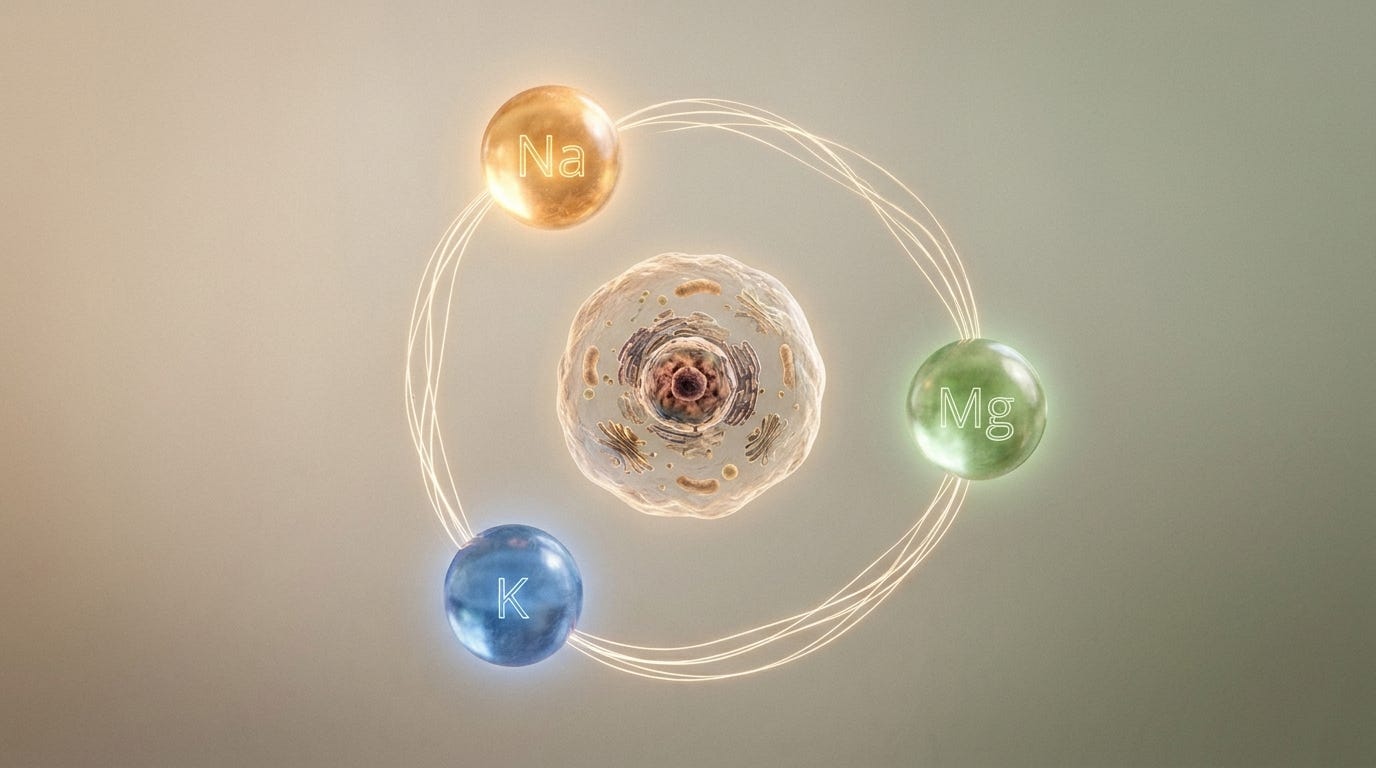
Electrolytes interact constantly.
Increasing one mineral without considering the others can shift the system.
For example:
High sodium intake with very low potassium may strain cardiovascular regulation.
High calcium with low magnesium can increase muscle tension.
Excess zinc can gradually reduce copper levels.
The body functions best when minerals move in coordinated patterns, not isolated spikes.
Practical Ways to Support Electrolyte Balance

Electrolyte stability often improves with simple habits:
consistent meals that include whole foods
fruits and vegetables that provide potassium
adequate dietary salt when appropriate
mineral-rich foods such as leafy greens, seeds, and legumes
hydration that includes electrolytes during heat or exercise
Many people find that supporting mineral intake through food first creates smoother tolerance than relying only on capsules.
Why This Matters
Electrolytes quietly regulate some of the most important signals in the body.

They influence:
hydration
nerve communication
muscle function
energy production
When these minerals move in balance, systems tend to feel stable.
Energy is steadier. Muscles relax more easily. Hydration improves.
The body responds well to coordinated inputs.
Not isolated nutrients.
If this helped clarify how electrolytes interact, the Mineral Repletion Guide walks through dosing strategy, deficiency patterns, and how to interpret common reactions when restoring minerals.

For $8 per month, you’ll get structured protocols, printable checklists, and long-form breakdowns designed for real life.
Here are our most recent premium articles:
We expand our premium library every week. Thank you for supporting the work.