


Hi friends,
A lot of people try to fix low energy, headaches, or that constant “off” feeling by drinking more water.
They carry a bottle around, aim for a gallon a day, and try to stay consistent.
And sometimes that helps.

But for a lot of people, it doesn’t fully solve the problem. They’re still tired, still getting headaches, and still feeling like something is missing.
That’s usually because hydration isn’t just about how much water you drink, it’s about how your body actually uses it.
In Less Than 10 Minutes, We’ll Cover:
Why water alone doesn’t always hydrate you
The role minerals play in hydration
Why you can drink a lot and still feel dehydrated
How food contributes to hydration
Simple ways to improve hydration at the cellular level
Before we begin, a quick note for readers who want to go deeper,
This is the foundation, but understanding the idea and actually applying it are two different things.
Paid subscribers get structured hydration protocols, electrolyte strategies, and deeper breakdowns so you can actually improve energy and consistency day to day.
Here are our most recent premium articles:
If you want that level of clarity, you can upgrade below.
Why Water Alone Often Isn’t Enough
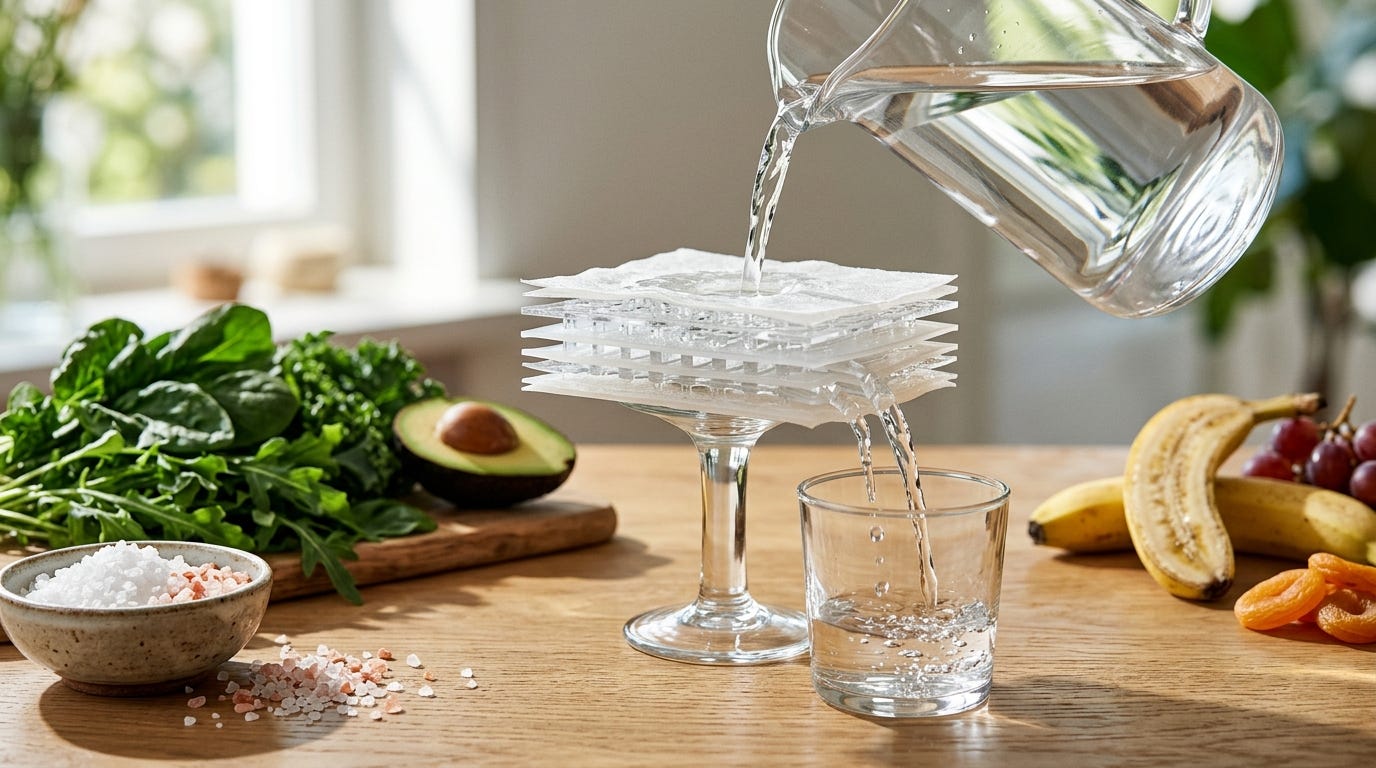
Water doesn’t just move freely into your cells on its own.
Your body relies on minerals like sodium, potassium, and magnesium to regulate where fluids go and how they’re used. These minerals help control fluid balance, nerve signaling, and how well your cells stay hydrated.
When those are out of balance, water can move through your system without being used effectively. You might be drinking more, but not actually improving hydration in a meaningful way.
Why You Can Drink a Lot and Still Feel Dehydrated

It’s possible to drink a large amount of water and still feel thirsty, fatigued, or lightheaded.
One reason is that increasing water intake without supporting electrolytes can shift the balance your body depends on. In some cases, this can dilute sodium levels, which affects how your body holds onto and distributes fluids.
That’s why some people notice they feel worse when they suddenly start drinking significantly more water without changing anything else.
What Hydration Actually Means
Hydration happens at the cellular level.
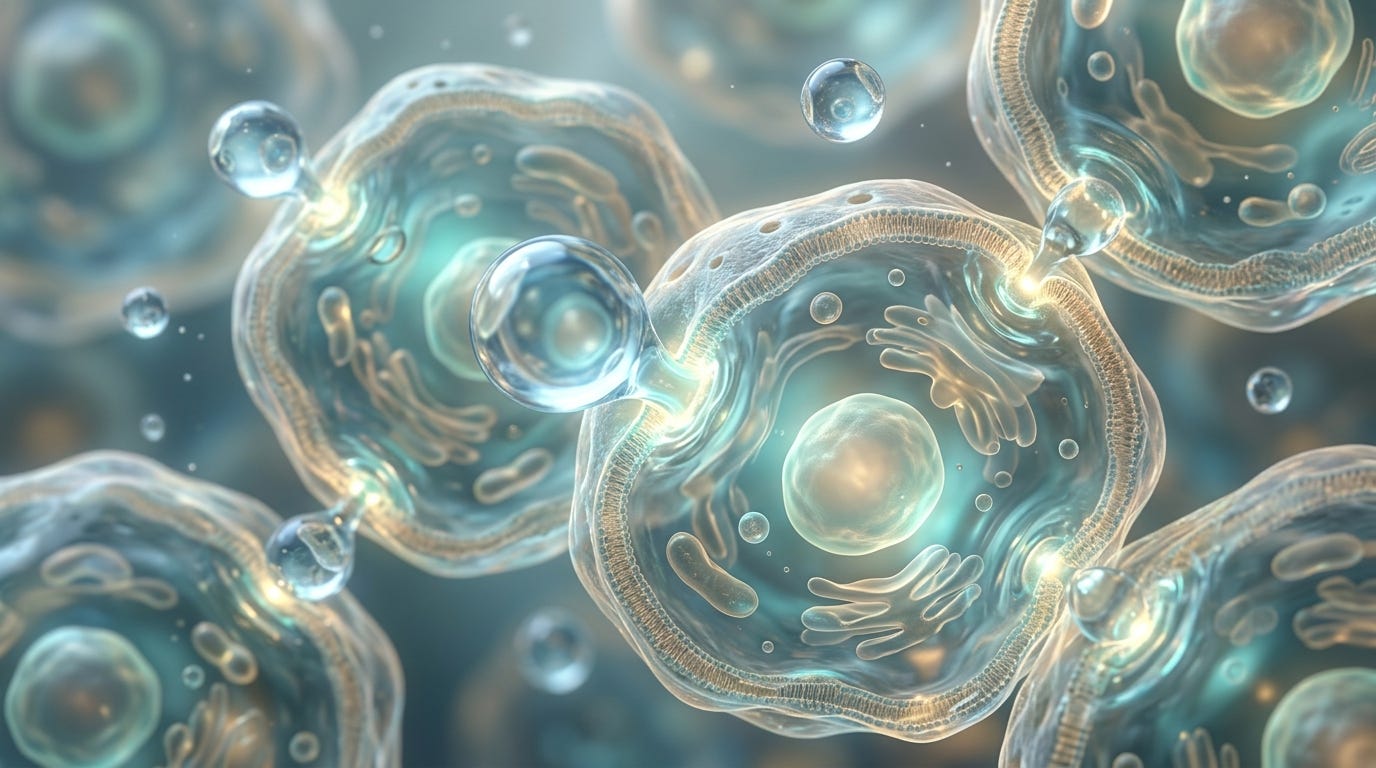
It’s less about how much water you consume and more about how well that water moves into your cells and stays there. That process depends on electrolyte balance, kidney function, and hormone signals that regulate fluid retention and release.
When those systems are working together, hydration feels steady. Energy is more consistent, and your body doesn’t constantly signal that something is off.
Foods That Help You Hydrate
Hydration doesn’t only come from what you drink.
A large portion of your daily fluid intake can come from food, especially foods that naturally contain both water and electrolytes.
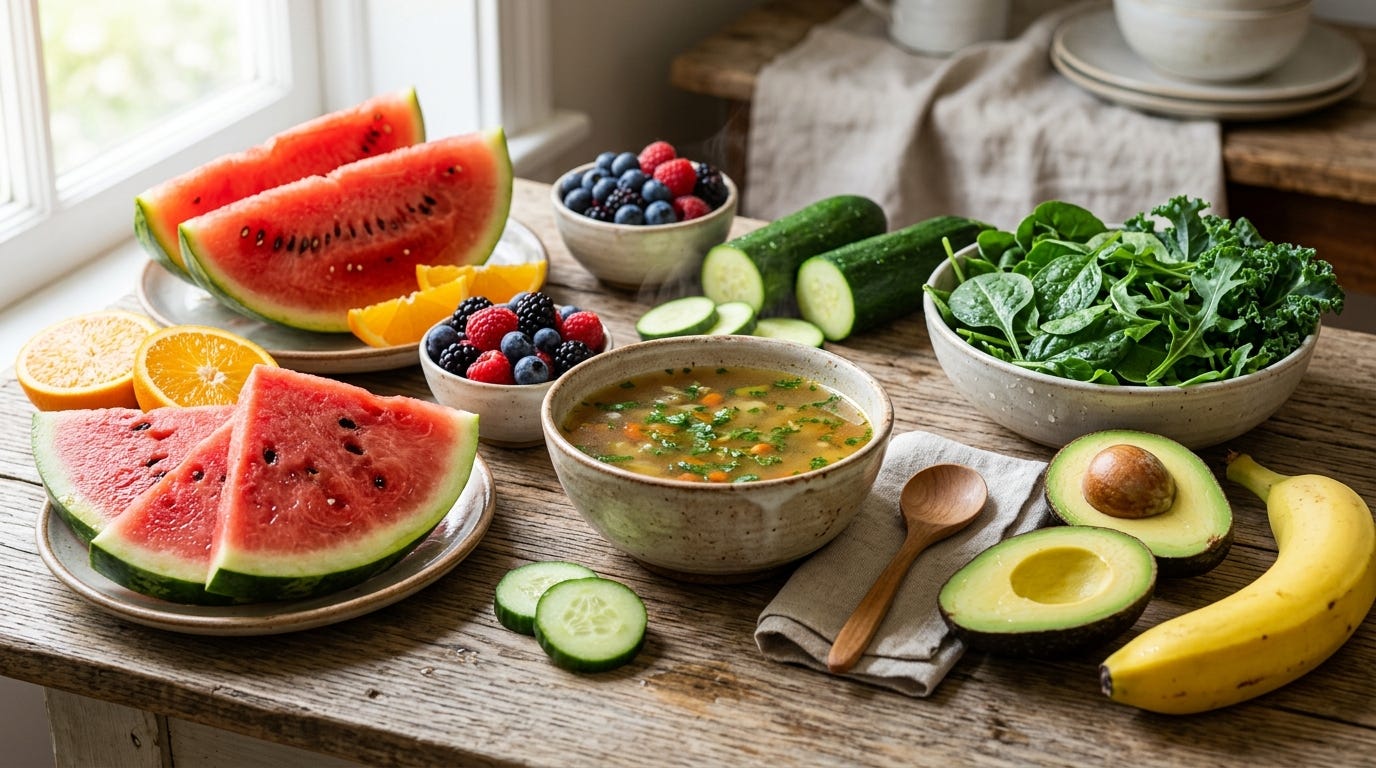
Some of the most helpful options include:
fruits like watermelon, oranges, and berries
vegetables like cucumbers, zucchini, and leafy greens
foods with natural potassium like avocados and bananas
broths or soups that contain both fluid and sodium
These foods tend to hydrate more effectively because they come with structure. Instead of just adding water, they provide the minerals your body needs to actually use that water.
For a lot of people, improving hydration starts as much in the kitchen as it does with what they drink.
Why Your Body Might Be Losing Fluids Faster

Another piece that often gets overlooked is how quickly you’re losing fluids.
Things like:
caffeine
alcohol
high stress
intense exercise
poor sleep
can all increase how much fluid your body uses or loses throughout the day.
Stress, in particular, can shift hormones that regulate fluid balance, which changes how your body retains sodium and water. Over time, this can make it feel like you constantly need more fluids, even if you’re already drinking a lot.
If this side isn’t addressed, it creates a cycle where you keep increasing water intake without fully solving the imbalance.
Simple Ways to Improve Hydration

You don’t need to complicate this.
Start by adding a pinch of mineral-rich salt to your water or meals, especially if you’re drinking more than usual. That alone can help your body hold and use fluids more effectively.
From there, focus on getting potassium from whole foods like fruits and vegetables, since that helps balance sodium and supports cellular hydration.
Magnesium can also be useful, especially in the evening, since it supports muscle function and the nervous system.
It also helps to spread your water intake throughout the day instead of drinking large amounts at once, and to pay attention to how you feel rather than forcing a fixed number.
Bringing It Together
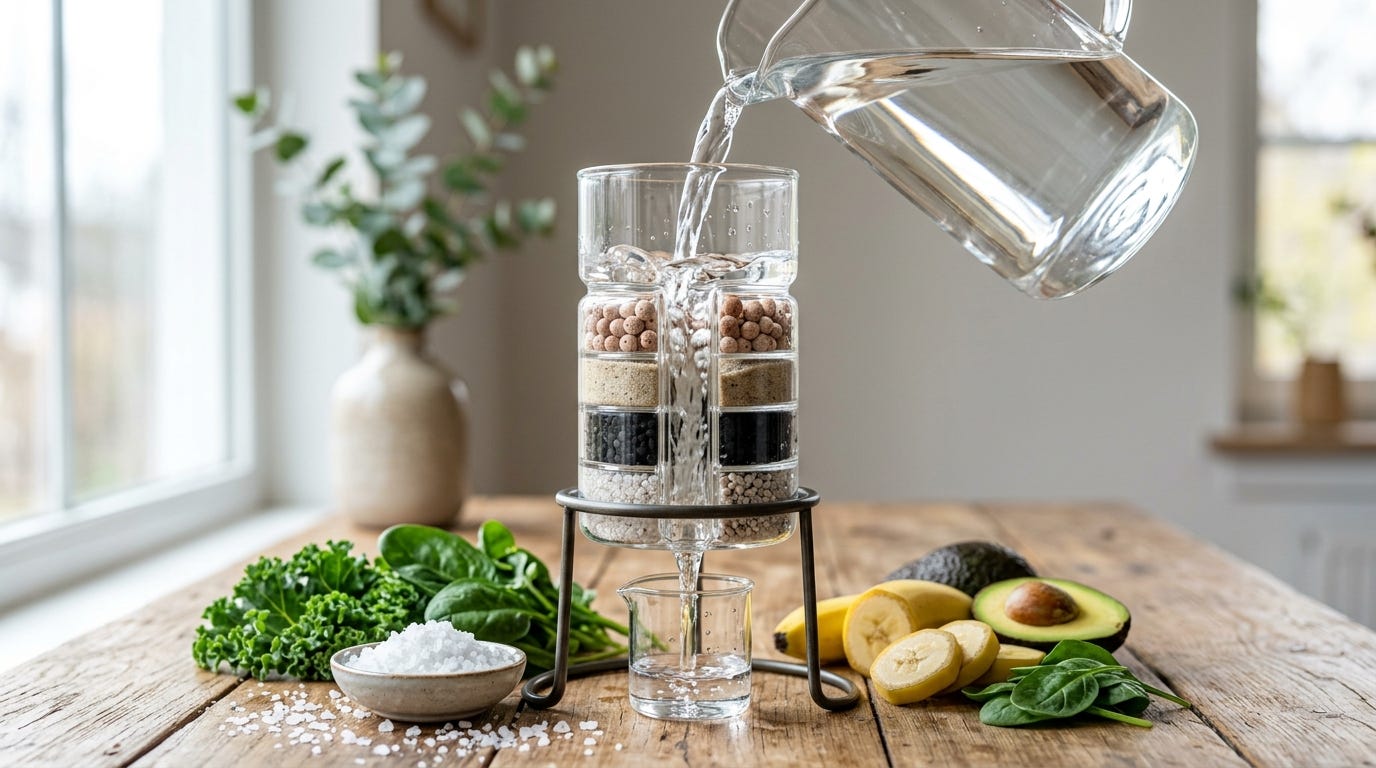
Hydration isn’t just about volume, it’s about balance.
When your body has the minerals it needs alongside water, fluids are used more effectively, energy tends to stabilize, and many of the small symptoms people deal with start to ease.
If you’ve been drinking more water but still don’t feel fully hydrated, this is usually the piece that’s been missing.
If you want a structured way to apply this,
Paid subscribers get access to:
a step-by-step cellular hydration protocol
how to balance electrolytes throughout the day
adjustments based on activity, stress, and sleep
clear signs your hydration is improving
You can upgrade below to access the full system.