


This guide is designed to be read from start to finish for deeper understanding. If you prefer a concise overview, a 1-page implementation summary is included at the end.
I. WHY FOOD WORKS DIFFERENTLY THAN PEOPLE THINK
Introduction
Food is often grouped into simple categories.
Healthy
Unhealthy
High protein
Low carb
That makes things easier to understand, but it doesn’t explain how food actually behaves in the body.
Food interacts with the body in specific ways.
enzymes are activated or slowed
minerals are absorbed or passed through
hormones shift
digestion speeds up or down
The same meal can feel different depending on the person and the context around it.
Most people focus on individual ingredients.
More vegetables
More water
More protein
But the body processes food as combinations.
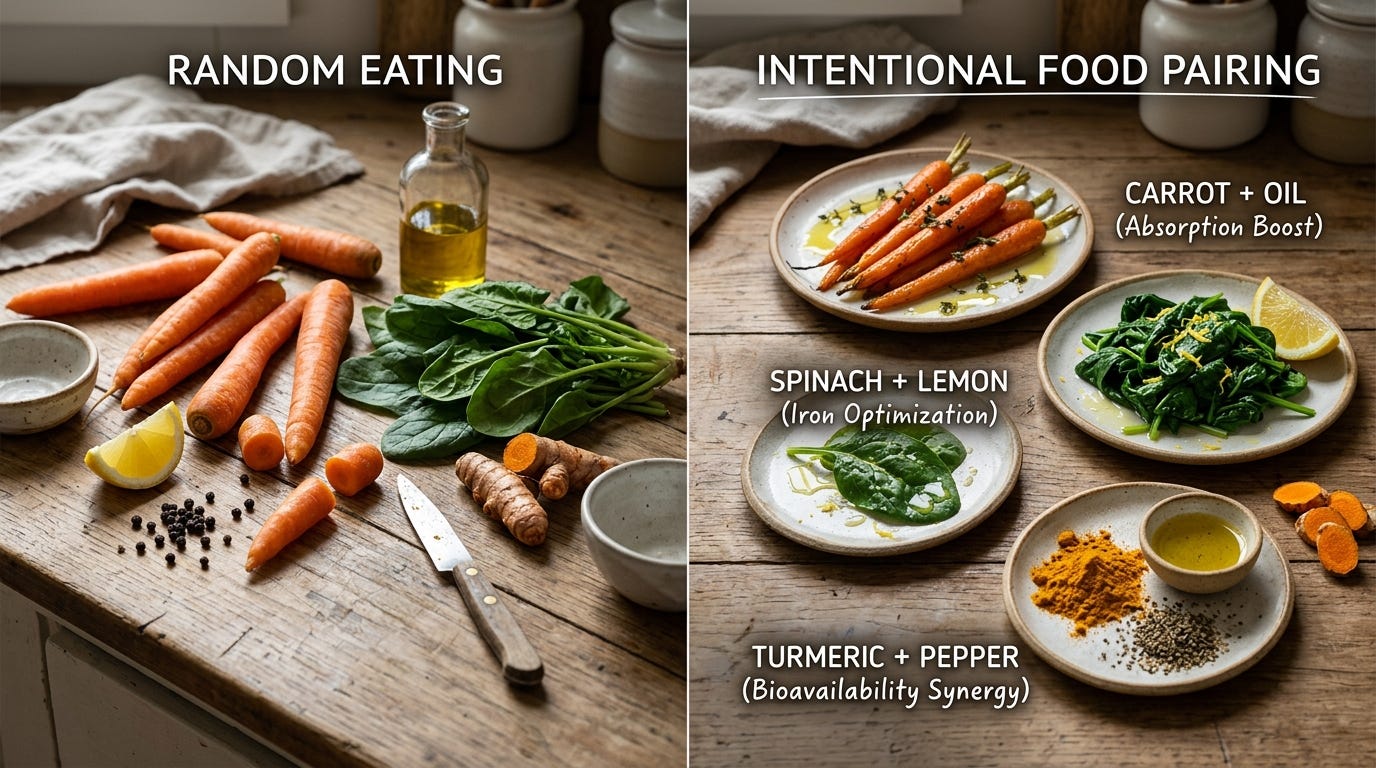
A carrot eaten on its own is handled differently than a carrot eaten with fat.
Spinach with lemon is absorbed differently than spinach without it.
Turmeric paired with black pepper behaves differently than turmeric alone.
These small changes influence how much the body can actually use.
This guide focuses on using food more intentionally.
Food Is More Than What’s On the Label
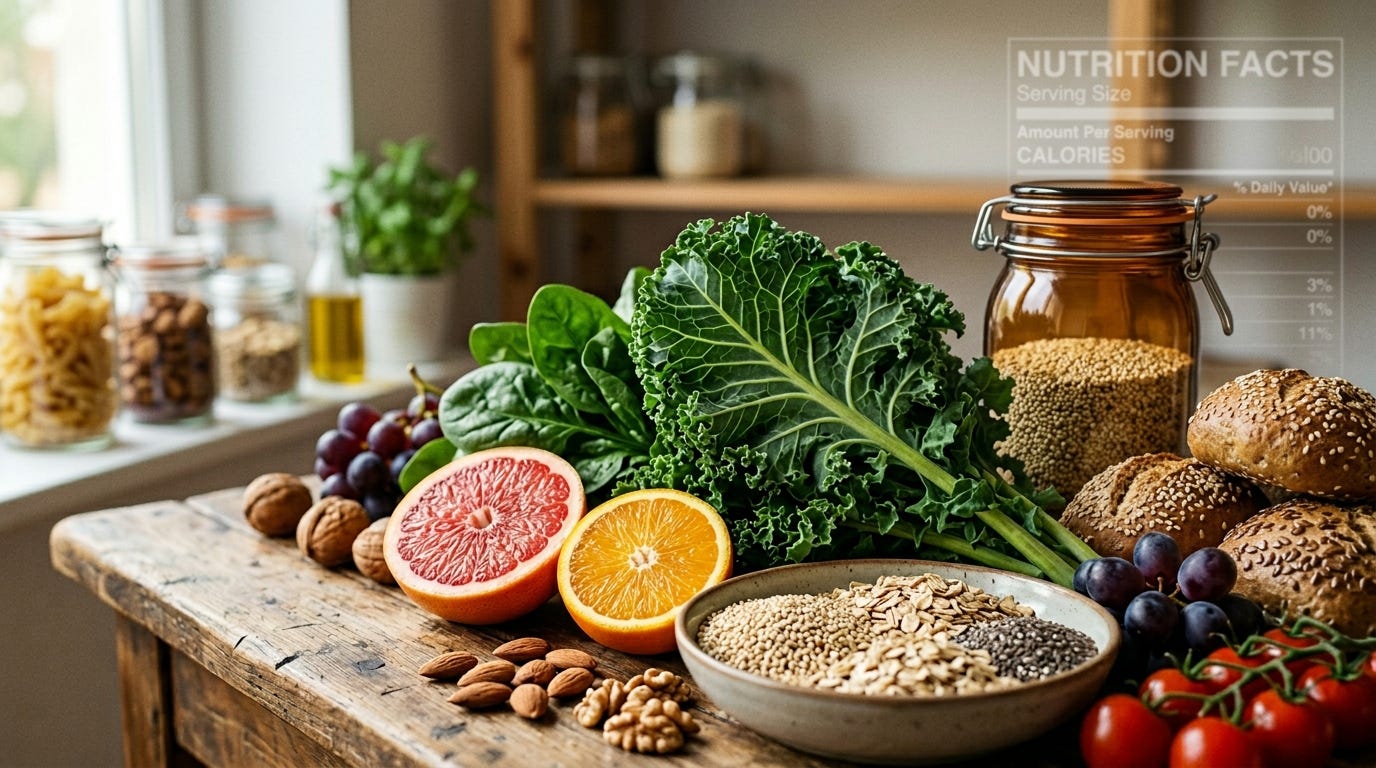
Food labels highlight nutrients.
Vitamin C
Magnesium
Fiber
Protein
That information is helpful, but it doesn’t explain how those nutrients are used.
What matters just as much is:
how a nutrient is absorbed
how it is transported
how long it remains available
what it interacts with
For example:
Iron from plant foods is absorbed more efficiently when vitamin C is present.
Fat-soluble vitamins are better utilized when eaten with fat.
Some compounds support absorption.
Others compete for the same pathways.
The value of a food changes depending on how it is eaten.
The Role of Combinations
Food combinations influence how the body responds.
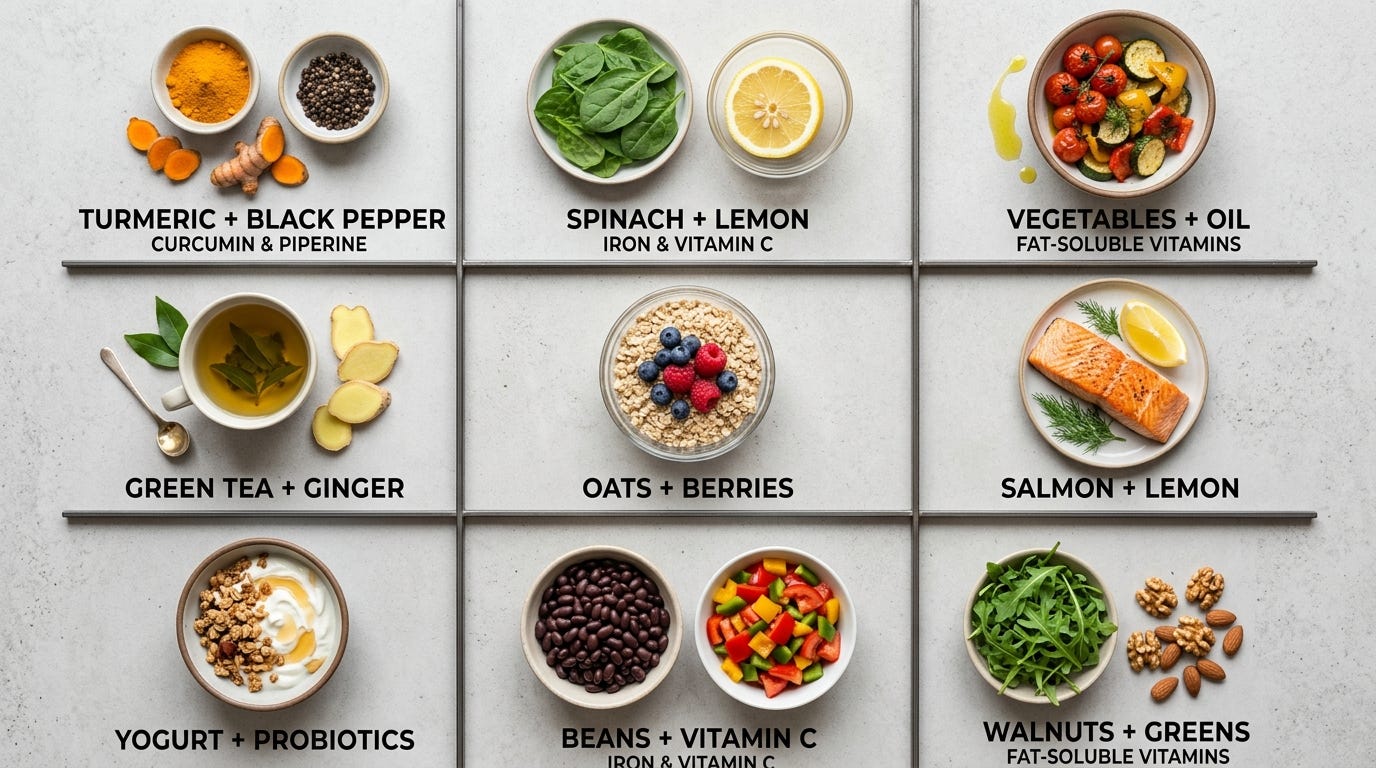
Turmeric contains curcumin.
Curcumin is difficult for the body to absorb on its own.
Black pepper contains piperine, which increases curcumin absorption.
When they are used together, the outcome changes.
Leafy greens contain iron.
They also contain compounds that limit how much is absorbed.
Adding lemon or vinegar can improve absorption.
Meals naturally follow this pattern:
protein influences blood sugar response
fat slows digestion
fiber changes how quickly nutrients are absorbed
These interactions shape energy, digestion, and how full you feel.
Understanding a few key combinations goes a long way.
Food becomes easier to use when the pairings are intentional.
