


Hi friends,
For years, we’ve been told to “eat the rainbow,” and that’s generally good advice. Colorful fruits and vegetables contain pigments and plant compounds that can be remarkably beneficial. Blueberries contain anthocyanins. Tomatoes contain lycopene. Carrots contain carotenoids. Leafy greens contain chlorophyll, folate, magnesium, and carotenoids.
But there’s a problem with focusing too much on color. Some incredibly nutritious foods are white. Garlic, onions, cauliflower, mushrooms, white beans, potatoes, and even foods like plain Greek yogurt and kefir can bring a lot of nutrition to the table despite looking fairly unremarkable.
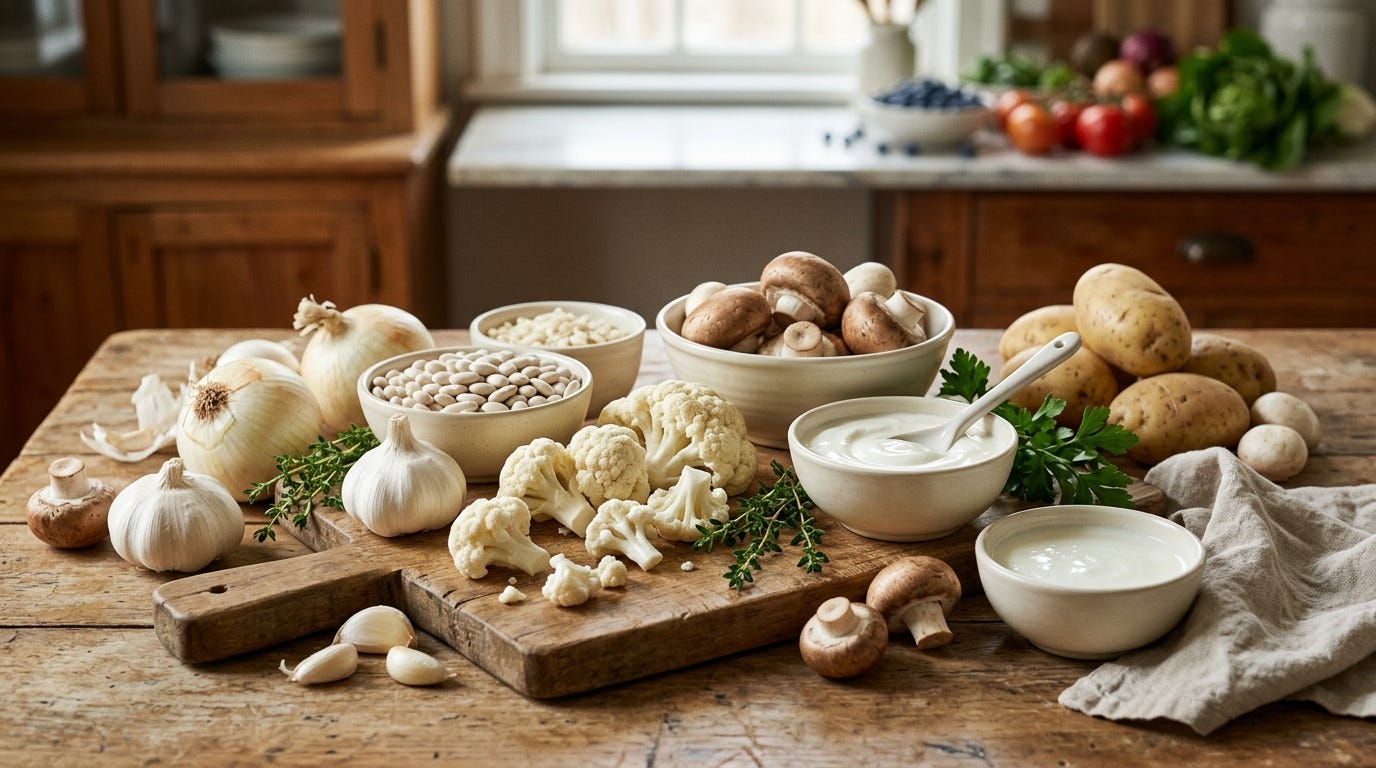
White foods don’t necessarily contain the colorful pigments that get so much attention in nutrition research. Instead, many contain something different, including sulfur compounds, prebiotic fibers, potassium, protein, resistant starch, selenium, calcium, and fermentation-derived compounds.
In other words, color can tell us something about a food, but it certainly doesn’t tell us everything.
So today, let’s look at some of the most overlooked white foods in the grocery store and why they deserve a little more attention.
In Less Than 10 Minutes, We’ll Cover
Why garlic changes when you crush it
What makes onions nutritionally unusual
Why cauliflower belongs in the cruciferous vegetable family
What makes mushrooms completely different from vegetables
Why white beans are nutritional powerhouses
Why potatoes are more nutritious than their reputation suggests
Where yogurt and kefir fit in
Why food color is only one small part of nutrition.
Before we begin, a quick note for readers who want to go deeper…
If you enjoy practical wellness breakdowns that connect nutrition, physiology, and everyday habits without the wellness fluff, consider subscribing to Holistic Magazine.
Free subscribers receive structured, science-backed wellness articles each week.
Paid subscribers receive our deeper protocols, advanced nutrition guides, meal systems, and premium wellness breakdowns and biweekly Lives with Dr. Ian Quitadamo (they’re coming soon!).
Here’s what paid subscribers are reading right now:
and more…
Garlic Is Basically a Tiny Chemistry Experiment

Garlic doesn’t look particularly impressive, but cut into a clove and something interesting happens. Garlic contains sulfur-containing compounds stored separately inside its cells. When you crush or chop garlic, those cells break apart.
That allows an enzyme called alliinase to interact with compounds in the garlic and form allicin. Allicin is one of the compounds responsible for garlic’s characteristic aroma, and it’s one reason freshly crushed garlic has attracted so much scientific interest.
There’s an interesting practical lesson here too. If you crush or chop garlic and let it sit briefly before cooking, you give these chemical reactions time to occur before heat begins inactivating some of the enzymes involved.
Garlic also contains manganese, vitamin B6, vitamin C, selenium, and several other sulfur-containing compounds. You don’t need enormous amounts. Garlic is useful precisely because it’s easy to incorporate into meals you already eat.
Add it to roasted vegetables. Cook it with beans. Mix it into soups. Use it in dressings. Add it to meat, fish, or potatoes.
Sometimes the most interesting foods aren’t the ones you eat by the bowlful. They’re the foods you use consistently in small amounts.
Onions Contain More Than Flavor
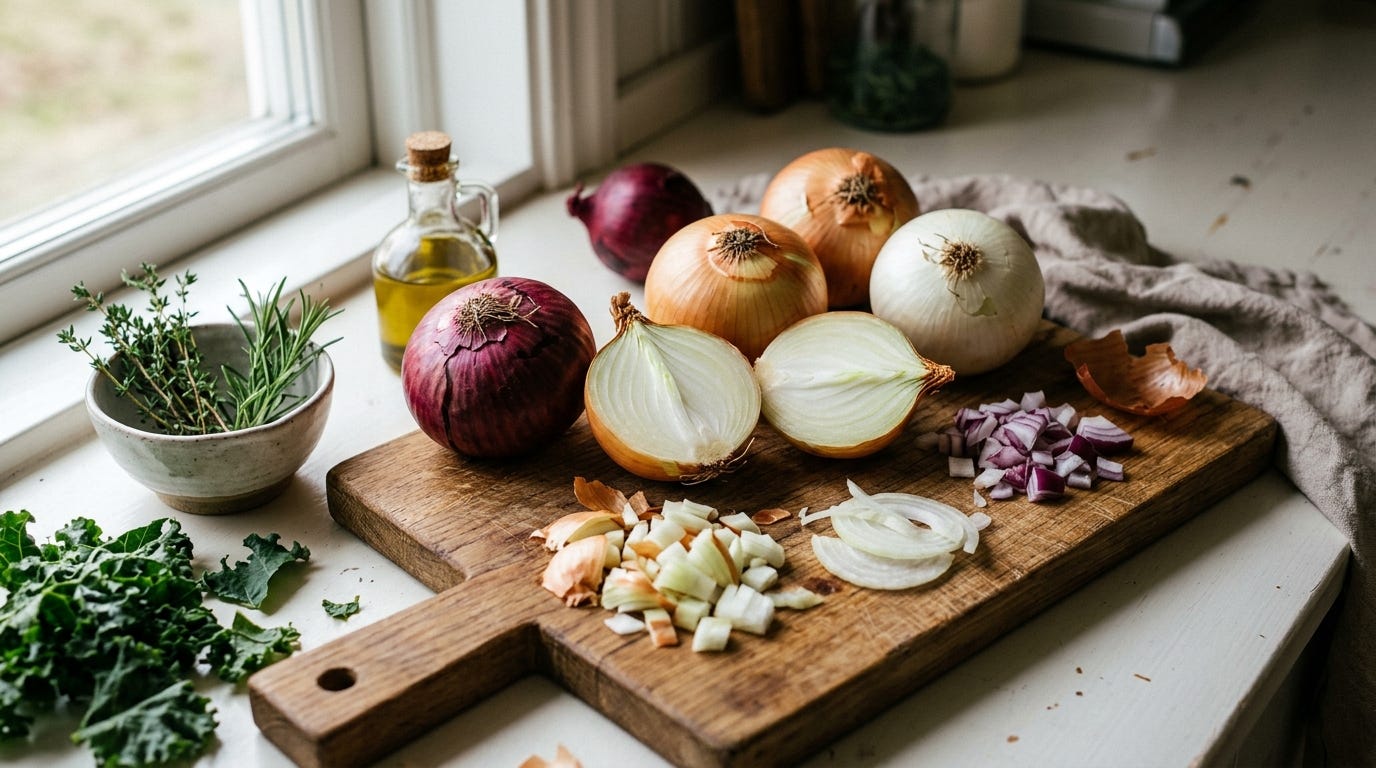
Onions are another food we tend to treat like seasoning, but nutritionally, they’re more interesting than they look.
Onions contain sulfur compounds along with plant compounds known as flavonoids. One of the best known is quercetin. Quercetin is found in many plant foods, including apples, berries, capers, and tea. Onions happen to be one of the more familiar dietary sources.
Onions also contain certain carbohydrates that can be fermented by bacteria in your digestive tract. That means they can act as a type of prebiotic food for some people.
Different onions bring slightly different things to the table. Red onions contain anthocyanins in their outer layers. Yellow onions tend to be particularly rich in certain flavonoids. White onions have a milder appearance but still provide sulfur compounds and other phytochemicals.
You don’t have to obsess over which variety is best. Rotate them. Cook with them. Add raw onion to salads if you enjoy it. Roast them until they become sweet.
An ingredient doesn’t have to be exotic to be biologically interesting.
Cauliflower Is Part of a Powerful Vegetable Family
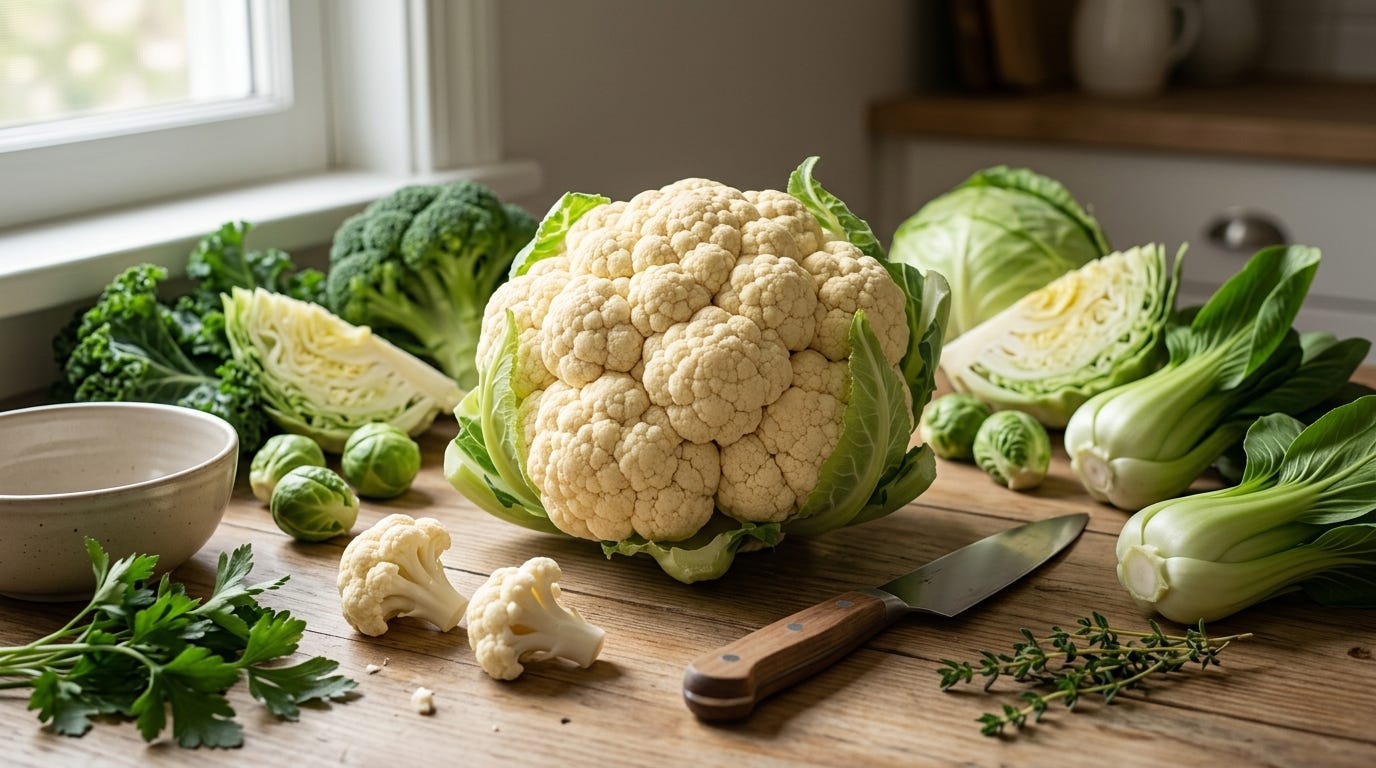
Cauliflower might be pale, but botanically it belongs to the same family as broccoli, cabbage, kale, Brussels sprouts, and bok choy. These are cruciferous vegetables.
Cruciferous vegetables contain compounds called glucosinolates. When the plant is chopped, chewed, or otherwise damaged, glucosinolates can be broken down into other biologically active compounds. One of the best known is sulforaphane, although cauliflower contains a different mixture of glucosinolates than broccoli.
Cauliflower also contributes fiber, vitamin C, folate, vitamin K, potassium, and several other micronutrients.
Perhaps its greatest advantage is versatility. You can roast it, steam it, mash it, add it to soups, use it in curries, or mix it with other roasted vegetables.
The healthiest vegetable isn’t necessarily the vegetable with the longest nutrient list. It’s often the vegetable you’ll actually keep eating.
Mushrooms Aren’t Vegetables at All
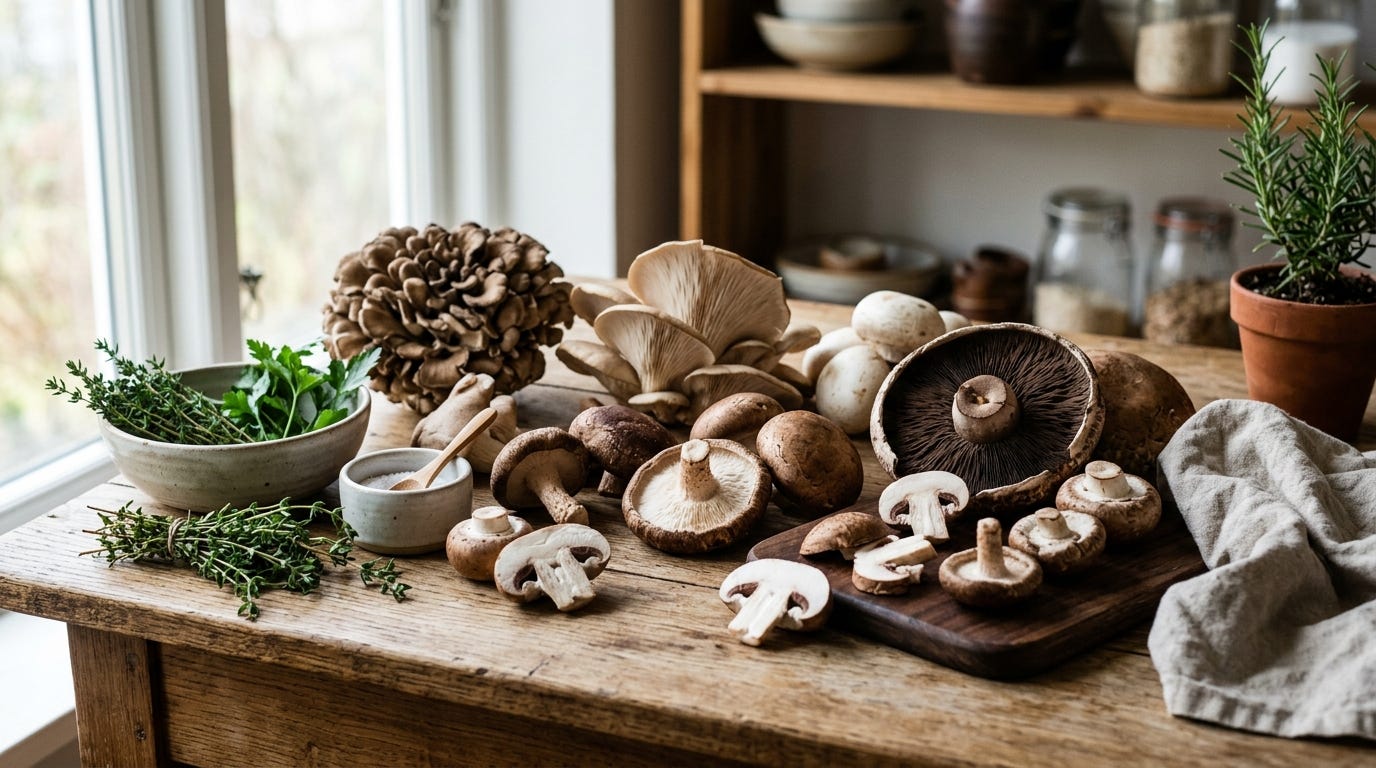
Mushrooms might sit beside vegetables in the produce section, but biologically, mushrooms belong to an entirely different kingdom. They’re fungi.
That makes their nutritional profile unusual. Mushrooms can provide B vitamins, selenium, copper, potassium, and other nutrients. They also contain compounds not commonly found in the same amounts in fruits and vegetables.
One particularly interesting antioxidant is ergothioneine. Humans can’t make ergothioneine ourselves. We obtain it through food, and mushrooms are among the richest dietary sources.
Certain mushrooms can also contain vitamin D if they’ve been exposed to ultraviolet light. Different mushrooms bring slightly different textures and nutrient profiles, including white button mushrooms, cremini, shiitake, oyster mushrooms, maitake, and portobello.
There’s no reason to treat one variety as a miracle food. The more useful idea is simpler. Mushrooms give you nutritional compounds that many other foods don’t provide in the same way.
White Beans Might Be One of the Most Underrated Foods in the Grocery Store
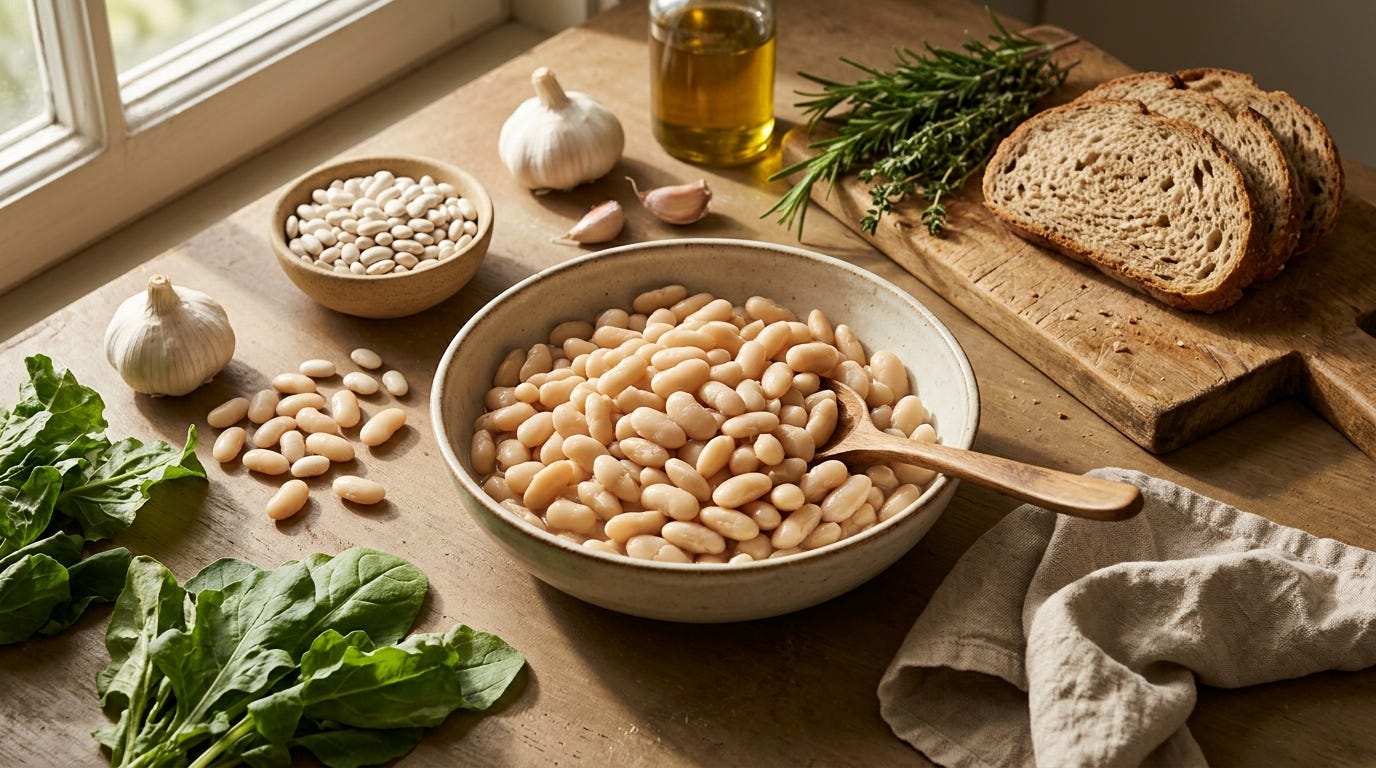
White beans aren’t trendy. They aren’t expensive. They don’t come in tiny wellness bottles. And they certainly don’t have the marketing appeal of exotic powders.
But nutritionally, they’re difficult to ignore.
White beans provide fiber, plant protein, potassium, magnesium, iron, folate, copper, and slowly digested carbohydrates.
Their fiber is especially interesting. Much of it reaches the large intestine, where bacteria can ferment certain components. That fermentation can produce short-chain fatty acids, including butyrate.
Beans also contain starch that can sometimes resist digestion in the small intestine, particularly depending on how they’re prepared and cooled. That’s one reason beans sit at an interesting intersection between nutrition and the microbiome.
Unlike many so-called superfoods, they’re inexpensive enough to eat regularly. Add them to soups. Mix them with greens. Mash them with olive oil and garlic. Toss them into salads. Cook them with tomatoes and herbs.
A bowl of beans might not look impressive. Your gut bacteria may disagree.
Potatoes Deserve a Better Reputation

Potatoes have spent years being reduced to one nutrient: carbohydrates.
But whole potatoes contain far more than starch. They provide significant amounts of potassium. They contain vitamin C. They provide vitamin B6. They contain fiber, especially when the skin is eaten. They’re also remarkably filling.
Preparation makes an enormous difference. A baked potato topped with olive oil, herbs, vegetables, and protein is nutritionally very different from deep-fried potato chips.
There’s another interesting detail. When potatoes are cooked and then cooled, some of their starch can reorganize into resistant starch. Resistant starch resists digestion in the small intestine and can reach the colon, where certain gut microbes can ferment it.
That doesn’t mean cold potatoes are magical, and it doesn’t mean everyone needs to start refrigerating potatoes before eating them.
It simply illustrates something fascinating about food. The same food can behave differently depending on how it’s prepared.
Plain Yogurt Is More Than a Protein Food
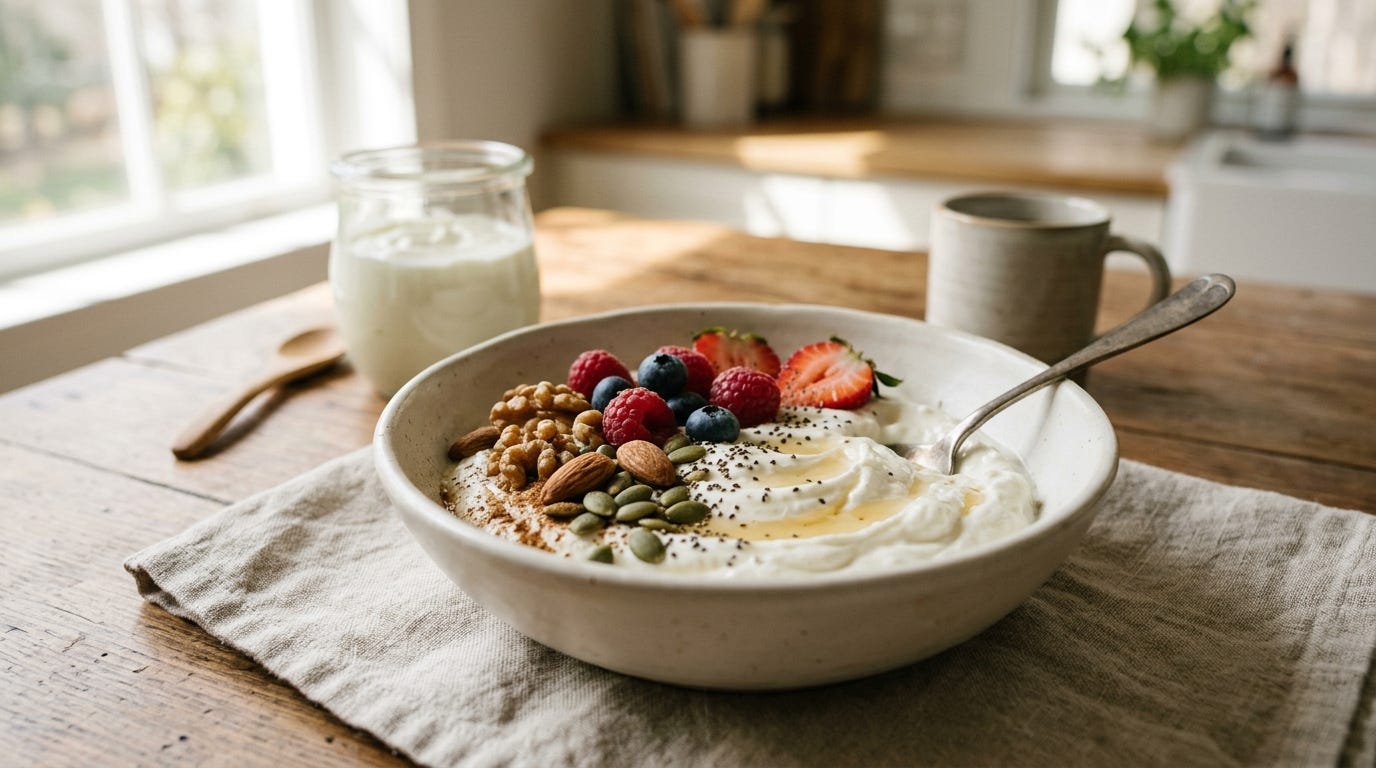
Plain Greek yogurt doesn’t have much color either, but it contains an entirely different nutritional package from vegetables.
Greek yogurt can provide complete protein, calcium, vitamin B12, phosphorus, potassium, and depending on the product, live bacterial cultures.
Those bacteria are one reason fermented dairy foods are interesting. Not every yogurt contains the same cultures, and not every product marketed as yogurt is nutritionally equivalent. Some contain substantial amounts of added sugar. Others contain relatively little protein.
A simple option is plain Greek yogurt with fruit, nuts, seeds, cinnamon, or a small amount of honey.
That combination adds something important: variety. You get protein from yogurt, fiber and polyphenols from fruit, and minerals and fats from nuts or seeds.
Healthy eating becomes much easier when foods complement one another.
Kefir Takes Fermentation Even Further

Kefir looks like milk, but microbiologically, it’s very different.
Traditional kefir is made by fermenting milk with communities of bacteria and yeast. That fermentation changes the food. Some lactose is broken down. Organic acids are produced. Microbial populations grow. The finished product can contain a diverse collection of microorganisms.
Kefir also retains many of the nutrients naturally found in milk, including protein, calcium, phosphorus, potassium, and B vitamins.
Again, it isn’t a miracle drink. Your gut microbiome isn’t transformed because you drank kefir once.
But regularly including fermented foods alongside fiber-rich plant foods can contribute to a more diverse dietary environment.
Your microbiome probably cares much more about your overall eating pattern than any single probiotic food.
White Foods Teach Us Something Important About Nutrition
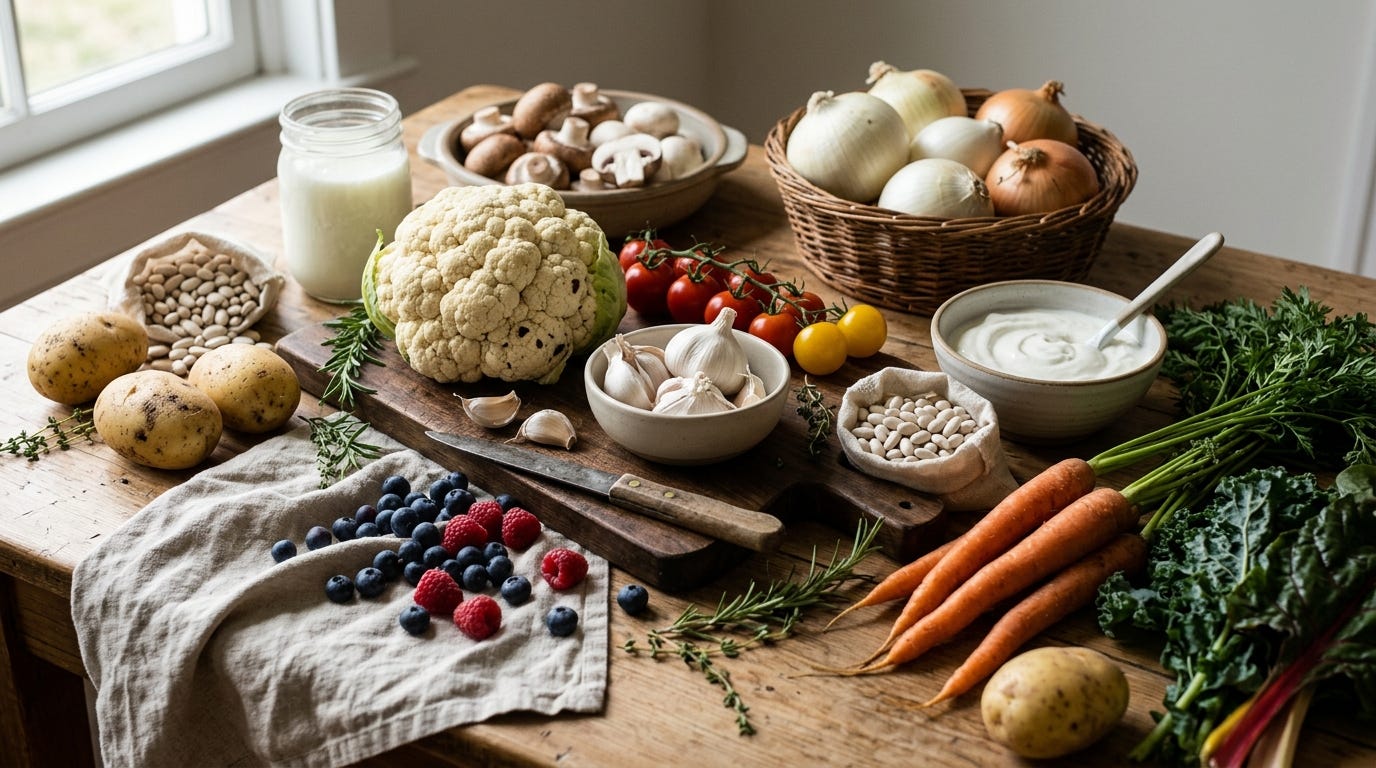
Nutrition advice often gets simplified into memorable rules. Eat the rainbow. Avoid processed foods. Eat more protein. Eat more fiber. Drink more water.
And simple rules can be useful.
But they can also make us forget something important. Biology is complicated.
Anthocyanins make some foods blue and purple. Carotenoids make others orange. Lycopene contributes to red coloration.
But many beneficial compounds aren’t colorful at all. Sulfur compounds can be nearly invisible. Minerals don’t announce themselves with bright colors. Protein doesn’t have a pigment. Fiber isn’t necessarily colorful. Beneficial microbes aren’t visible to the naked eye. Resistant starch doesn’t look special.
Nutrition contains an enormous amount of biology that we simply can’t see.
You Don’t Need to Eat Every White Food Every Day
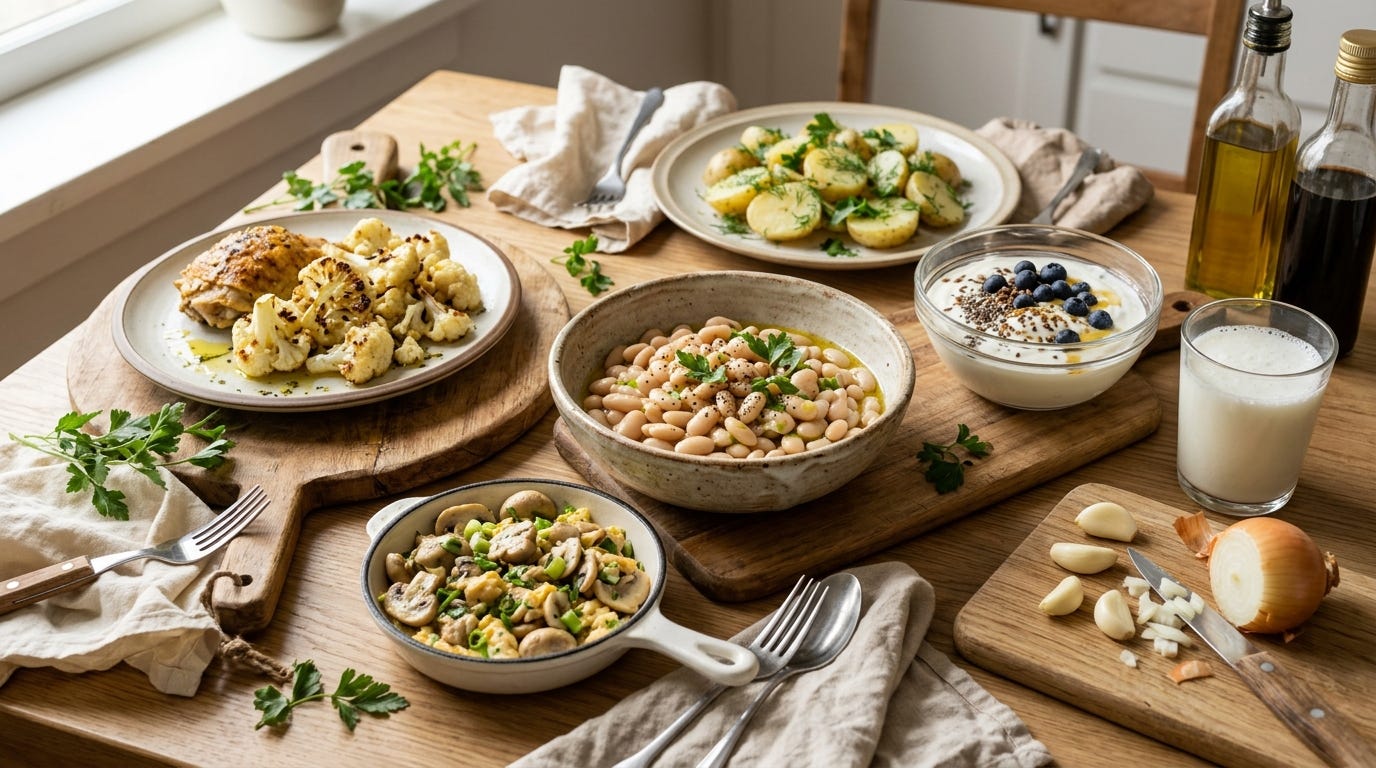
This is where healthy eating can become unnecessarily complicated.
You don’t need garlic at breakfast, mushrooms at lunch, white beans at dinner, kefir before bed, and cauliflower precisely three times per week.
Your body doesn’t require a perfectly optimized food schedule.
Think in terms of variety.
Garlic goes into dinner tonight. White beans become tomorrow’s lunch. Mushrooms get cooked with eggs this weekend. Cauliflower gets roasted alongside dinner. Greek yogurt becomes breakfast. Kefir shows up occasionally. Potatoes replace another starch one evening.
Over weeks and months, those foods contribute different fibers, minerals, proteins, phytochemicals, and fermentation products.
Consistency and variety beat nutritional perfection.
Bringing It Together
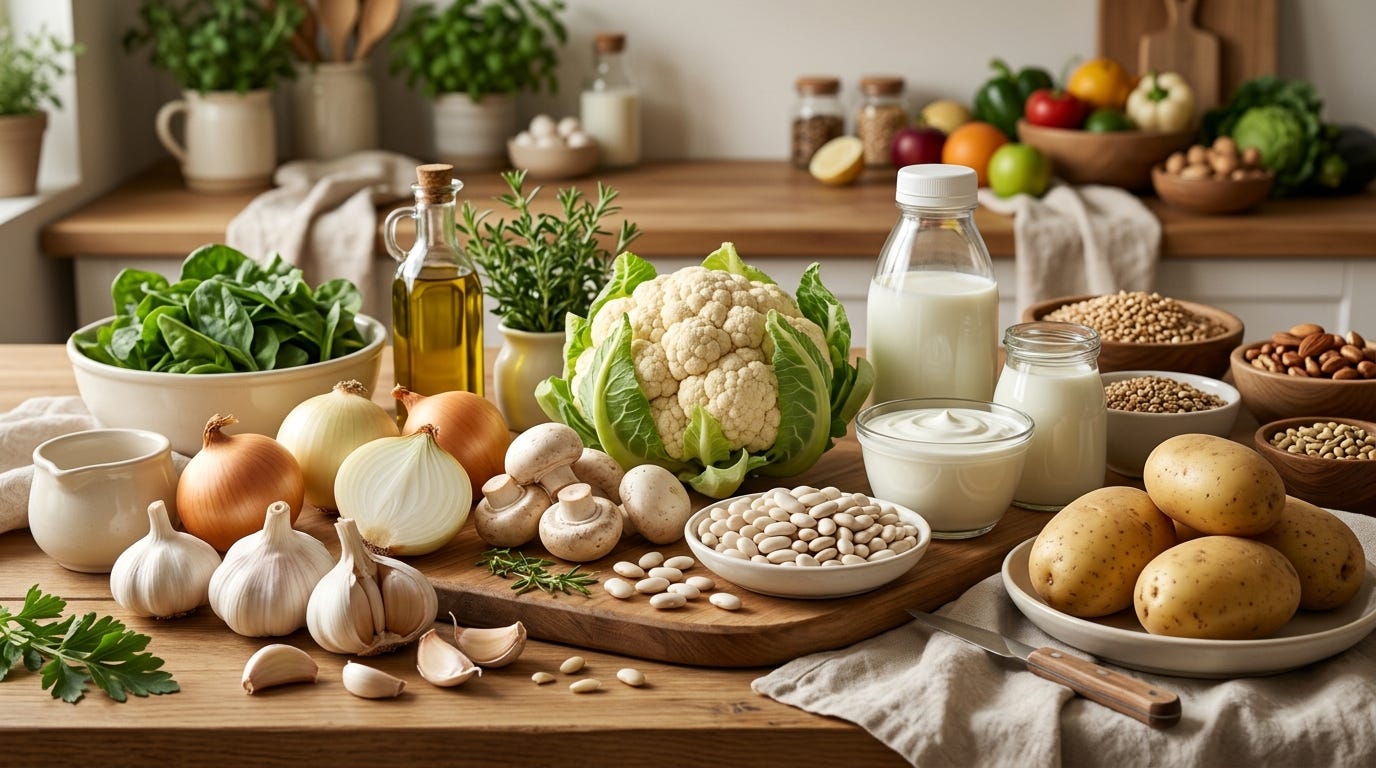
White foods are easy to underestimate. They don’t have the deep purple color of blueberries. They don’t have the bright orange color of carrots. They don’t have the vibrant green color of kale.
But look closer.
Garlic contains unusual sulfur chemistry. Onions provide flavonoids and fermentable carbohydrates. Cauliflower belongs to the glucosinolate-rich cruciferous vegetable family. Mushrooms provide compounds such as ergothioneine. White beans deliver fiber, minerals, protein, and resistant carbohydrates. Potatoes provide potassium, vitamin C, and highly satiating whole-food carbohydrates. Greek yogurt contributes protein and calcium. Kefir combines nutrition with fermentation.
None of these foods needs to be called a superfood.
They don’t need miracle claims.
They’re valuable for a much simpler reason.
They’re ordinary foods with surprisingly interesting biology.
And that’s something worth remembering the next time someone tells you the healthiest foods are always the most colorful.