

Hi friends,
Most people think vitamins come from pills, powders, and supplement bottles.
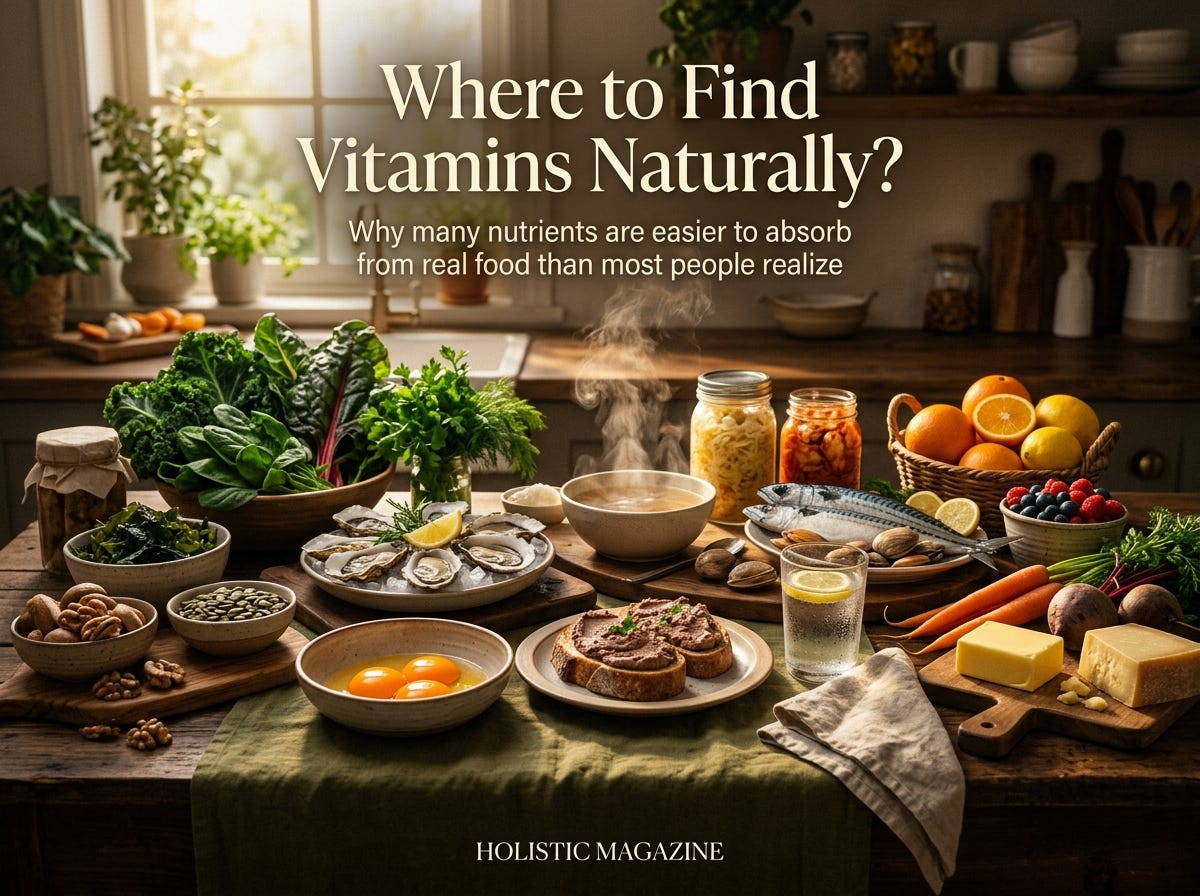
But long before vitamins were isolated into capsules, they existed inside real food systems alongside fats, minerals, enzymes, fibers, polyphenols, and thousands of compounds researchers are still trying to understand today.

Interestingly, nutrients rarely exist alone in nature. Magnesium naturally comes packaged with chlorophyll and potassium. Vitamin C naturally occurs alongside flavonoids and antioxidant compounds. Fat-soluble vitamins naturally occur in foods that already contain the fats needed to help absorb them.
That matters because the body does not just interact with isolated nutrients. Digestion, stress, gut health, sleep, metabolism, and food combinations can all influence how nutrients are absorbed and utilized.
Modern supplements can absolutely help in certain situations, but many people have slowly become disconnected from where vitamins originally came from in the first place.
And understanding that bigger picture changes how you begin looking at food entirely.
In Less Than 10 Minutes, We’ll Cover:
Why nutrients in food often work together naturally
The difference between isolated nutrients and whole-food nutrition
Where many important vitamins naturally occur
Why absorption matters just as much as intake
The hidden role soil, stress, and gut health play in nutrient status
The nutrient-dense foods traditional cultures valued most
Before we begin, if you enjoy practical health breakdowns that connect nutrition, physiology, and real-world habits without the wellness fluff, consider subscribing to Holistic Magazine.
Free subscribers get structured, science-backed wellness breakdowns each week.
Paid subscribers get the deeper protocols, food systems, timing strategies, and premium guides we usually can’t fit into regular posts.
Here’s what paid subscribers are reading right now:
Vitamins Originally Came From Living Food Systems

For most of human history, people never thought in terms of “taking vitamins.” They thought in terms of eating seasonal foods, preserving nutrient-dense foods for winter, consuming broths when sick, fermenting foods for digestion, and relying on traditional preparation methods that concentrated nutrition naturally over time.
Many ancestral diets naturally provided nutritional diversity through the way food systems functioned. Organ meats provided fat-soluble vitamins and minerals. Shellfish concentrated zinc, copper, selenium, and B12. Fermented foods contributed beneficial bacteria and compounds that supported digestion. Slow-cooked broths extracted minerals and collagen compounds from bones and connective tissue. Sea vegetables provided iodine and trace minerals from ocean ecosystems.
Many traditional cultures also prized foods modern diets often overlook today. Liver was valued for vitality and strength. Fish eggs were consumed for fertility and nourishment. Fermented dairy and aged foods were appreciated because they lasted longer and often improved digestibility. Long before laboratories isolated nutrients, people noticed patterns between certain foods and how the body felt afterward.
Modern food systems changed much of that relationship. Industrial agriculture prioritized shelf life, transport stability, sweetness, consistency, and scalability. Foods became easier to mass produce and easier to standardize globally, but many also became less nutrient dense over time.
The Soil Connection Most People Never Think About
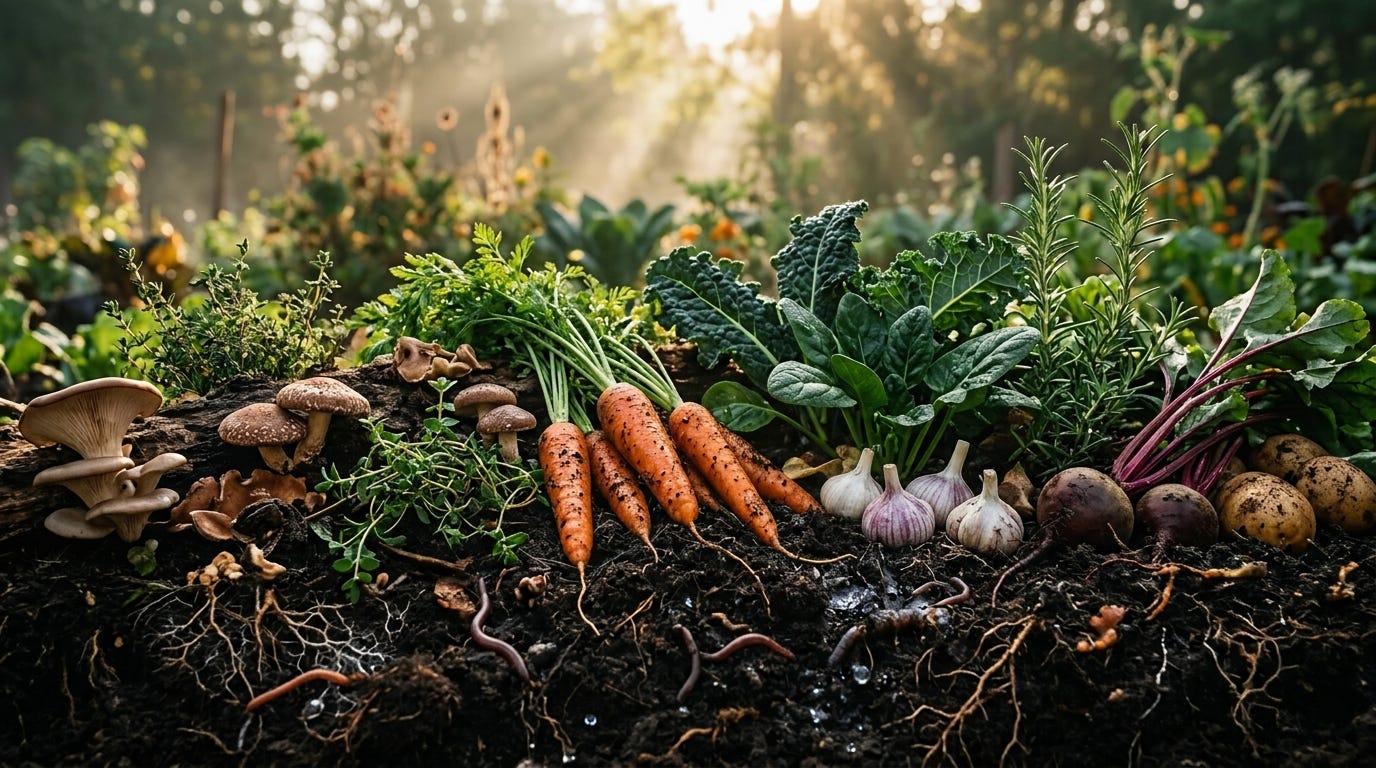
Plants only contain nutrients that exist within the ecosystems they grow in.
That means soil quality directly influences food quality.
Magnesium-depleted soil can produce magnesium-depleted crops. Selenium levels vary dramatically depending on the region food is grown in. Mineral depletion from industrial farming practices can gradually reduce nutrient density over time, especially when soil is repeatedly farmed without adequate restoration.
This partly explains why some people feel drawn toward mineral-rich foods, sea vegetables, quality animal foods, broths, or even mineralized water without fully understanding why. Modern diets are often calorie rich while still being surprisingly low in certain trace minerals that support enzyme systems, thyroid function, stress regulation, and cellular energy production.
Researchers have also found that food grown in healthier soil environments often contains higher levels of polyphenols and protective plant compounds. Plants create many of these compounds as defense systems in response to environmental stressors, microbial interactions, and ecosystem complexity. In many ways, healthier ecosystems create more biologically active food.
Where Vitamins Naturally Occur
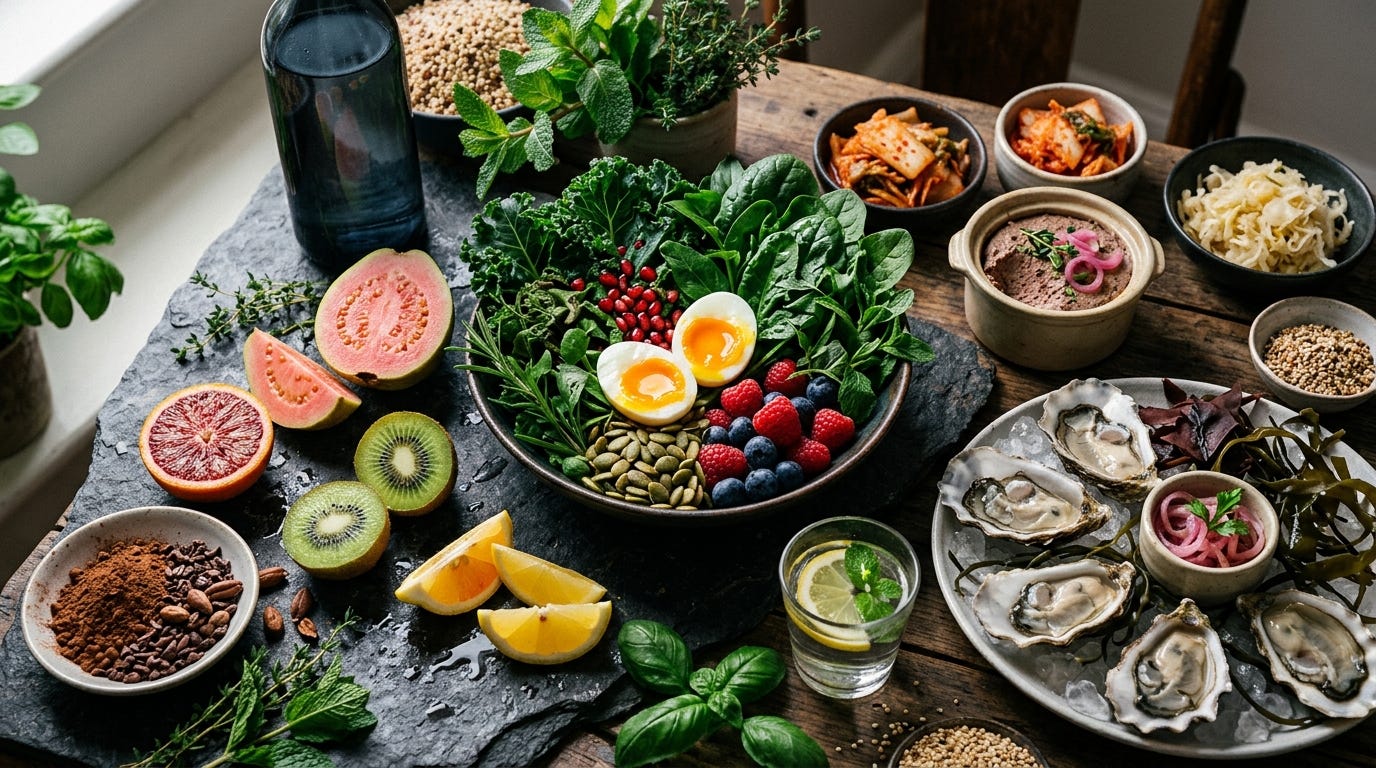
Vitamin C naturally occurs in foods like guava, kiwi, acerola cherry, camu camu, citrus fruits, berries, and bell peppers. These foods also contain flavonoids and antioxidant compounds that appear to help stabilize and recycle vitamin C inside the body. Traditional diets often consumed vitamin C from fresh fruits, herbs, roots, and seasonal plants rather than isolated powders.
Magnesium naturally occurs in pumpkin seeds, cacao, dark leafy greens, mineral-rich water, almonds, beans, and sea vegetables. Magnesium participates in hundreds of enzymatic reactions related to sleep, stress regulation, nerve signaling, blood sugar balance, muscle function, and energy production. Highly processed diets often contain significantly lower magnesium levels than whole-food diets.
Vitamin A naturally occurs in foods like egg yolks, liver, butter from grass-fed animals, cod liver oil, carrots, squash, and sweet potatoes. Animal foods provide preformed vitamin A, while orange vegetables provide carotenoids that the body converts into vitamin A depending on metabolic health and nutrient status.
Vitamin K2 naturally occurs in natto, aged cheeses, egg yolks, fermented foods, and certain grass-fed animal products. This nutrient works closely alongside vitamin D and calcium metabolism, yet many people consume very little of it in modern diets because fermented and traditional foods became less common over time.
B vitamins naturally occur in organ meats, eggs, shellfish, red meat, legumes, nutritional yeast, and certain fermented foods. These vitamins are deeply involved in energy metabolism, nervous system regulation, neurotransmitter production, and methylation pathways throughout the body.
Why Absorption Matters As Much As Intake

One of the biggest missing conversations in nutrition is bioavailability.
A nutrient consumed is not automatically a nutrient absorbed and utilized efficiently.
Low stomach acid can reduce mineral absorption. Chronic stress can influence digestion and nutrient utilization. Poor gut health can interfere with absorption across the intestinal lining. Certain medications may reduce B12, magnesium, or mineral status over time. Lack of dietary fat can reduce absorption of vitamins A, D, E, and K.
Even sleep plays a role because many repair and regulatory systems function differently during proper circadian rhythms.
This helps explain why some people continue feeling depleted despite “eating healthy.” Nutrition is connected to digestion, nervous system function, stress physiology, hormones, inflammation, microbial health, and metabolic resilience all at the same time.
The body functions more like an interconnected ecosystem than a simple calculator.
The Foods Traditional Cultures Valued Most
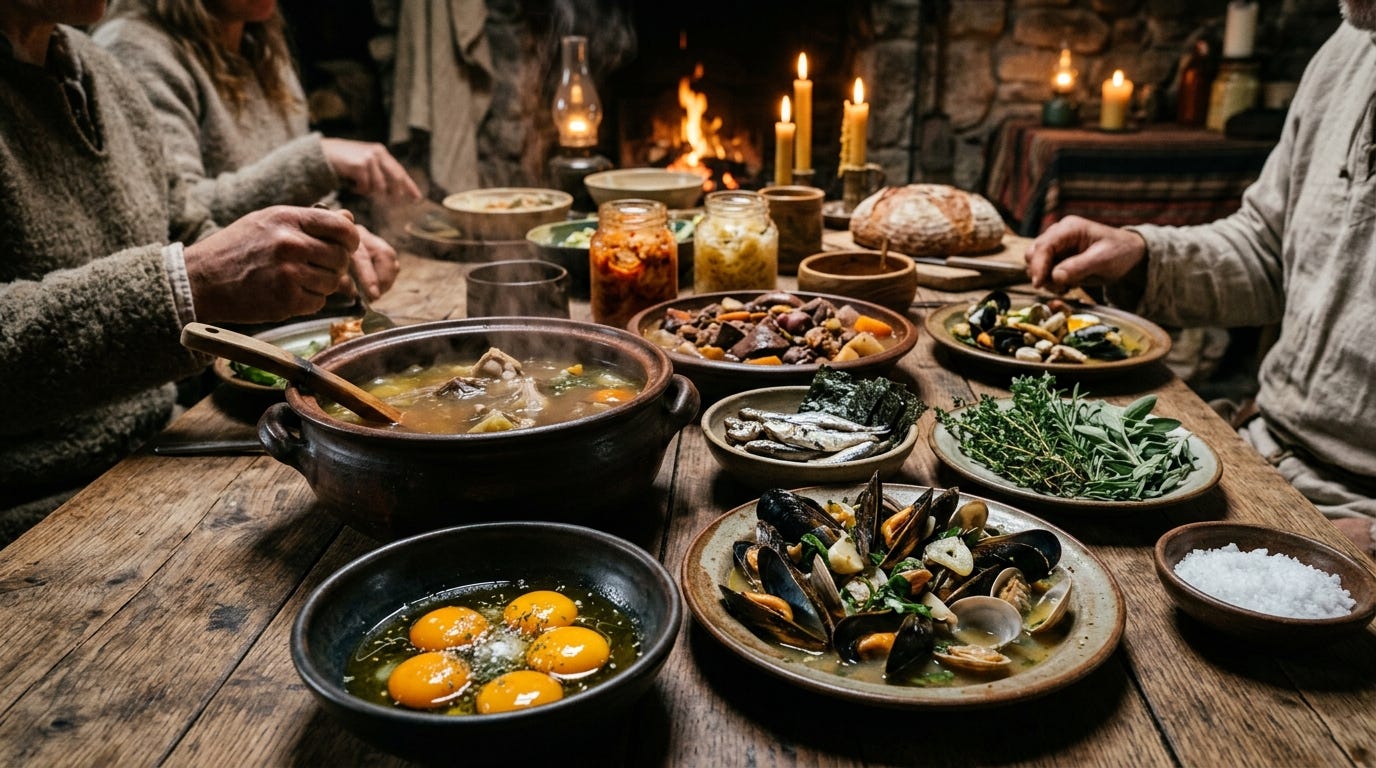
When researchers study long-living traditional populations, many patterns repeat themselves consistently. Nutrient density mattered. Food preparation mattered. Fermentation mattered. Seasonal eating mattered. Mineral-rich foods mattered.
Foods repeatedly valued across traditional cultures included:
Egg yolks
Shellfish
Small fish
Mineral broths
Fermented vegetables
Fermented dairy
Sea vegetables
Organ meats
Herbs and bitter plants
Slow-cooked stews
These foods concentrated vitamins, minerals, collagen compounds, fatty acids, trace elements, probiotics, and polyphenols in ways modern ultra-processed foods often do not.
Many of these foods were also consumed in combinations that naturally improved absorption. Fat-soluble vitamins were eaten with fats. Minerals were consumed alongside broths and slow-cooked foods. Fermentation reduced anti-nutrients and improved digestibility. Traditional eating patterns often unintentionally optimized nutrient utilization long before modern nutrition science existed.
Bringing It Together

Vitamins originally came from ecosystems.
From soil.
From oceans.
From plants.
From roots.
From organs.
From fermented foods.
From mineral-rich waters and traditional preparation methods humans relied on for thousands of years before nutrition labels existed.
Modern supplements can absolutely serve an important purpose today, especially in deficiency states and high-demand situations, but understanding the broader biological context nutrients originally came from changes how we think about food entirely. The body evolved alongside real food systems, environmental diversity, microbial exposure, and nutrient combinations that worked together naturally over time.
Sometimes the healthiest foods are the ones traditional cultures protected long before modern marketing ever told people what “healthy” meant.
If you want deeper breakdowns on nutrient absorption, metabolism, gut health, minerals, hydration, food systems, and the physiology behind how the body actually works, paid subscribers get access to the full protocols, premium guides, and advanced nutrition breakdowns we don’t publish publicly.
Most health advice stays surface level.
We try to explain what’s happening underneath it.