


I. WHY FOOD COMBINATIONS MATTER
Introduction
Most nutrition conversations focus on individual foods.
Blueberries are considered healthy. Salmon is considered healthy. Eggs are considered healthy. Yogurt is considered healthy.

But inside the body, nutrients constantly interact with one another.
Some nutrients improve the absorption of other nutrients. Some help transport minerals into cells more effectively. Some support enzyme activity involved in energy production, circulation, digestion, nervous system regulation, and recovery. Others compete for absorption and reduce how efficiently nutrients are utilized.
This means meal structure matters.
A bowl of vegetables paired with olive oil may behave differently physiologically than vegetables eaten alone. Iron-rich foods paired with vitamin C foods may absorb more efficiently. Certain herbs and spices can significantly influence digestion, circulation, microbial balance, and nutrient availability.
Traditional food cultures often built meals around these combinations naturally.
Olive oil was commonly paired with tomatoes throughout the Mediterranean. Fermented foods were eaten alongside fiber-rich meals in many cultures. Turmeric was traditionally cooked with black pepper and fats. Bone broth was often combined with herbs, garlic, minerals, and slow-cooked vegetables.
Many of these combinations supported digestion, nutrient utilization, hydration, recovery, and long-term resilience in ways modern nutrition is still continuing to study.
The goal of this guide is not to make eating feel rigid or complicated.
The goal is to understand how simple food pairings can help support:
nutrient absorption
stable energy
digestion
blood sugar balance
hydration
recovery
sleep
nervous system regulation
Because nutrition is influenced not only by what is eaten, but by how effectively the body can use it.
Nutrient Synergy Explained
The body functions through systems and interactions.
Inside cells, vitamins, minerals, amino acids, fatty acids, bacteria, enzymes, and hormones constantly work together. Many nutrients rely on other compounds to support absorption, conversion, activation, or transport.
This is known as nutrient synergy.
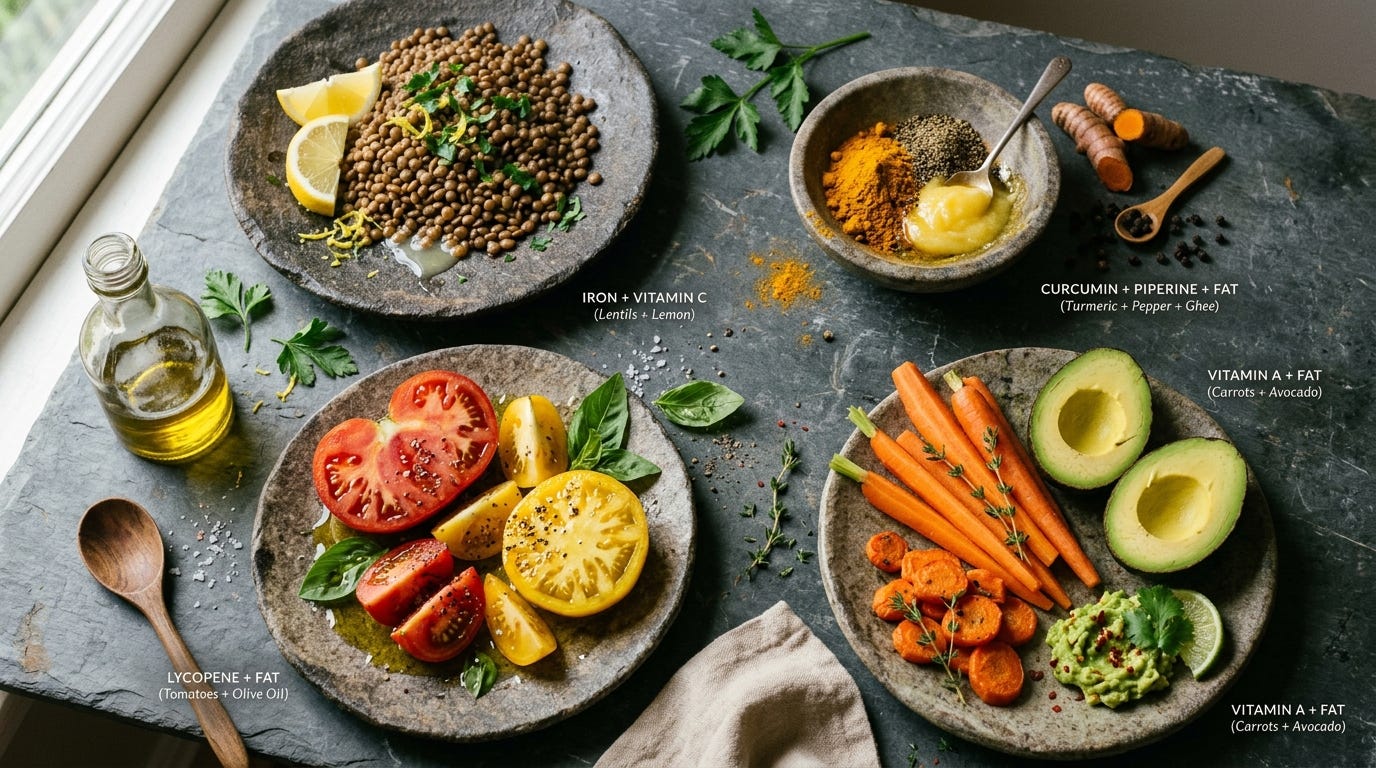
One of the clearest examples is iron and vitamin C.
Iron from plant foods is absorbed less efficiently than iron from animal foods. Vitamin C helps convert plant-based iron into a form that becomes easier for the body to absorb inside the digestive tract.
Another example involves turmeric and black pepper.
Turmeric contains curcumin, a compound studied for its role in oxidative stress and inflammation pathways. Curcumin is absorbed relatively poorly on its own. Black pepper contains piperine, which changes how long curcumin remains available in the body.
Healthy fats create another important area of synergy.
Fat-soluble vitamins including vitamins A, D, E, and K rely on dietary fat for proper absorption. Carotenoids found in foods like tomatoes, carrots, squash, and peppers are also absorbed more effectively when paired with fats such as olive oil, avocado, nuts, seeds, or eggs.
Digestion itself also depends on synergy.
Some foods stimulate stomach acid production. Others support bile flow. Fermented foods may help support microbial diversity, while prebiotic fibers help nourish beneficial bacteria involved in nutrient metabolism.
Meals function like biochemical environments.
Small changes in food combinations can influence:
absorption
satiety
digestive comfort
blood sugar stability
hydration
circulation
recovery
inflammation response
This is one reason why certain meals leave people feeling steady and energized while others leave them feeling sluggish, bloated, hungry again quickly, or mentally foggy despite similar calorie totals.
The body responds to interaction and context constantly.
Bioavailability and the Missing Piece in Modern Nutrition
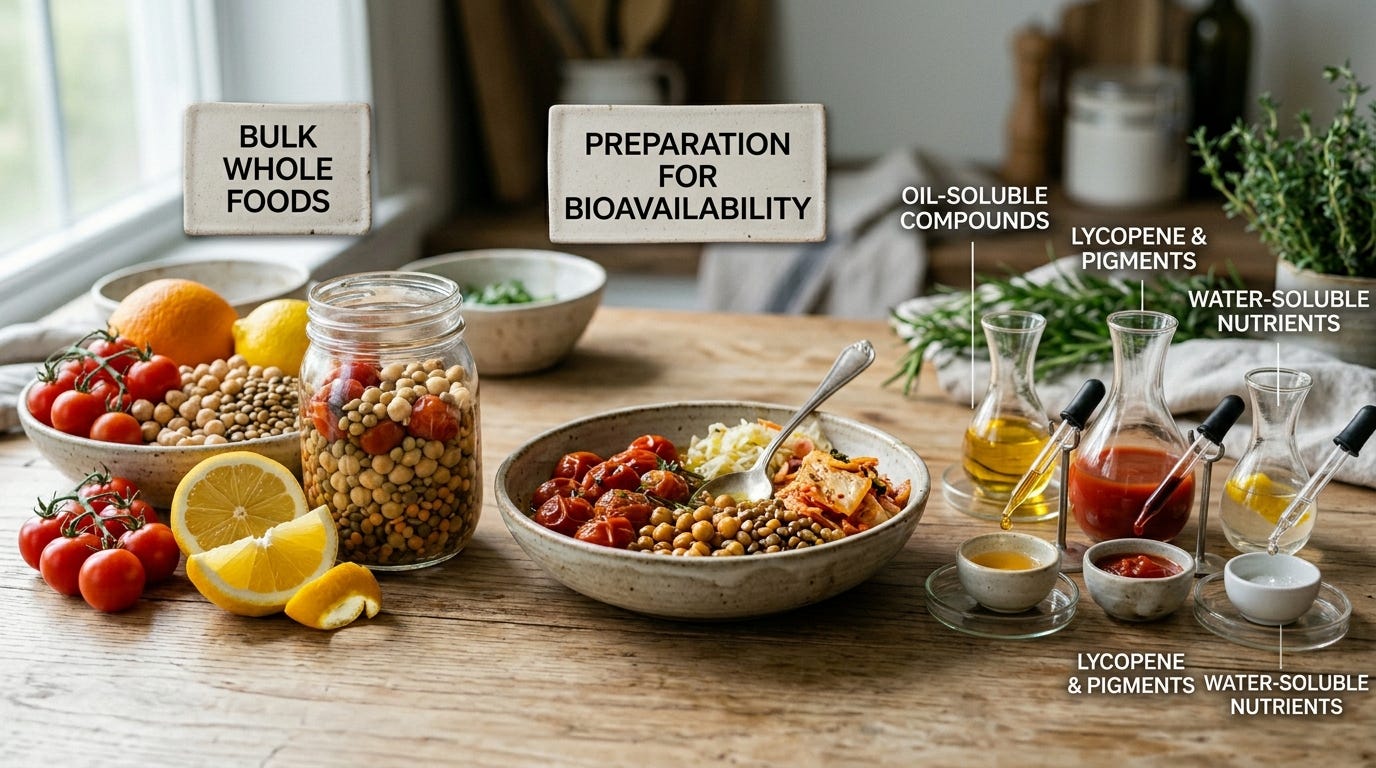
Bioavailability refers to how much of a nutrient the body can absorb and utilize after consumption.
This process involves far more than simply eating nutrient-dense foods.
After food is consumed, nutrients still need to:
be released from the food itself
survive digestion
interact with stomach acid and enzymes
move across the intestinal lining
enter circulation
reach tissues that need them
become activated inside cells
Every stage influences outcome.
This is why nutrition labels only tell part of the story.
Two meals may contain similar nutrients on paper yet behave very differently physiologically depending on digestion, preparation methods, meal composition, stress levels, and food pairings.
Cooking methods alone can dramatically change nutrient availability.
Cooking tomatoes increases lycopene availability. Fermentation may improve digestibility and nutrient access. Soaking legumes can reduce compounds that interfere with mineral absorption. Pairing healthy fats with carotenoid-rich foods may improve utilization of fat-soluble compounds.
Stress also changes absorption patterns.
Under chronic stress, digestion often becomes less efficient. Blood flow shifts away from digestive processes and toward immediate energy demands. Stomach acid production may decline. Motility patterns may become irregular. Over time, nutrient utilization can become less efficient even when food intake appears relatively balanced.
This helps explain why some people experience:
fatigue
low stress tolerance
poor recovery
cravings
low energy
digestive discomfort
poor sleep
muscle tightness
brain fog
The issue is not always extreme deficiency.
In many cases, the body is struggling with efficiency, regulation, digestion, or utilization.
Understanding bioavailability changes how nutrition is approached.
The goal becomes creating meals that support digestion, absorption, stability, and nutrient utilization more consistently over time.
Fat, Acid, Fiber, and Enzymes

Digestion is a coordinated chemical process.
Before nutrients can be absorbed, food must be mechanically broken down, mixed with acids and enzymes, processed through the stomach and intestines, and transported across the intestinal lining.
Several factors heavily influence how efficiently this process occurs.
Among the most important are:
dietary fat
stomach acid
digestive enzymes
fiber
bile flow
These components influence nutrient availability far more than many people realize.
Dietary Fat and Nutrient Transport

Certain nutrients depend on fat for absorption.
This includes:
vitamins A, D, E, and K
carotenoids such as lycopene and beta-carotene
various plant compounds involved in antioxidant activity
Without sufficient dietary fat, absorption of these compounds may decrease significantly.
This is one reason traditional meals often paired vegetables with:
olive oil
butter
eggs
avocado
nuts
seeds
Adding olive oil to tomatoes or avocado to roasted vegetables does more than improve flavor. It may help increase utilization of fat-soluble compounds inside the digestive tract.
Fat also slows digestion slightly, which may improve satiety and help stabilize blood sugar response after meals.
