


Hi friends,
When people hear the word inflammation, they usually think of something negative.
Pain
Swelling
Chronic disease
So the goal becomes simple:
reduce inflammation as much as possible.
But inside the body, inflammation isn’t just a problem.
It’s a signal.
And more importantly, it’s a process.
Without inflammation, the body wouldn’t be able to:
heal damaged tissue
respond to infection
adapt to physical stress
remove dysfunctional cells
The issue isn’t inflammation itself.
It’s when inflammation becomes chronic, unresolved, or poorly regulated.
The body doesn’t operate on “on vs off.”
It operates on timing, coordination, and completion.
In Less Than 10 Minutes, We’ll Cover:
What inflammation actually is
Why the body needs it
What happens when inflammation doesn’t resolve
How inflammation connects to energy, stress, and metabolism
Common signs of chronic low-grade inflammation
Practical ways to support a more balanced inflammatory response
Before We Begin…
If you value clear, research-informed explanations that focus on physiology rather than trends, consider upgrading to the paid subscription.
Your support allows us to continue publishing long-form guides, structured protocols, and practical checklists designed to help people understand how their bodies work.
You’ll also gain access to our growing premium library.
Here are our most recent premium articles:
We expand our premium library every week. Thank you for supporting the work.
Inflammation Is a Structured Biological Process
Inflammation is not random.

It follows a sequence.
When the body detects a disruption, the immune system initiates a response designed to:
contain the issue
break down damaged tissue
signal for repair
restore normal function
This happens through coordinated signaling molecules, immune cells, and changes in blood flow.
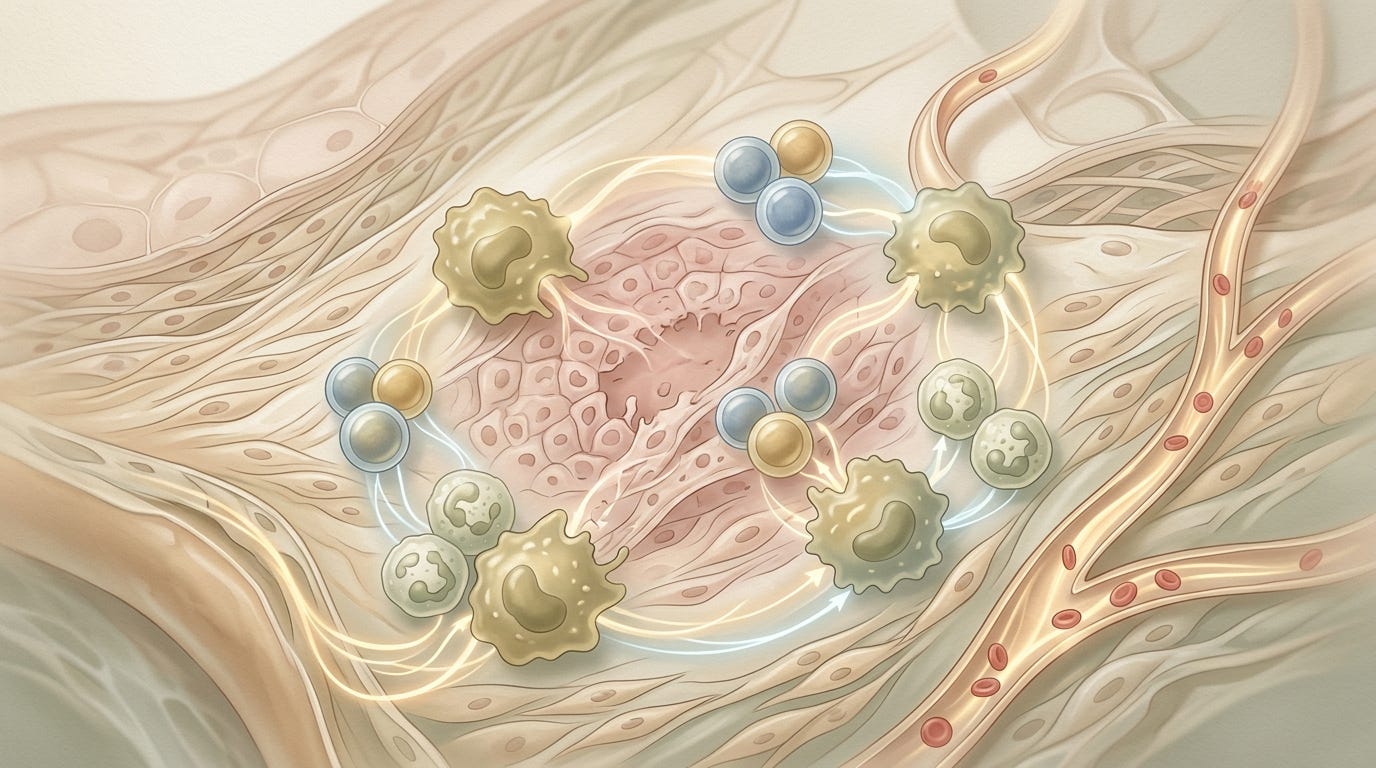
You can think of it as a temporary shift in priority.
The body pauses normal operations to focus on repair.
But this only works when the process is completed.
The Missing Piece: Resolution
Most conversations stop at “inflammation.”
But the body doesn’t just create inflammation.
It also has to resolve it.
Resolution is an active process.
It requires:
energy
nutrients
proper signaling

When resolution happens correctly:
tissue is repaired
immune activity returns to baseline
the system stabilizes
When resolution is incomplete:
the signal lingers
the system stays partially activated
the body never fully returns to baseline
This is where problems begin.
Acute vs Chronic Inflammation
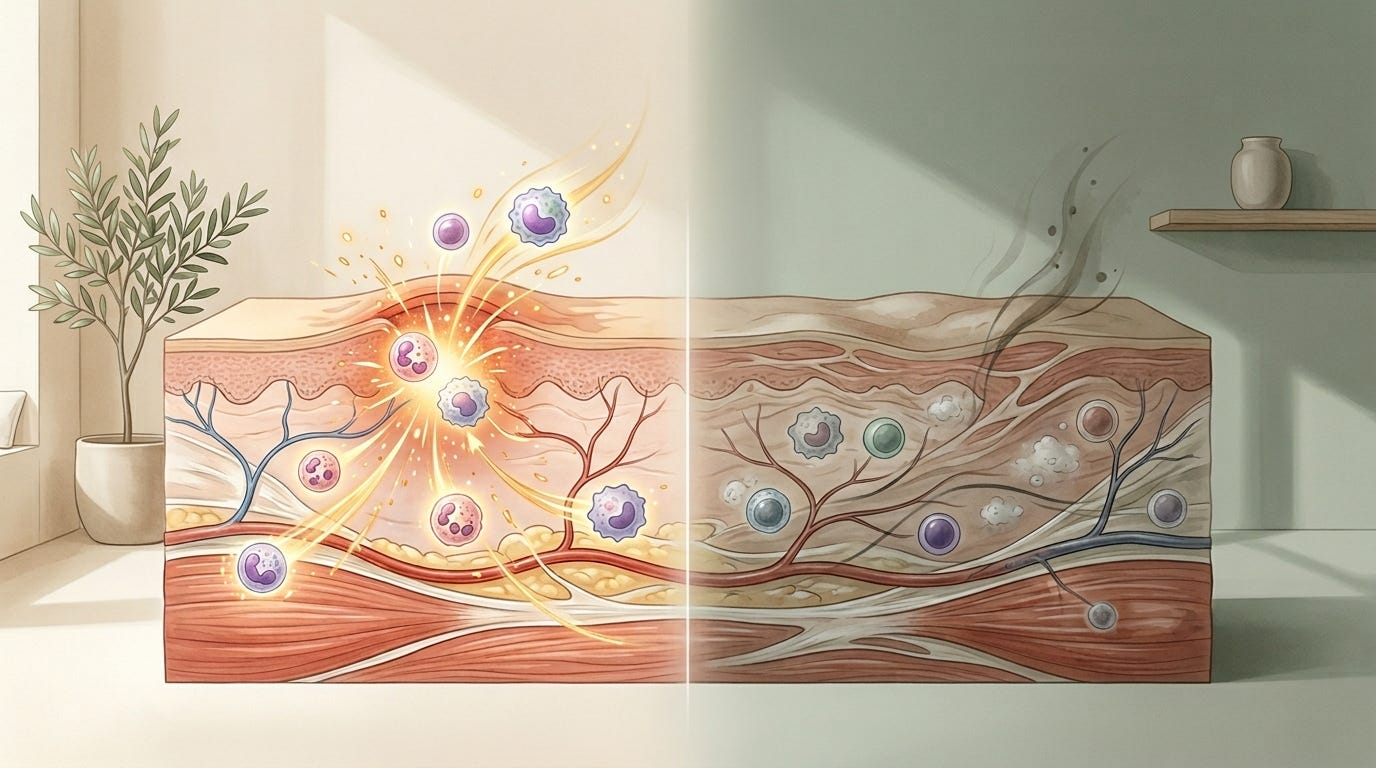
Acute inflammation is short-term and purposeful.
Examples include:
a cut healing
muscle soreness after training
a temporary immune response
This type of inflammation is necessary.
It’s part of normal function.
Chronic inflammation is different.
It’s not always intense.
It’s often low-grade and persistent.
Instead of a full response that resolves, the body stays in a partial activation state.
This can gradually affect:
cellular energy production
hormonal signaling
tissue recovery
metabolic flexibility
And it often goes unnoticed for a long time.
What Keeps Inflammation From Resolving
Chronic inflammation is rarely caused by one major issue.
It’s usually the result of stacked inputs over time.

Some of the most common ones include:
poor sleep consistency
chronic psychological stress
blood sugar fluctuations
nutrient insufficiencies
gut irritation or imbalance
overtraining without recovery
environmental exposures
Each one may seem manageable on its own.
But together, they create a constant signal the body has to respond to.
The system never gets a full break.
The Energy–Inflammation Loop
One of the most overlooked connections is this:
inflammation and energy are tightly linked.
The immune system requires energy to activate and to resolve.
If energy production is compromised, the body may struggle to complete the inflammatory process.
This creates a feedback loop:
incomplete resolution → prolonged inflammation → reduced energy → even slower resolution
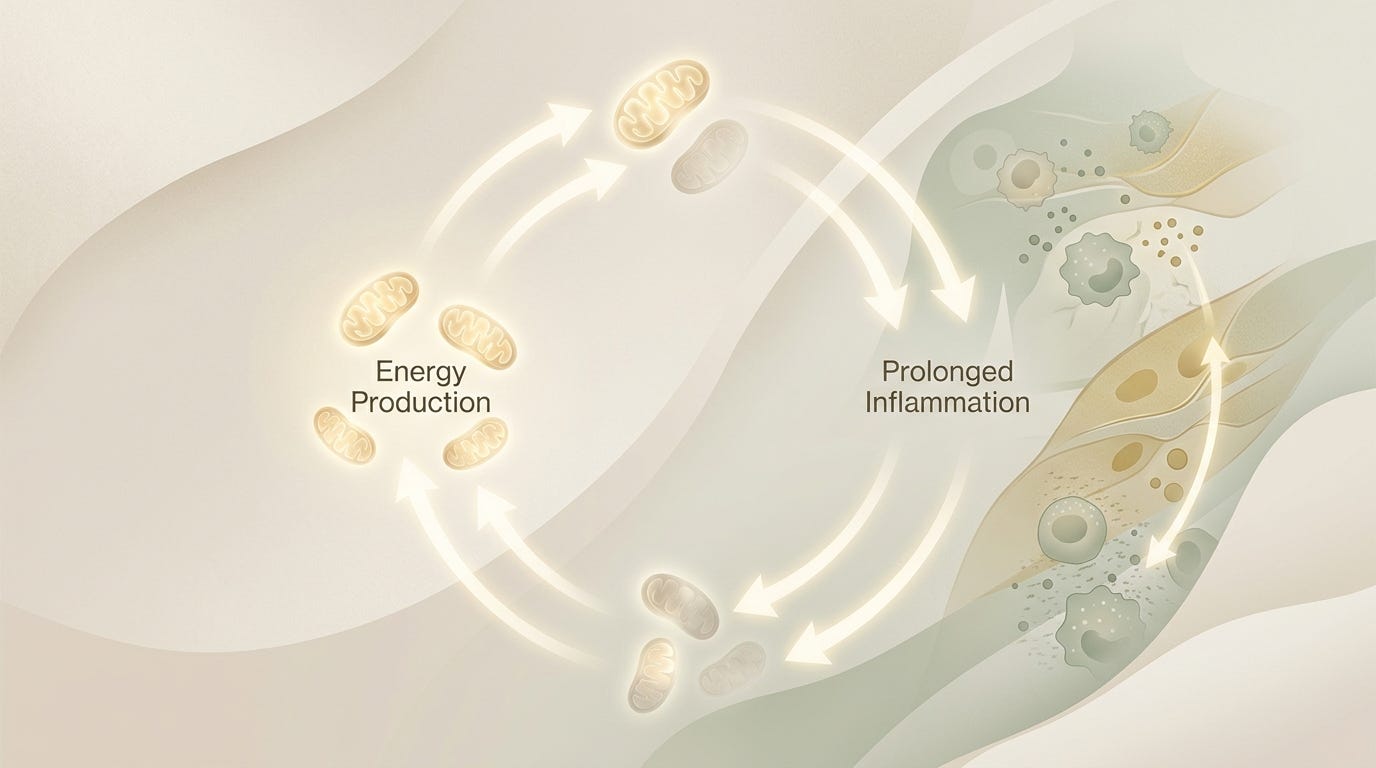
Over time, this can show up as:
persistent fatigue
low resilience
slower recovery
reduced capacity for stress
This is why addressing inflammation often starts with supporting energy systems.
Inflammation and the Nervous System
The nervous system plays a key role in regulating inflammation.
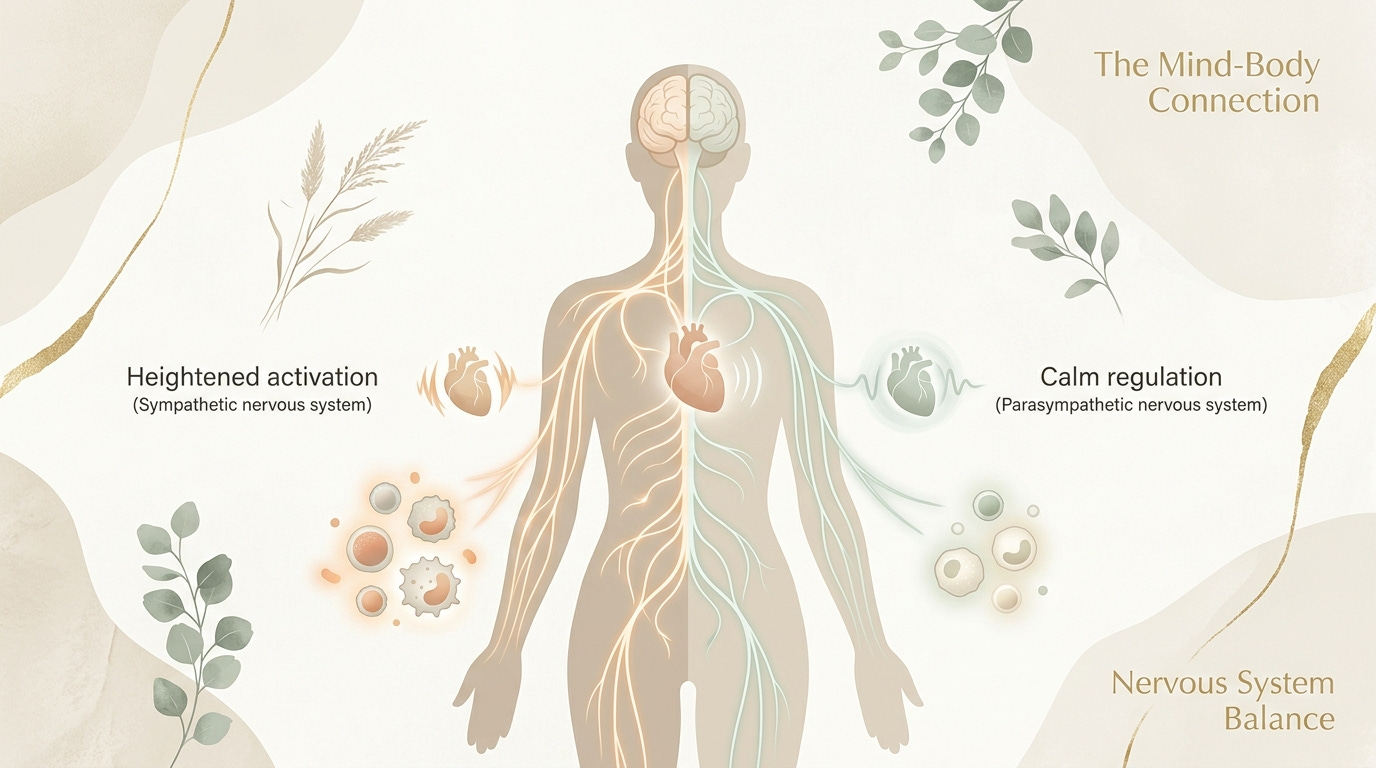
When the body is in a more sympathetic state (fight or flight):
inflammatory signaling tends to increase
When the body shifts into a more parasympathetic state (rest and repair):
resolution becomes easier
Chronic stress can keep the body in a state where:
signals are constantly being sent
but recovery signals are limited
This is one reason why stress affects:
digestion
sleep
immune function
healing capacity
The system is connected.
Signs of Low-Grade Inflammation
Chronic inflammation rarely announces itself clearly.

It often shows up as patterns:
fatigue that doesn’t fully resolve
brain fog or reduced clarity
joint stiffness, especially in the morning
digestive discomfort
skin congestion or breakouts
slower recovery from workouts
feeling slightly “off” without a clear reason
These are not diagnoses.
They are signals that something may not be resolving efficiently.
Why Suppression Isn’t the Full Solution
Many approaches focus on reducing inflammation quickly.
This can provide short-term relief.
But if the underlying drivers remain, the body will continue to respond.
This is why symptoms can return.
A more useful question becomes:
What is my body continuously responding to?
And:
What is preventing resolution?
Food, Inputs, and Context
No single food or ingredient “causes” inflammation in isolation.

The body responds to patterns.
For example:
irregular meals can affect blood sugar and stress signaling
low nutrient density can limit repair capacity
ultra-processed foods can reduce overall resilience
At the same time:
over-restriction
constant dieting
fear around food
can also create stress signals.
Context matters more than isolated rules.
Practical Ways to Support Resolution
The body tends to regulate inflammation better when inputs are consistent and supportive.

Some of the most effective foundations include:
consistent sleep timing and duration
meals that stabilize blood sugar (protein, fats, fiber)
adequate intake of key minerals and micronutrients
regular movement without pushing into exhaustion
intentional recovery (quiet time, breathing, low stimulation)
time outdoors and light exposure
These don’t work because they “target inflammation.”
They work because they improve the body’s ability to complete processes.
If this helped clarify how inflammation actually works, the upcoming Inflammation Regulation Guide goes deeper.
It walks through:
how to identify what your body may be responding to
how to support resolution pathways
how to rebuild energy and recovery capacity
step-by-step frameworks you can apply
For $8 per month, you’ll get structured protocols, printable checklists, and long-form breakdowns designed for real life.
Here are our most recent premium articles:
We expand our premium library every week. Thank you for supporting our work!