


Hi friends,
A lot of people try to eat in a way that supports their health, but the results can feel inconsistent. Some meals leave you feeling lighter, more comfortable, and steady, while others can lead to bloating, sluggishness, or that subtle sense that your body is working harder than it needs to.

It’s easy to focus on individual foods or ingredients, but in many cases, the bigger factor is how meals are put together and how your body processes them as a whole.
When meals are built in a way that supports digestion and reduces unnecessary stress on the body, the difference often shows up in how you feel day to day.
In Less Than 10 Minutes, We’ll Cover:
How meal structure influences gut health and inflammation
Why certain meals can create more internal stress
What supportive, balanced meals look like in practice
Signs your meals may be working against your digestion
Simple ways to adjust your meals without overcomplicating things
Before we begin, a quick note for readers who want to go deeper,
Understanding what supports gut health is one thing, but applying it consistently is where most people get stuck. Small details like food combinations, meal timing, and how your body responds tend to make the biggest difference over time.
Paid subscribers get structured gut support protocols, daily routines that help reduce inflammation, and practical ways to adjust meals based on specific symptom patterns.
Here are our most recent premium articles:
If you want that level of clarity, you can upgrade below.
How Meal Structure Influences Gut Health and Inflammation
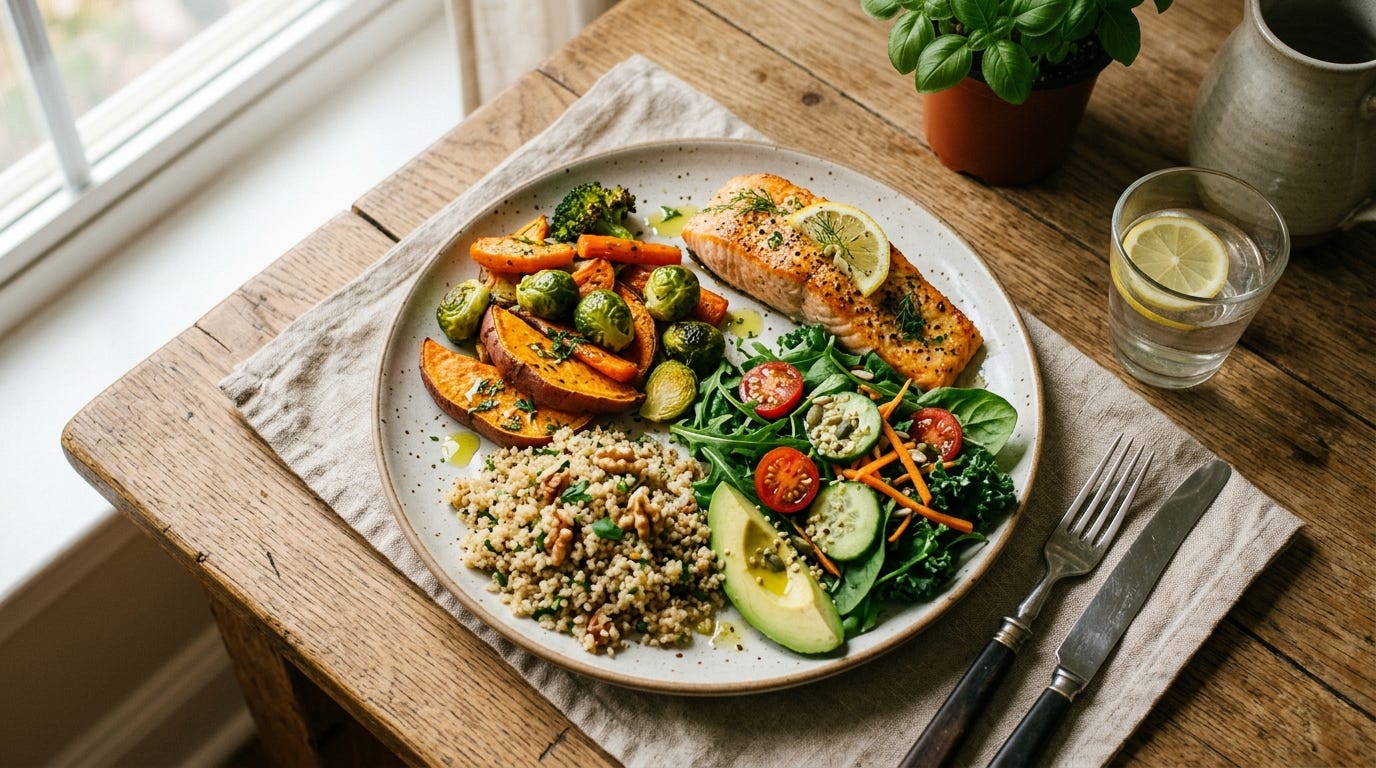
Your digestive system is responsible for breaking food down, absorbing nutrients, and interacting with your immune system, all at the same time.
When digestion is working efficiently, nutrients are absorbed more effectively, and your body can maintain a more balanced internal environment.
But when meals are harder to break down or processed too quickly, it can create more stress on the system.
Protein, carbohydrates, and fats all play different roles here. Protein provides the building blocks your body needs for repair. Carbohydrates supply energy, especially for the gut and brain. Fats help regulate how quickly food moves through digestion and support absorption of certain nutrients.
When these are combined in a balanced way, digestion tends to be more steady, and your body is better able to process and use what you’re eating.
Over time, that consistency can support a more stable gut environment and reduce the likelihood of ongoing low-grade inflammation.
Why Some Meals Create More Internal Stress

Certain meals can be more demanding for your body to process, especially when they are heavily refined, lack balance, or combine many ingredients in a way that slows digestion.
When food isn’t broken down efficiently, it can lead to fermentation in the gut, which may show up as bloating or discomfort. In some cases, partially digested food can also contribute to irritation along the gut lining.
There’s also a signaling component.
Your immune system is closely connected to your gut, and when digestion is off, it can shift how your body responds internally. Over time, that can contribute to patterns associated with inflammation, even if they’re subtle at first.
This is often why certain meals leave you feeling heavier, more fatigued, or less clear, even if they seemed fine on the surface.
What Supportive Meals Actually Look Like

Meals that support gut health and help regulate inflammation tend to include a few key elements working together.
A source of protein, such as fish, eggs, legumes, or high-quality meats, helps support repair and provides amino acids your body uses daily.
Carbohydrates from whole food sources, like vegetables, fruits, and properly prepared grains, provide energy while also bringing in fiber that supports digestion.
Healthy fats, such as olive oil, avocado, nuts, or seeds, help regulate digestion and support nutrient absorption.
Fiber, especially from a variety of plant sources, helps support a more balanced gut environment and contributes to overall digestive function.
Meals don’t need to be complex. Simple combinations that include these elements often work best.
What This Looks Like Day to Day

You might notice that certain meals leave you feeling lighter, with steady energy and minimal digestive discomfort. There’s less bloating, less heaviness, and your body feels like it’s working with you rather than against you.
Other meals can feel different.
Digestion may feel slower, there might be some discomfort or pressure, and energy can feel lower or less stable. Sometimes it’s subtle, just a general sense of feeling off after eating.
These patterns are useful feedback.
Over time, they can help you identify which meals are supporting your gut and which ones may be creating more strain.
Subtle Signs Your Meals Aren’t Supporting Gut Health

There are a few patterns that tend to show up when meals are harder for your body to process.
Bloating or discomfort after eating
Feeling heavy or sluggish after meals
Irregular digestion
Energy dips that don’t match how much you ate
Cravings that show up soon after meals
A general sense that meals aren’t leaving you feeling as good as they should
Individually, these can happen occasionally. When they show up consistently, they often point back to how meals are being built.
Simple Ways to Build More Supportive Meals

You don’t need to overhaul everything at once. Small adjustments tend to have the biggest impact over time.
Start by including a consistent source of protein in each meal to support repair and satiety.
Build meals around whole foods where possible, since they naturally include fiber and nutrients that support digestion.
Include healthy fats to help regulate digestion and improve nutrient absorption.
Keep meals relatively simple, especially if digestion feels sensitive. Fewer variables can make it easier for your body to process food efficiently.
Pay attention to how you feel after eating. That feedback can guide you toward what works best for your body over time.
Sample Meals That Support Gut Health and Reduce Inflammation
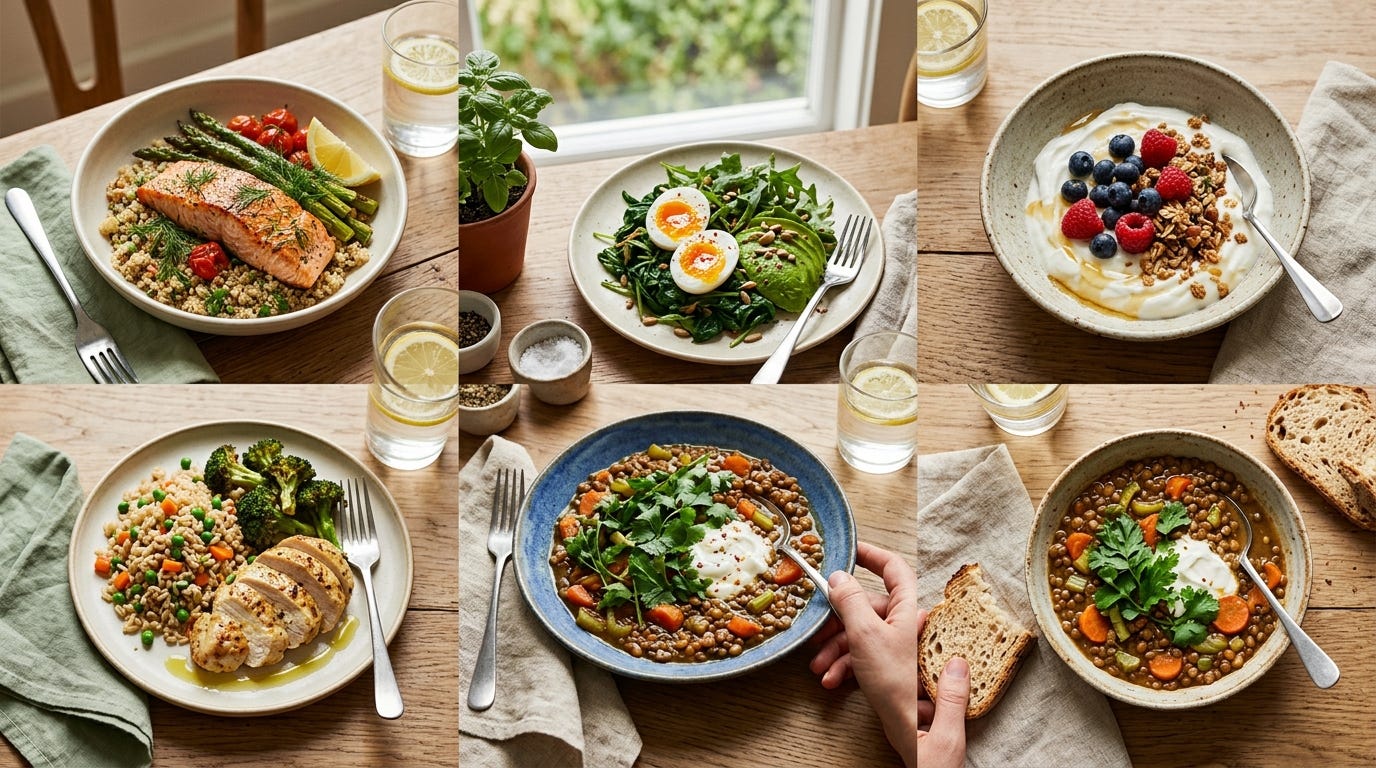
Simple meals tend to be the most effective when they combine protein, fiber, and healthy fats in a way that’s easy to digest.
Eggs with sautéed spinach and olive oil, with a side of berries
Grilled salmon with roasted vegetables and avocado
Chicken with rice, zucchini, and a drizzle of olive oil
Greek yogurt with chia seeds, walnuts, and blueberries
Lentils with cooked carrots, herbs, and olive oil
Ground beef with sweet potatoes and steamed greens
Oatmeal with flaxseeds, almond butter, and cinnamon
These types of meals are straightforward, but they tend to support digestion and provide more steady energy throughout the day.
Bringing It Together

Meals that support gut health and reduce inflammation are less about perfection and more about how consistently your body can process and use what you’re eating.
When digestion is supported, your body is better able to absorb nutrients, regulate internal processes, and maintain a more balanced state.
Over time, that can show up as better energy, clearer thinking, improved digestion, and a general sense of feeling more stable day to day.
If you want a more structured way to apply this,
Paid subscribers get:
Step-by-step gut support protocols
How to reduce inflammation through food and daily routines
Meal frameworks based on digestion and energy patterns
Clear signs your gut health is improving
You can upgrade below to access the full system.