

I. WHAT INFLAMMATION ACTUALLY IS
Inflammation Is a Protective Response
Inflammation is often described as something harmful, but in reality it is one of the body’s most important protective systems.
When tissues are injured or when the immune system detects infection, the body activates inflammatory signals to defend and repair itself.
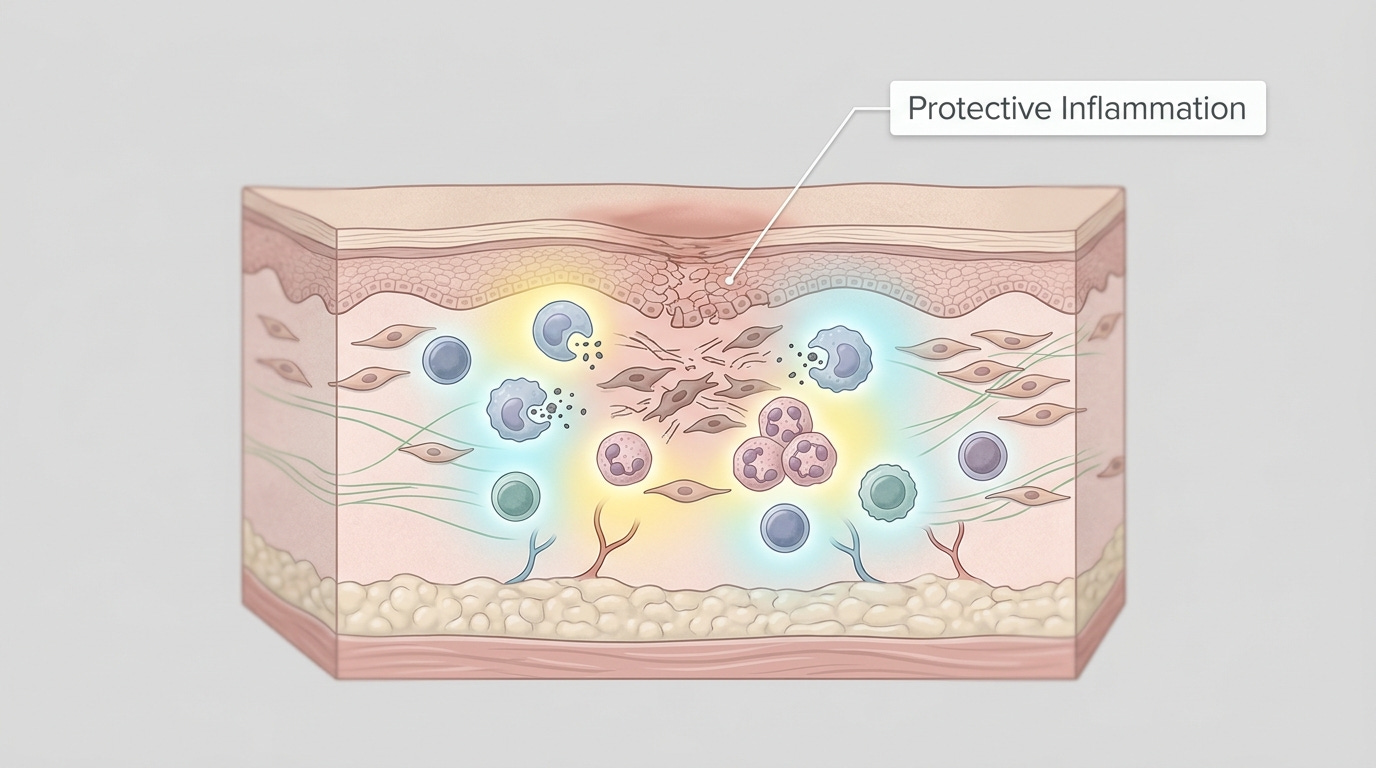
This response helps the body:
destroy harmful pathogens
remove damaged cells
begin tissue repair
coordinate immune activity
Without inflammation, even small injuries would struggle to heal.
When you cut your skin or strain a muscle, the redness, warmth, and swelling that appear are signs that the immune system has been activated to restore balance.
In this sense, inflammation is not a malfunction.
It is a controlled biological process designed to protect the body.
The challenge arises when inflammatory signals remain active longer than necessary.
Acute vs Chronic Inflammation
Inflammation exists in two general forms: acute and chronic.
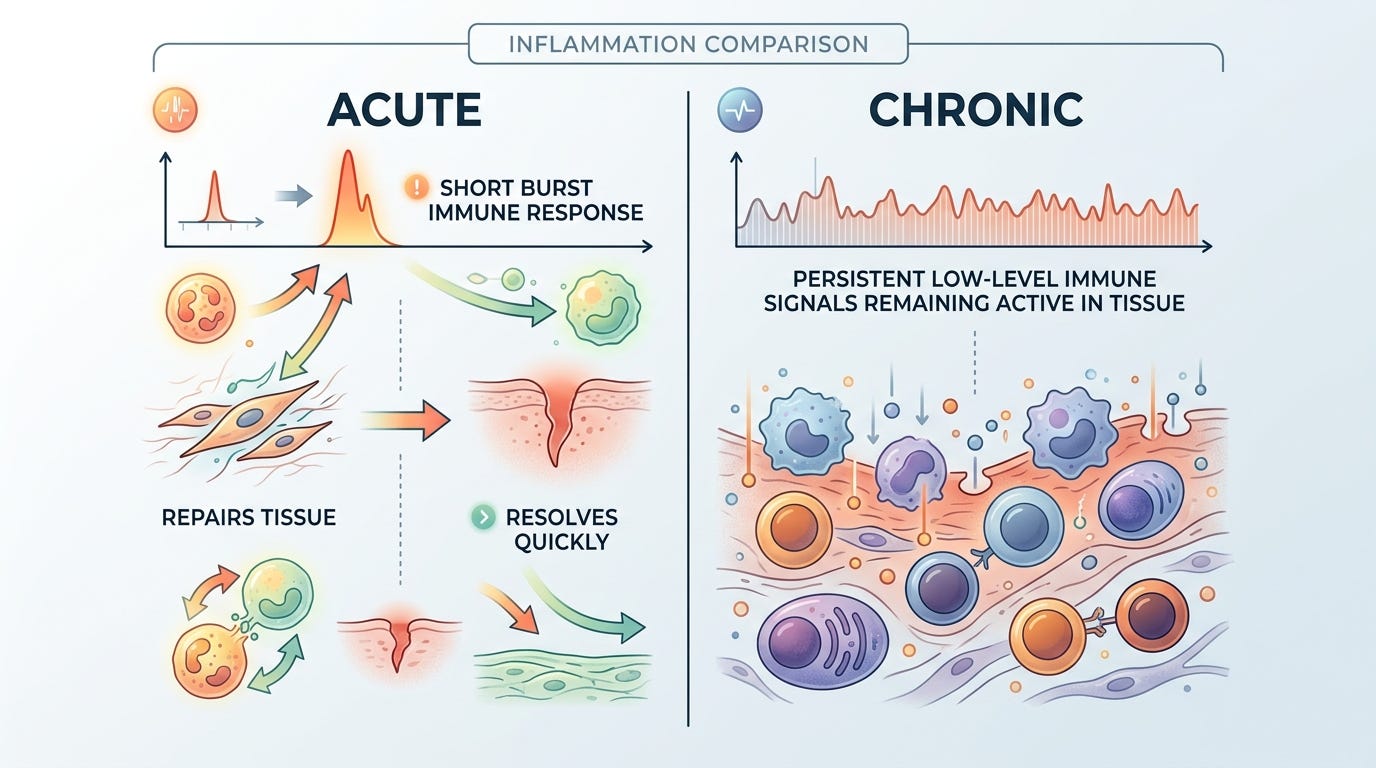
Acute inflammation is short-term and resolves once the threat has passed.
Examples include:
swelling around a wound
immune activation during infection
temporary inflammation after intense exercise
In these situations, the immune system activates quickly, removes the threat, and then reduces the inflammatory response once healing begins.
Chronic inflammation behaves differently.
Instead of appearing briefly and resolving, low-level inflammatory signals remain active over long periods.
This persistent activation can gradually influence many systems in the body.
Chronic inflammation has been associated with conditions affecting:
metabolism
cardiovascular health
digestive function
immune balance
Unlike acute inflammation, which is visible and temporary, chronic inflammation often develops quietly.
The Immune System and Inflammatory Signaling
Inflammation is coordinated through complex communication between immune cells and signaling molecules.
When the body detects stress, injury, or infection, immune cells release chemical messengers known as cytokines.
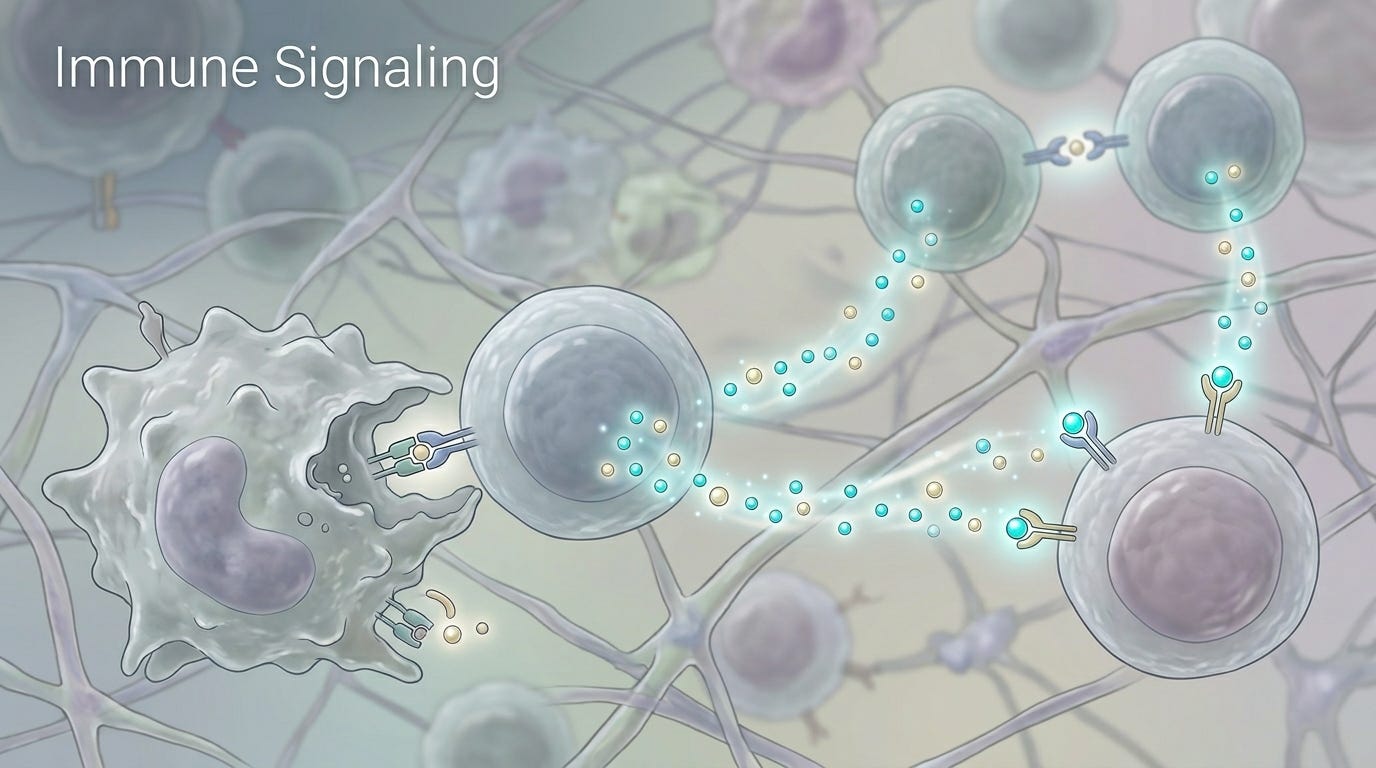
These signals help recruit additional immune cells to the affected area and coordinate the healing response.
Some cytokines increase inflammatory activity, while others help calm the response once the threat has been resolved.
This balance allows the immune system to respond quickly without remaining permanently activated.
When the regulatory signals that normally reduce inflammation become less effective, inflammatory activity may persist longer than intended.
The goal of improving inflammatory balance is not to eliminate this response.
Instead, the goal is to restore the immune system’s ability to activate and resolve inflammation appropriately.
Why Chronic Inflammation Develops
Chronic inflammation rarely develops from a single cause.
It usually emerges when several influences accumulate over time.
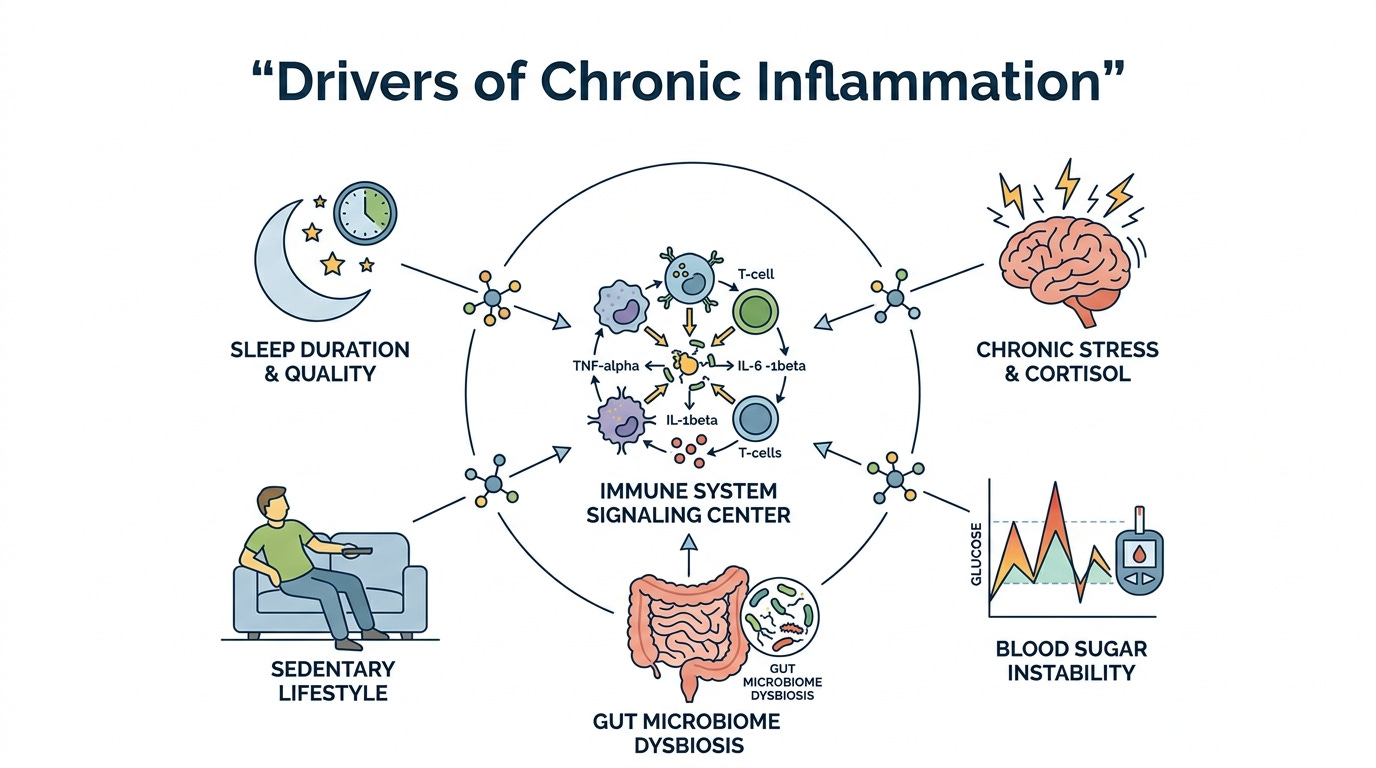
Factors that can influence inflammatory signaling include:
poor sleep quality
chronic psychological stress
blood sugar instability
low dietary fiber intake
environmental exposures
limited physical activity
When these factors persist, the immune system may begin maintaining a low level of inflammatory signaling even in the absence of injury or infection.
Over time, this background inflammatory state can influence metabolism, digestion, and energy regulation.
Because these signals develop gradually, many individuals may not immediately recognize the underlying cause.
