


Hi friends,
When people think about gut health, they often hear two words:
probiotics
prebiotics
They’re usually grouped together, but they’re not the same.

And more importantly, they don’t work the same on their own.
The gut works as a system.
And these two play different roles inside that system.
In Less Than 10 Minutes, We’ll Cover:
What probiotics and prebiotics actually are
How they work together inside the gut
Why taking one without the other often falls short
How this affects digestion, energy, and overall health
Simple ways to support both through food
Before we begin, a quick note for readers who want to go deeper,
If you value clear, research-informed explanations that focus on physiology rather than trends, consider upgrading to the paid subscription.
Your support allows us to continue publishing structured protocols, long-form guides, and practical frameworks designed to help you understand how your body actually works.
Here are our most recent premium articles:
What Probiotics Actually Do

Probiotics are living microorganisms.
They’re the bacteria that live in your gut and support processes like:
digestion
nutrient absorption
immune signaling
gut barrier function
You can get them from foods like:
yogurt
kefir
sauerkraut
kimchi
Or from supplements.
But adding bacteria alone doesn’t guarantee they stay.
What Prebiotics Actually Do

Prebiotics are types of fiber that feed those bacteria.
They act as fuel.
Without that fuel, many beneficial bacteria struggle to survive or grow.
Prebiotics are found in foods like:
garlic
onions
leeks
asparagus
bananas
oats
They don’t directly add bacteria.
They support the ones already there.
Why They Work Better Together
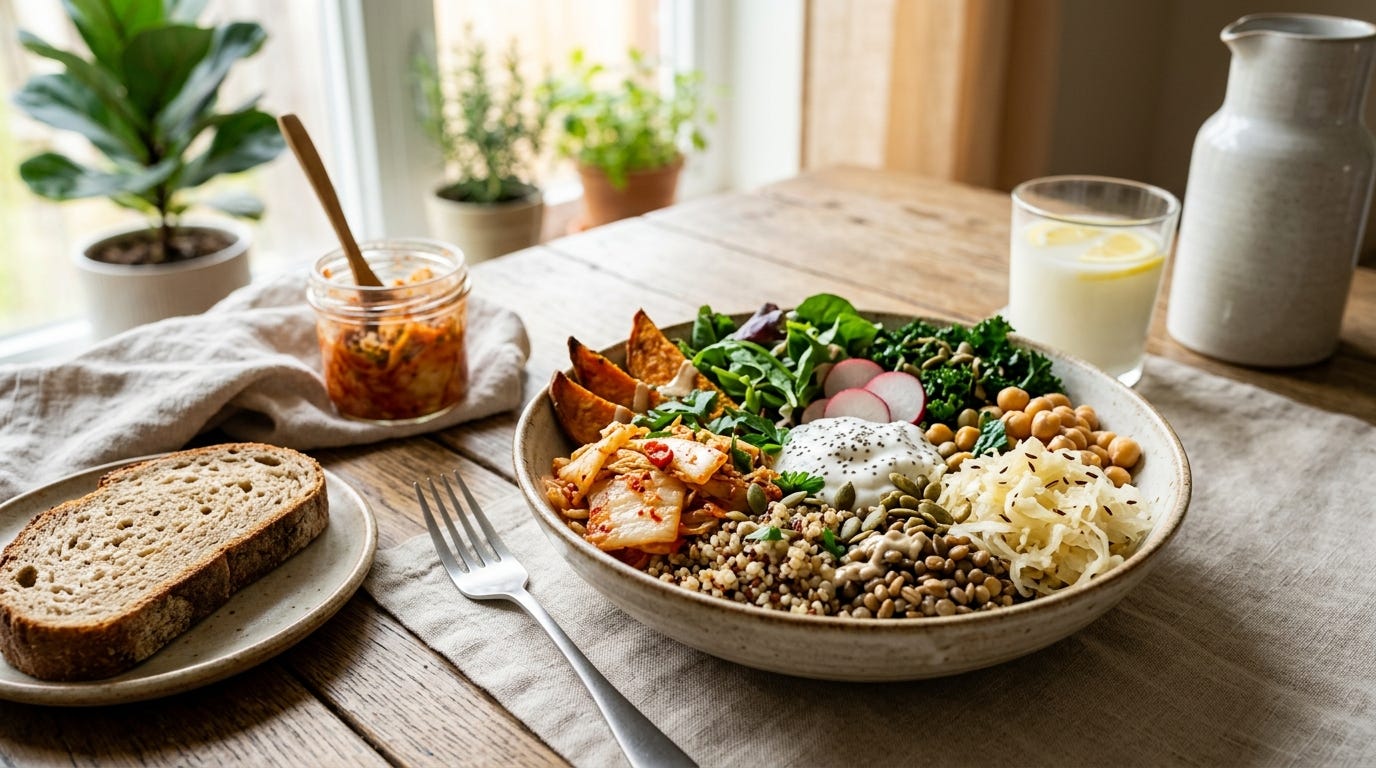
This is where the synergy comes in.
Probiotics introduce or support beneficial bacteria.
Prebiotics help those bacteria grow, function, and stay active.
Without prebiotics, probiotics may pass through without much long-term impact.
Without probiotics, prebiotics may not fully support the balance you’re looking for.
Together, they support:
microbial balance
short-chain fatty acid production
gut lining integrity
immune regulation
This is less about adding something in isolation and more about supporting a system.
How This Affects the Rest of the Body
The gut connects to more than digestion.

When this system is supported, it can influence:
energy levels
mental clarity
immune function
inflammation
nutrient absorption
When it’s off, you might notice:
bloating
irregular digestion
fatigue after meals
food sensitivities

The gut doesn’t operate in isolation.
It reflects and affects multiple systems at once.
Simple Ways to Support Both
You don’t need a complicated approach.

Start with consistency.
Include fermented foods a few times per week
Add fiber-rich, whole foods daily
Rotate your food choices to increase diversity
Eat in a relaxed state to support digestion
Some combinations naturally include both:
yogurt with fruit
oats with banana
rice with vegetables and fermented sides
These pairings help support both the bacteria and the environment they rely on.
Bringing It Together

Gut health isn’t about one ingredient or one supplement.
It’s about how different parts of the system work together.
When you support:
beneficial bacteria
their fuel source
your digestive environment
The system becomes more stable over time.
If you want a more structured approach…

Please consider upgrading to a paid tier to support us. You’ll also get access to our complete premium library, which includes:
step-by-step gut support protocols
how to identify patterns behind digestion issues
how food, timing, and stress affect the gut
daily routines that support long-term gut health
Here are our most recent premium articles: