

Hi friends,
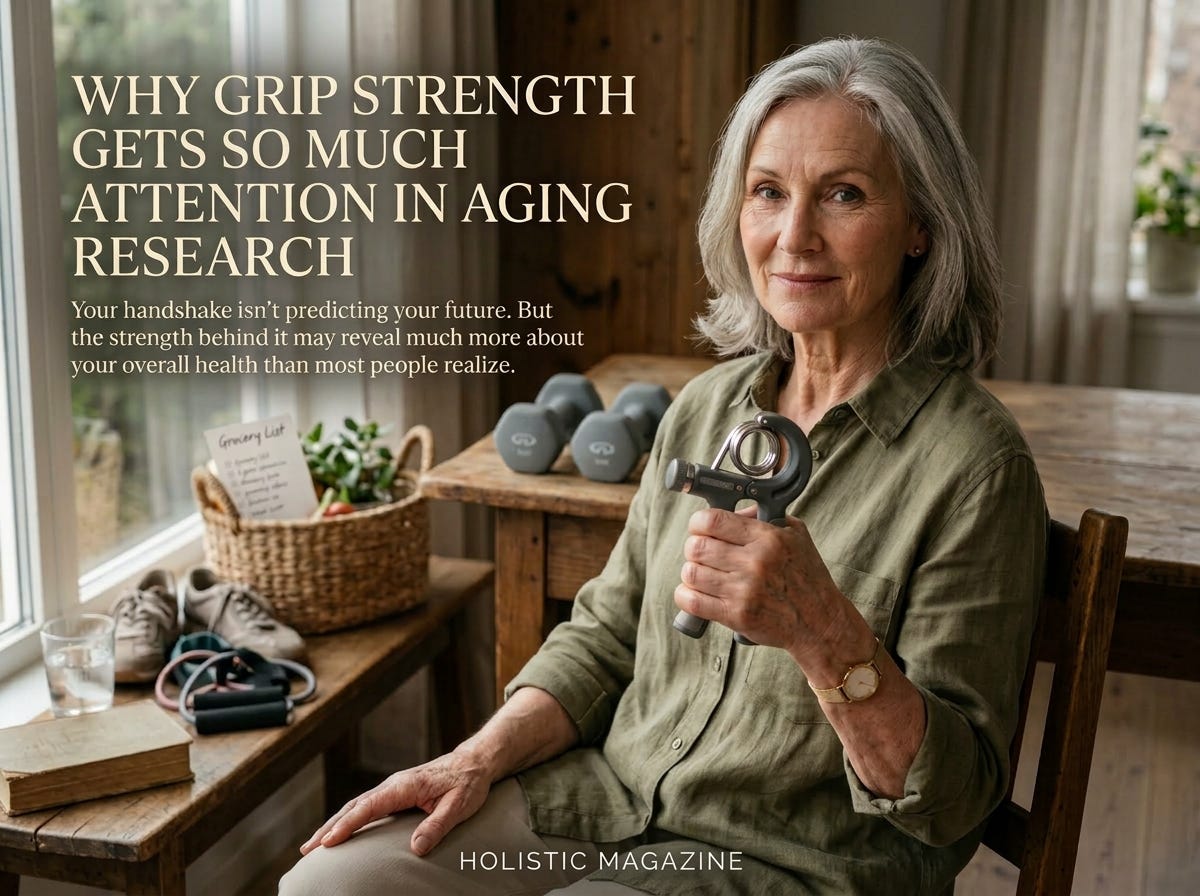
If you spend enough time reading research about healthy aging, you’ll eventually notice something strange. Researchers keep measuring people’s hands.
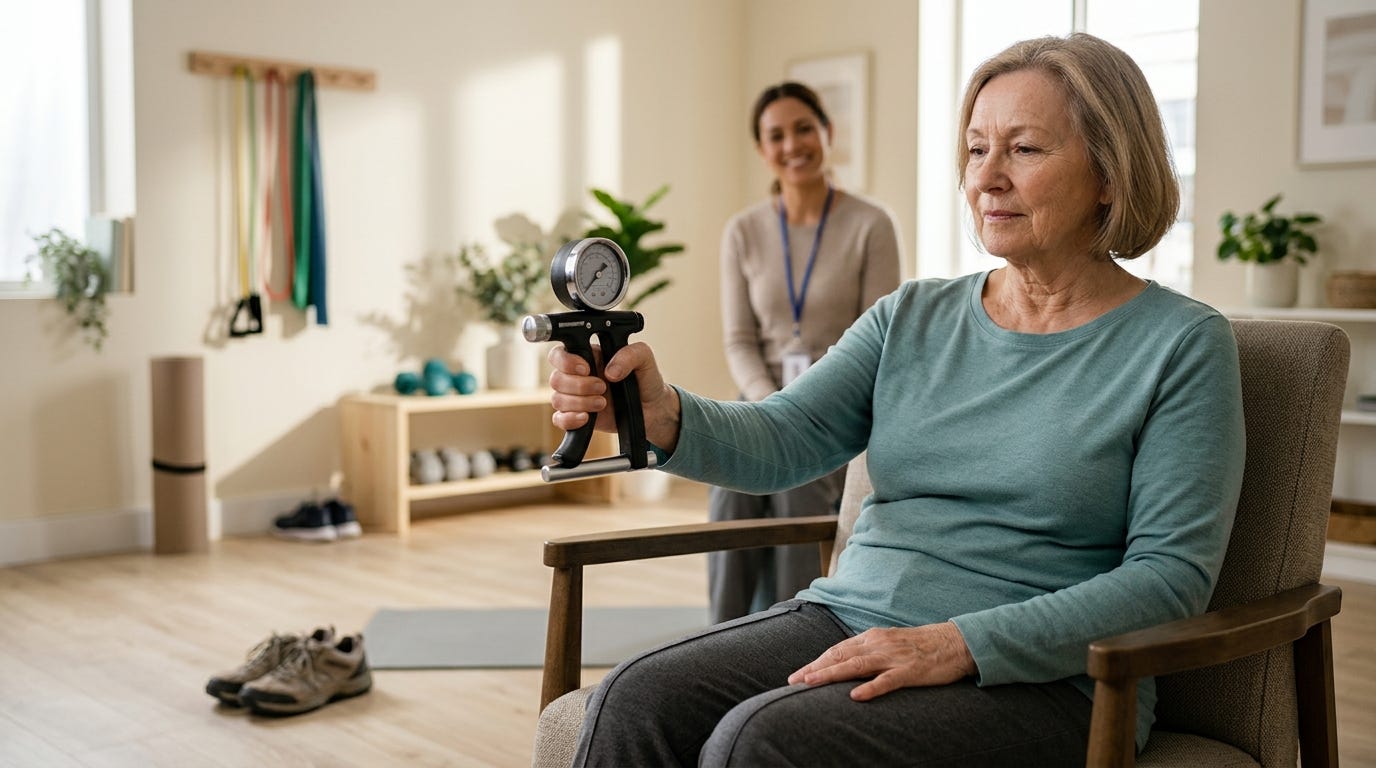
They give participants a small device called a handgrip dynamometer, ask them to squeeze as hard as they can, record the number, and then sometimes follow those people for years.
At first glance, it seems almost too simple. What could the strength of your hand possibly tell researchers about how well you’re aging?
Quite a lot, actually.
Grip strength has become one of the simplest ways researchers assess overall muscle function.
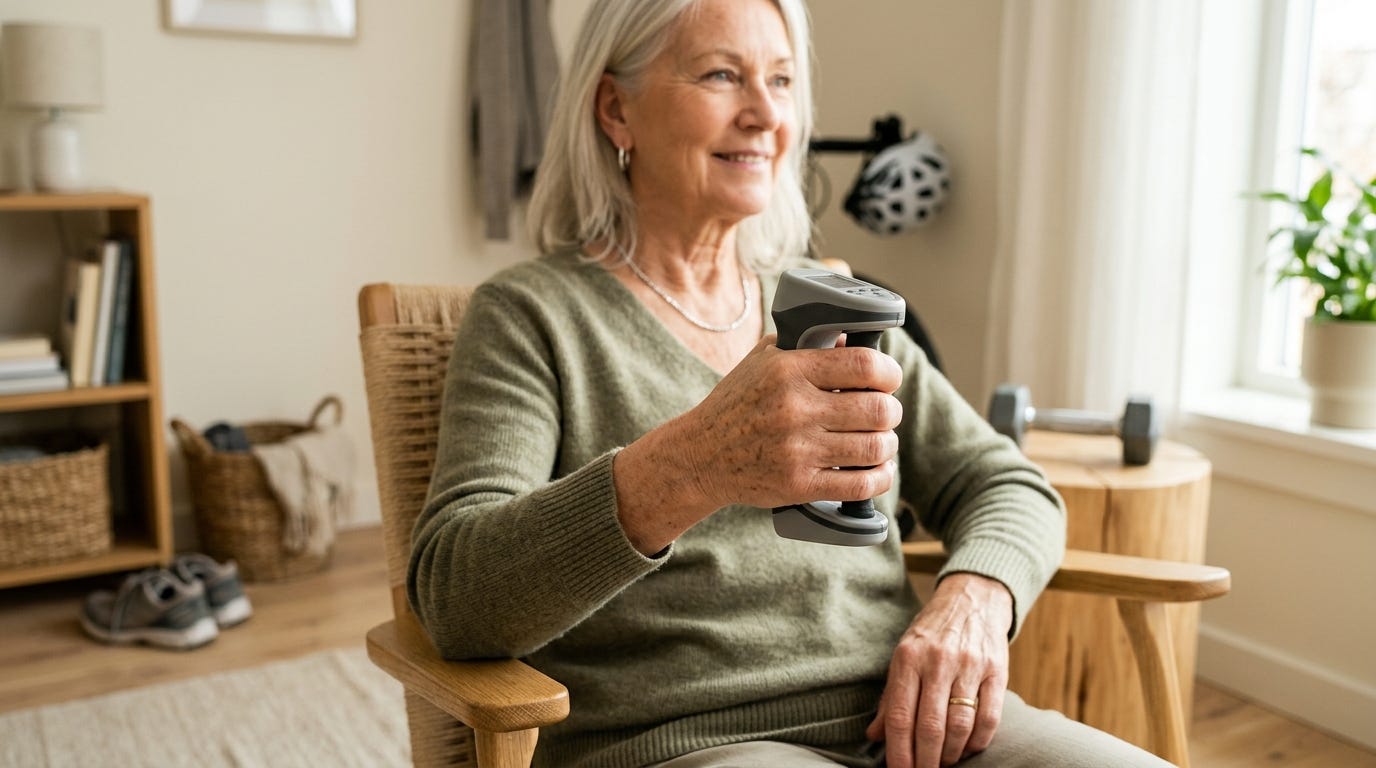
Lower grip strength has repeatedly been associated with poorer physical function, frailty, disability, and other unfavorable health outcomes as people age.
That doesn’t mean squeezing harder magically makes you live longer. Grip strength is better understood as a signal.
Your ability to generate force with your hand reflects much more than the muscles in your fingers. It depends on your muscles, nerves, coordination, nutritional status, activity level, and overall physical condition.
In other words, researchers aren’t really obsessed with your hands. They’re interested in what your hands may be telling them about the rest of your body.
Today, let’s look at why grip strength receives so much attention in aging research, what it can and cannot tell us, and what you can actually do to preserve strength as you get older.
In Less Than 10 Minutes, We’ll Cover
Why researchers measure grip strength,
What grip strength tells us about muscle health,
Why strength matters more than muscle size alone,
What sarcopenia has to do with aging,
Why muscle strength often declines with age,
Why grip strength is associated with long-term health outcomes,
Why you shouldn’t obsess over one number, and
How to preserve strength throughout the body.
Before we begin, a quick note for readers who want to go deeper…
If you enjoy practical wellness breakdowns that connect nutrition, physiology, and everyday habits without the wellness fluff, consider subscribing to Holistic Magazine.
Free subscribers receive structured, science-backed wellness articles each week, while paid subscribers receive our deeper protocols, advanced nutrition guides, meal systems, and premium wellness breakdowns.
Here’s what paid subscribers are reading right now:
Grip Strength Is Basically a Convenient Window Into Muscle Function
Imagine researchers wanted to measure the physical strength of thousands of people. They could have everyone perform squats, deadlifts, leg presses, pull-ups, or complicated strength assessments.
That would require large amounts of equipment, space, training, and time.
Or they could hand someone a small dynamometer and ask them to squeeze.
That simplicity is one of the biggest reasons grip strength is used so frequently. A handgrip test takes only seconds, is inexpensive, is relatively easy to standardize, and can be performed in clinics, hospitals, research facilities, and community settings.
Most importantly, grip strength tends to provide useful information about overall muscle strength and physical capability.
Your hands obviously aren’t identical to your legs, hips, back, or shoulders. But humans generally don’t lose strength in one isolated location while everything else remains completely unaffected.
When overall muscle function begins declining, that decline can often show up in measurable hand strength too.
That makes grip strength an incredibly practical screening tool.
Strength and Muscle Size Aren’t the Same Thing
One of the biggest shifts in aging research has been recognizing that simply measuring how much muscle someone has doesn’t tell the entire story.
Two people may have similar amounts of muscle tissue and very different levels of strength.
That is because strength depends on much more than muscle size. Your nervous system has to recruit muscle fibers, those muscle fibers have to generate force, your brain and muscles have to communicate efficiently, your joints have to move properly, your body needs adequate energy and nutrients, and you have to actually use your muscles frequently enough to maintain their function.
This helps explain why modern definitions of age-related muscle decline place so much emphasis on muscle strength, not simply muscle mass.
Muscle that cannot produce enough force is less useful regardless of how much of it appears on a scan. And ultimately, function is what matters.
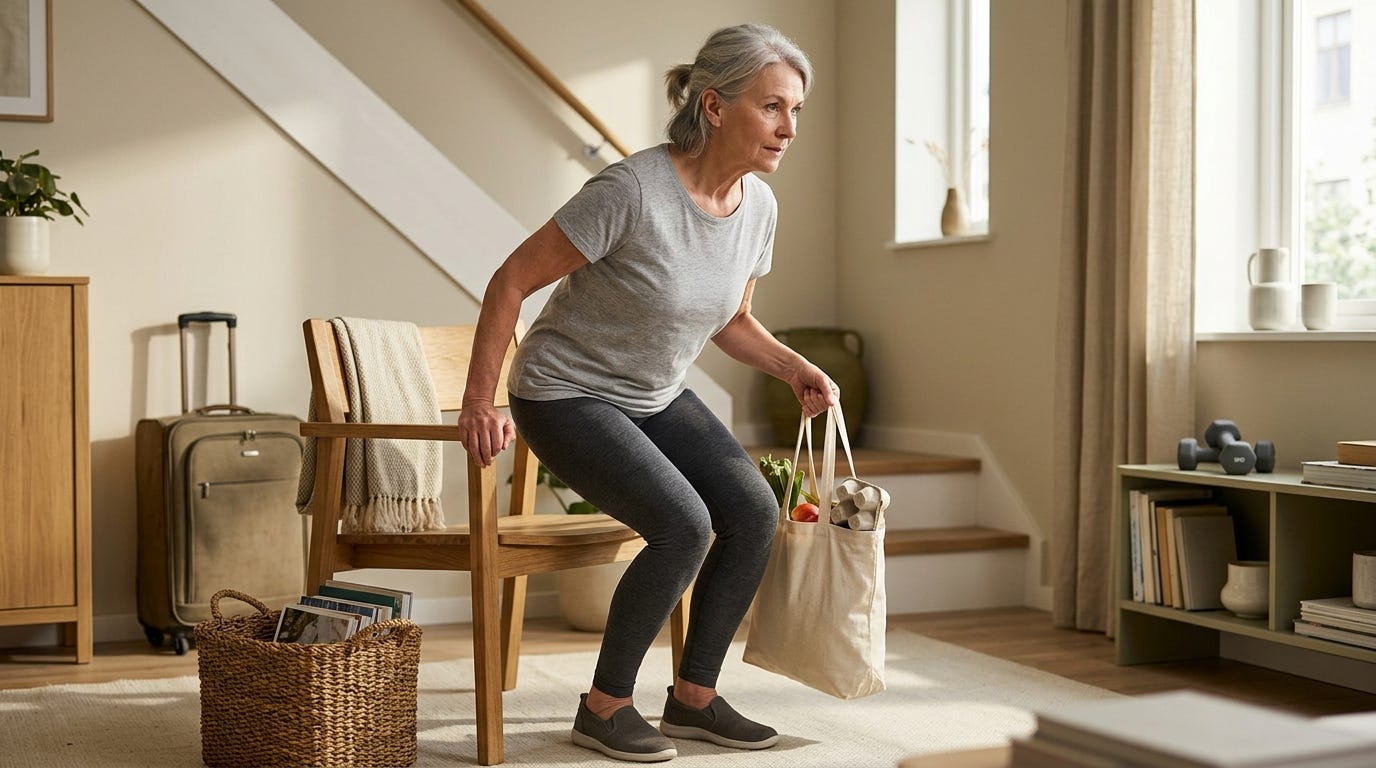
Can you get out of a chair easily? Carry your groceries? Climb stairs? Pick something heavy off the floor? Catch yourself when you stumble? Lift a suitcase? Open a stubborn jar?
Those everyday tasks depend heavily on your ability to generate force.
This Is Where Sarcopenia Comes In
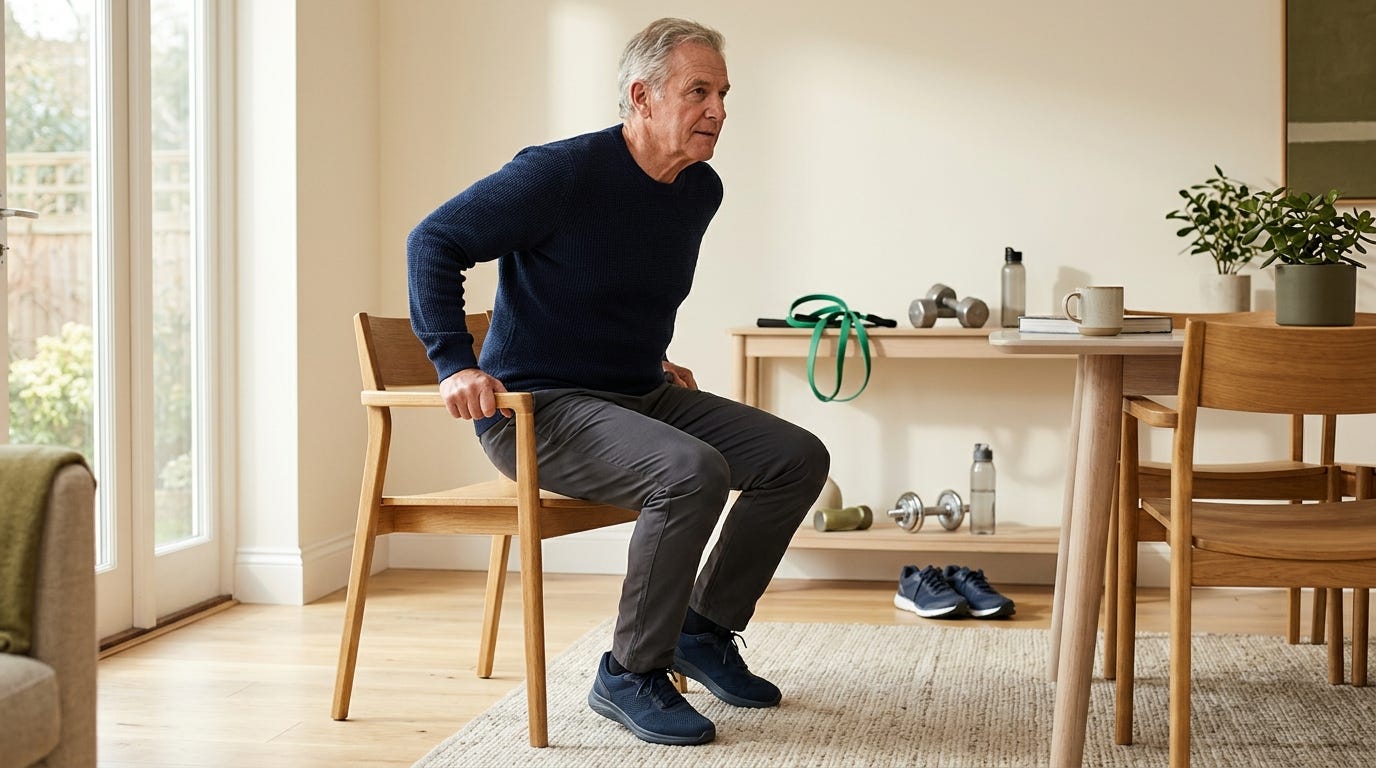
You’ll frequently encounter the word sarcopenia when reading about aging.
Sarcopenia refers to the progressive loss of muscle strength and muscle tissue that can occur with aging and disease.
For years, conversations about sarcopenia focused heavily on muscle mass. Researchers have since realized that strength may tell us even more about function.
Current European consensus guidelines on sarcopenia actually place low muscle strength at the center of identifying probable sarcopenia. Muscle quantity or quality can then be measured to help confirm it.
That distinction matters.
You could theoretically maintain a decent amount of muscle while still becoming considerably weaker. And weakness itself can have enormous consequences as you get older.
Why Losing Strength Matters So Much
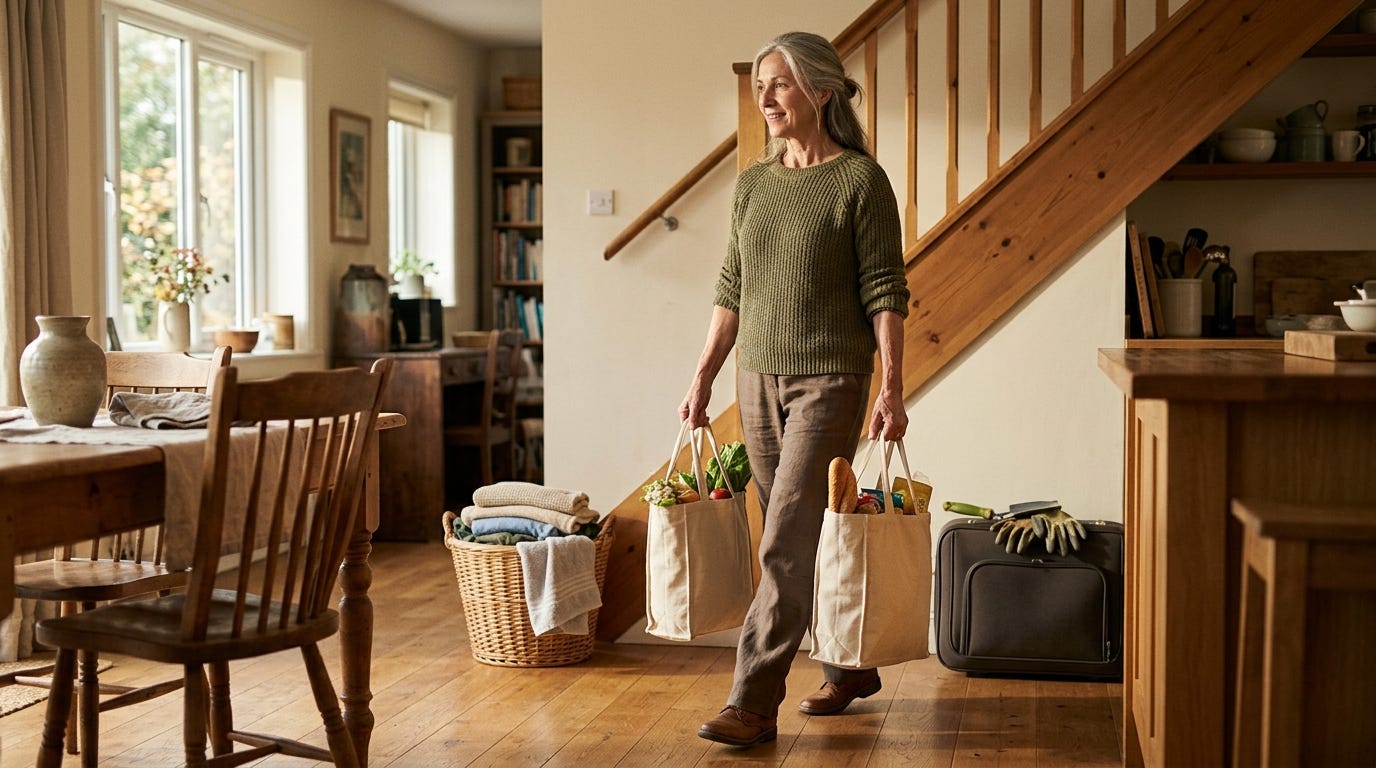
Think about what strength allows you to do throughout an ordinary day.
Standing up requires strength. Walking uphill requires strength. Getting out of the bathtub requires strength. Carrying groceries requires strength. Moving furniture requires strength. Catching your balance requires strength.
Even remaining independent often depends partly on having enough physical reserve to perform tasks when life becomes unexpectedly demanding.
That reserve becomes increasingly important with age.
You don’t want to maintain exactly enough strength to get out of a chair today. Ideally, you want enough additional capacity that illness, injury, inactivity, or normal aging doesn’t immediately push you below the threshold required for everyday activities.
That is one reason researchers pay so much attention to declining strength.
Strength gives your body physical margin.
And having more physical margin becomes increasingly valuable as you get older.
Grip Strength Has Been Linked With Long-Term Health Outcomes

This is where grip-strength research becomes particularly interesting.
Large observational studies have repeatedly found associations between lower grip strength and higher risks of unfavorable outcomes, including disability and mortality.
One major systematic review examining physical capability found that people with weaker grip strength generally had higher subsequent mortality than people with stronger grip strength.
But there’s an incredibly important distinction here.
Association does not mean that weak hands are causing these outcomes.
Your grip probably isn’t controlling your lifespan.
Instead, grip strength may capture information about several underlying systems at the same time.
Someone who maintains strength into older age may also have maintained more muscle, remained more physically active, avoided prolonged periods of inactivity, maintained better neurological function, consumed adequate nutrition, and experienced fewer illnesses that reduce physical capacity.
That is why grip strength is better viewed as a biomarker of physical function rather than some magical longevity trick.
The number gives researchers information. It doesn’t tell the entire story.
Your Nervous System Is Part of the Story Too
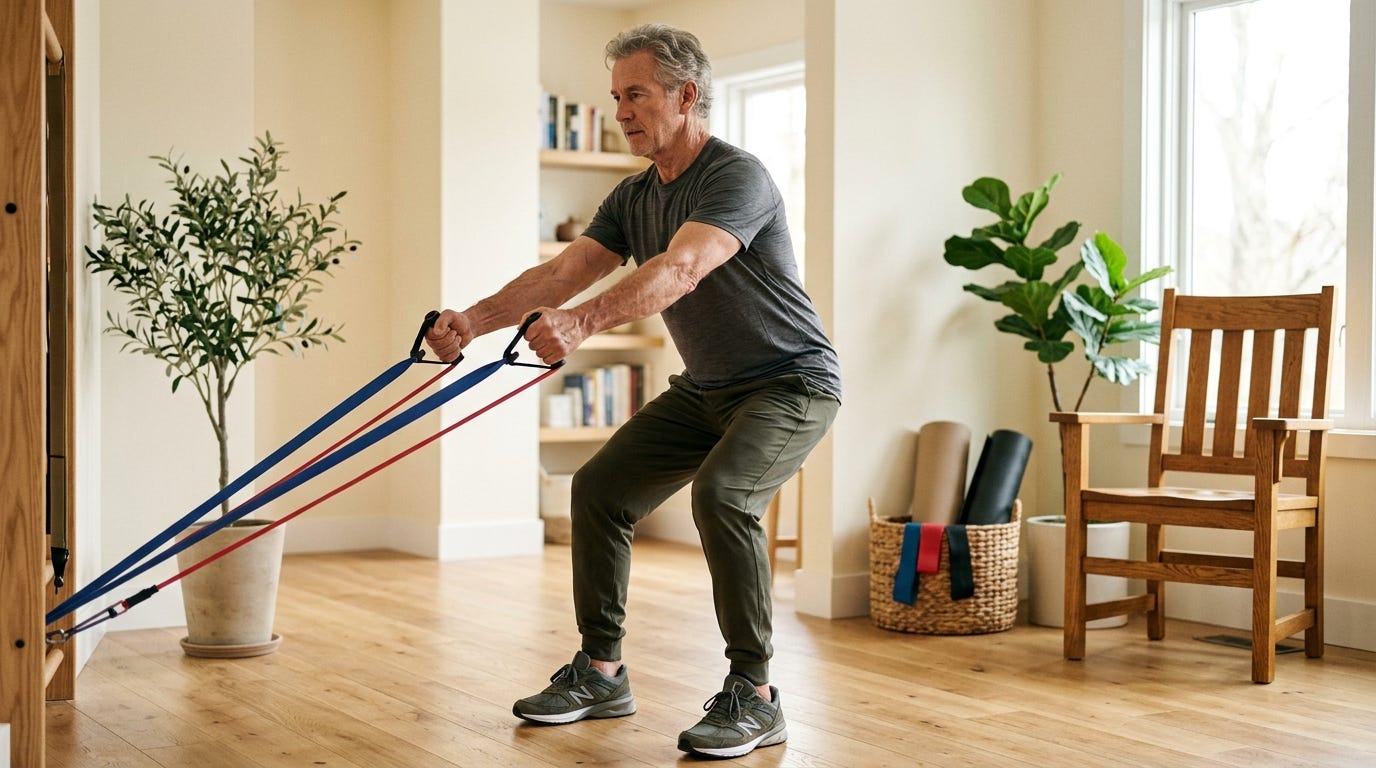
When most people think about strength, they picture muscle.
But every strong muscular contraction begins with the nervous system.
Your brain sends signals through nerves, motor neurons activate muscle fibers, and those fibers coordinate to generate force.
Strength therefore reflects both the muscle itself and your ability to recruit that muscle.
This becomes increasingly relevant as we age because age-related changes occur throughout the neuromuscular system.
Motor units can change, muscle fibers can shrink, fast-twitch muscle fibers may be particularly vulnerable, physical inactivity reduces the demand placed on those systems, and periods of illness or bed rest can accelerate losses surprisingly quickly in older adults.
That is another reason strength testing gives researchers information that simply measuring body weight cannot.
Someone may weigh exactly the same while their physical capability changes considerably.
Strength Often Declines Before We Notice It
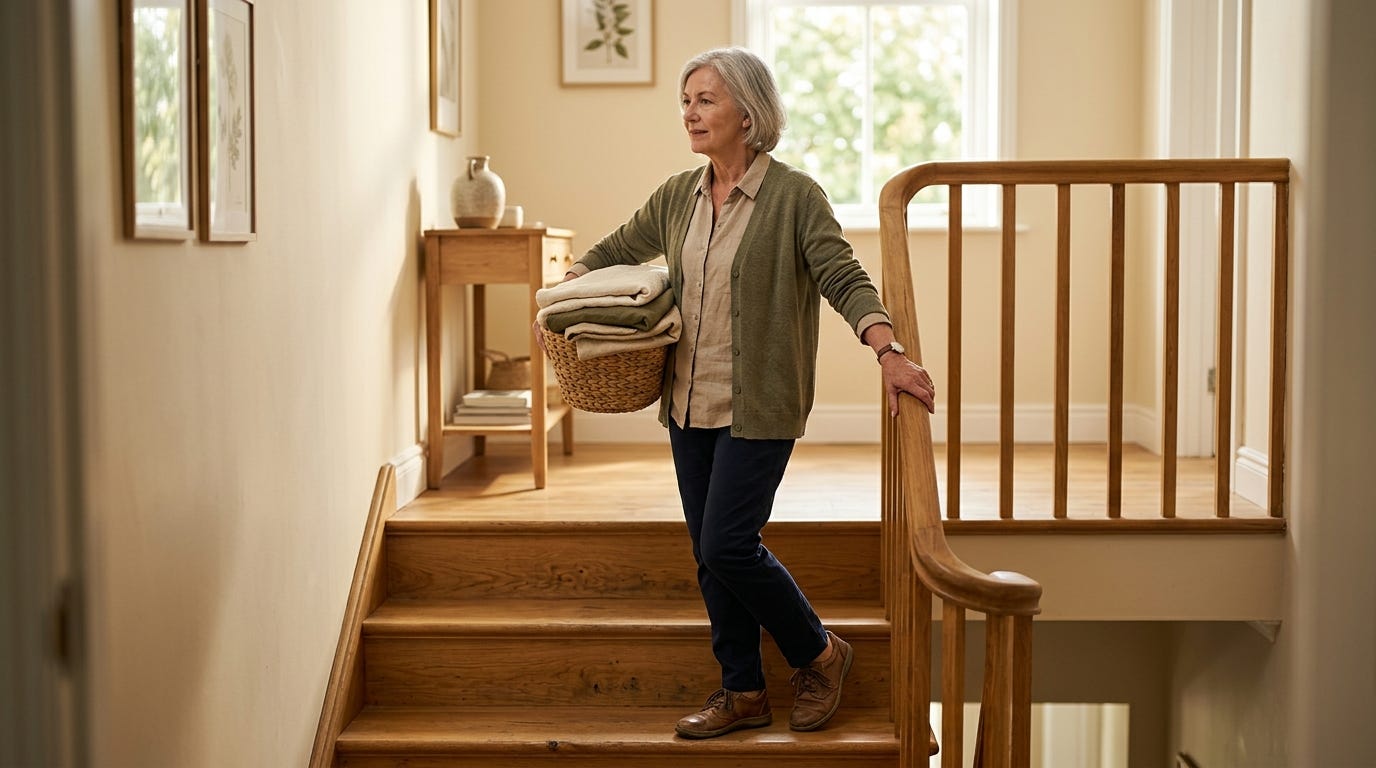
Muscle decline usually isn’t dramatic.
You don’t wake up one morning suddenly unable to carry your groceries.
Instead, everyday life gradually becomes easier to structure around weakness.
Maybe you stop carrying everything upstairs in one trip. You use the railing more often. You choose the elevator. You ask someone else to open the jar. You avoid lifting heavier objects. You stop getting down on the floor because standing back up feels awkward.
None of those changes necessarily seem significant by themselves.
But collectively they can signal declining physical capacity.
This gradual nature is precisely why simple measurements such as grip strength, walking speed, or chair-stand performance are useful.
They can turn something subjective like, “I feel a little weaker than I used to,” into something measurable.
But Don’t Obsess Over a Single Grip-Strength Number
This deserves emphasis.
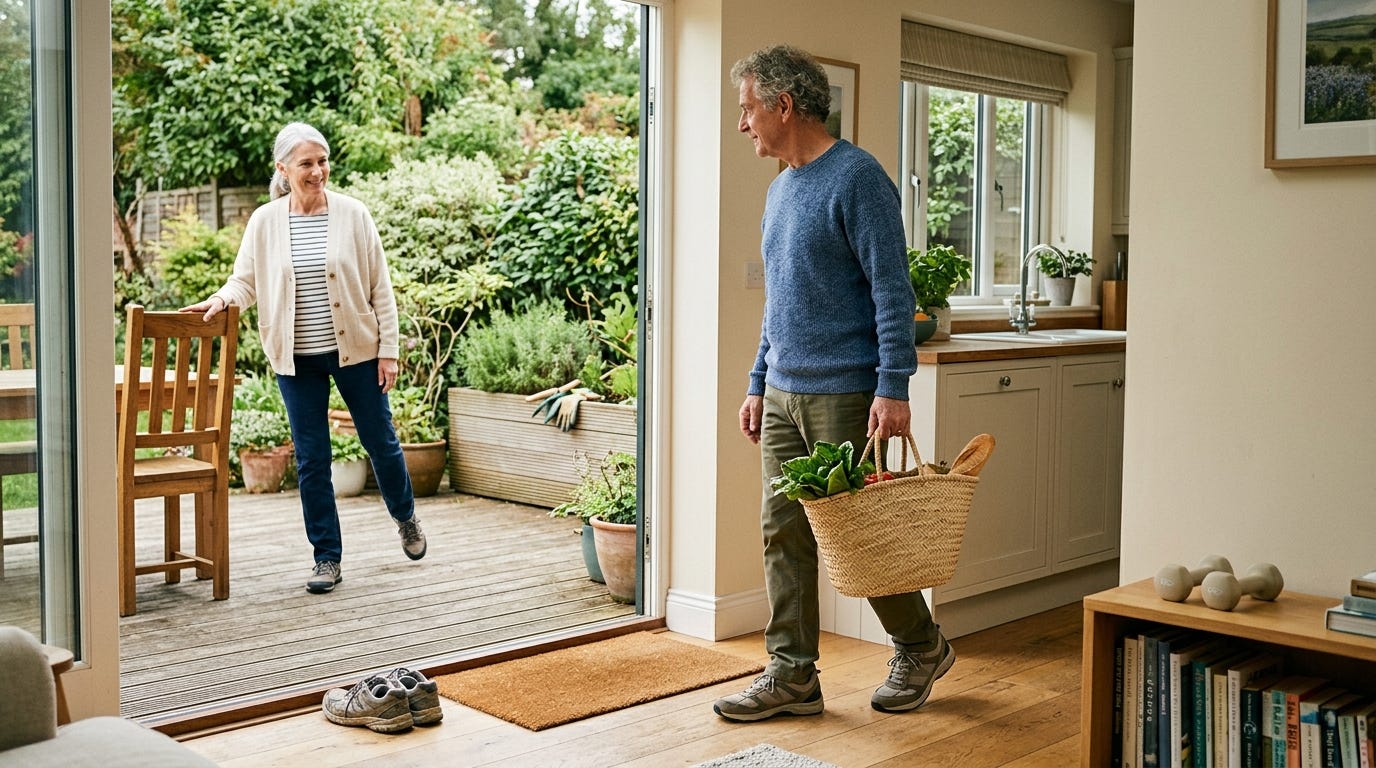
Grip strength varies between people. Age matters. Sex matters. Body size matters. Hand size matters. Injuries matter. Arthritis matters. Neurological conditions matter. Even testing technique matters.
Researchers use standardized testing procedures and reference values because simply comparing yourself with your neighbor doesn’t tell you very much.
And grip strength is only one measure of physical function.
Walking speed, balance, chair stands, mobility, cardiovascular fitness, and lower-body strength all provide useful information too.
A strong grip with poor balance and weak legs doesn’t suddenly equal perfect physical health.
Think of grip strength like one instrument on the dashboard.
Useful? Absolutely.
The entire car? Not even close.
The Bigger Goal Is Whole-Body Strength
Here is probably the most important takeaway from the entire conversation.
You don’t need to spend your life squeezing grip trainers because researchers discovered an association between grip strength and aging.
The larger goal is preserving functional strength throughout your body.
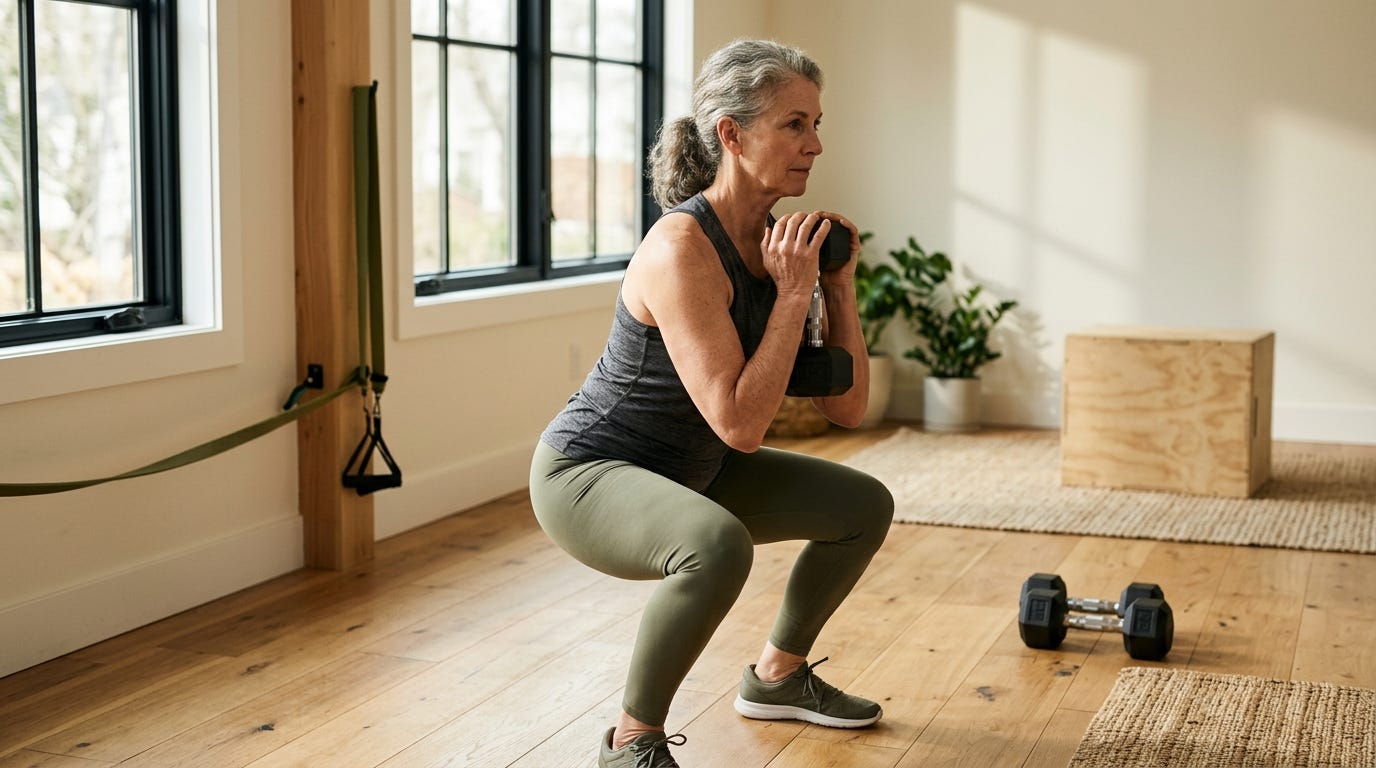
That means training your legs, hips, back, shoulders, arms, core, and yes, your hands and forearms too.
Resistance training is one of the most direct ways to challenge these systems.
Squats train your legs and hips. Rows train your back and grip. Farmer carries challenge your grip, shoulders, core, and gait simultaneously. Deadlift variations train your posterior chain and grip. Push-ups train your upper body and trunk. Step-ups train the muscles involved in climbing stairs.
Even carrying heavy grocery bags provides a small real-world strength challenge.
You don’t necessarily need complicated equipment.
You simply need to keep giving your muscles reasons to remain strong.
Your Hands Still Deserve Some Attention

Although grip strength mostly interests researchers because of what it tells us about the larger body, your hands themselves are still incredibly important.
Think about how many everyday activities depend on them.
Carrying bags, opening containers, cooking, gardening, using tools, holding onto railings, picking up children or grandchildren, lifting weights, and opening doors all require grip strength.
Your grip connects you with the physical environment around you.
And many excellent whole-body exercises naturally strengthen grip anyway.
Carrying dumbbells, hanging from a bar, doing rows, lifting weights, carrying groceries, gardening, and using hand tools all challenge your hands and forearms while also training other parts of the body.
You don’t have to turn grip training into an obsession.
Just keep using your hands for challenging things.
Protein Matters, But So Does Using It
Muscle tissue requires amino acids.
That makes adequate dietary protein increasingly important when the goal is maintaining muscle.
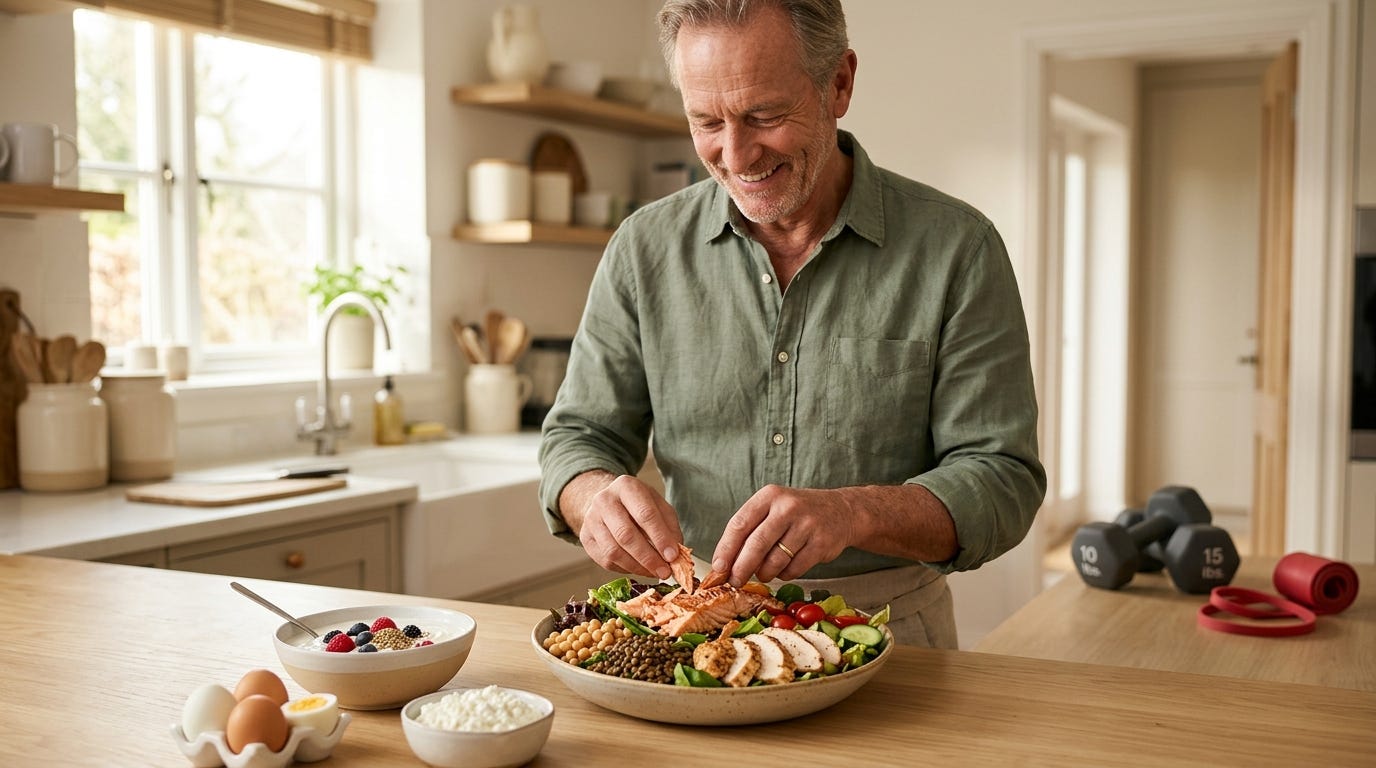
Foods such as eggs, Greek yogurt, cottage cheese, fish, meat, poultry, beans, lentils, and other protein-rich foods can all contribute.
But protein alone cannot replace resistance training.
Think of nutrition as supplying building materials.
Exercise provides the signal telling your body those materials are needed.
The combination matters.
Adequate food without muscular challenge gives your body relatively little reason to maximize strength. Constant exercise without adequate nutrition makes recovery and tissue maintenance more difficult.
Healthy aging works best when those pieces support each other.
Movement Throughout the Day Matters Too
Formal exercise receives most of the attention, but everyday movement matters enormously.
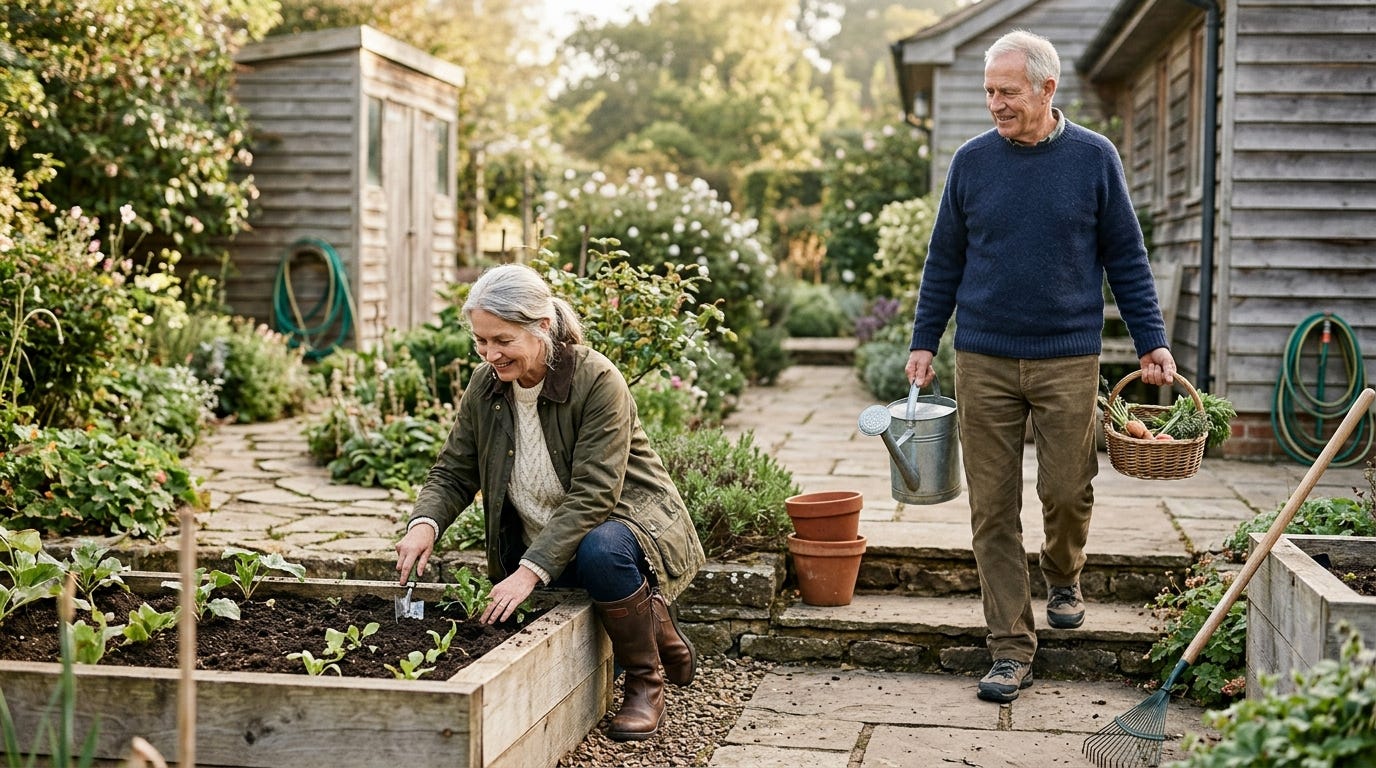
Walking, taking the stairs, gardening, cleaning, carrying groceries, standing up frequently, playing with children, and doing household projects all require your body to produce force.
The opposite pattern—sitting for most of the day and exercising briefly once in a while—still leaves large portions of the day physically inactive.
Your muscles respond to what you repeatedly ask them to do.
If you keep asking them to work, they have a reason to maintain capacity.
If you rarely challenge them, your body has less reason to preserve metabolically expensive tissue and strength.
You’re Building Physical Reserve for Your Future Self
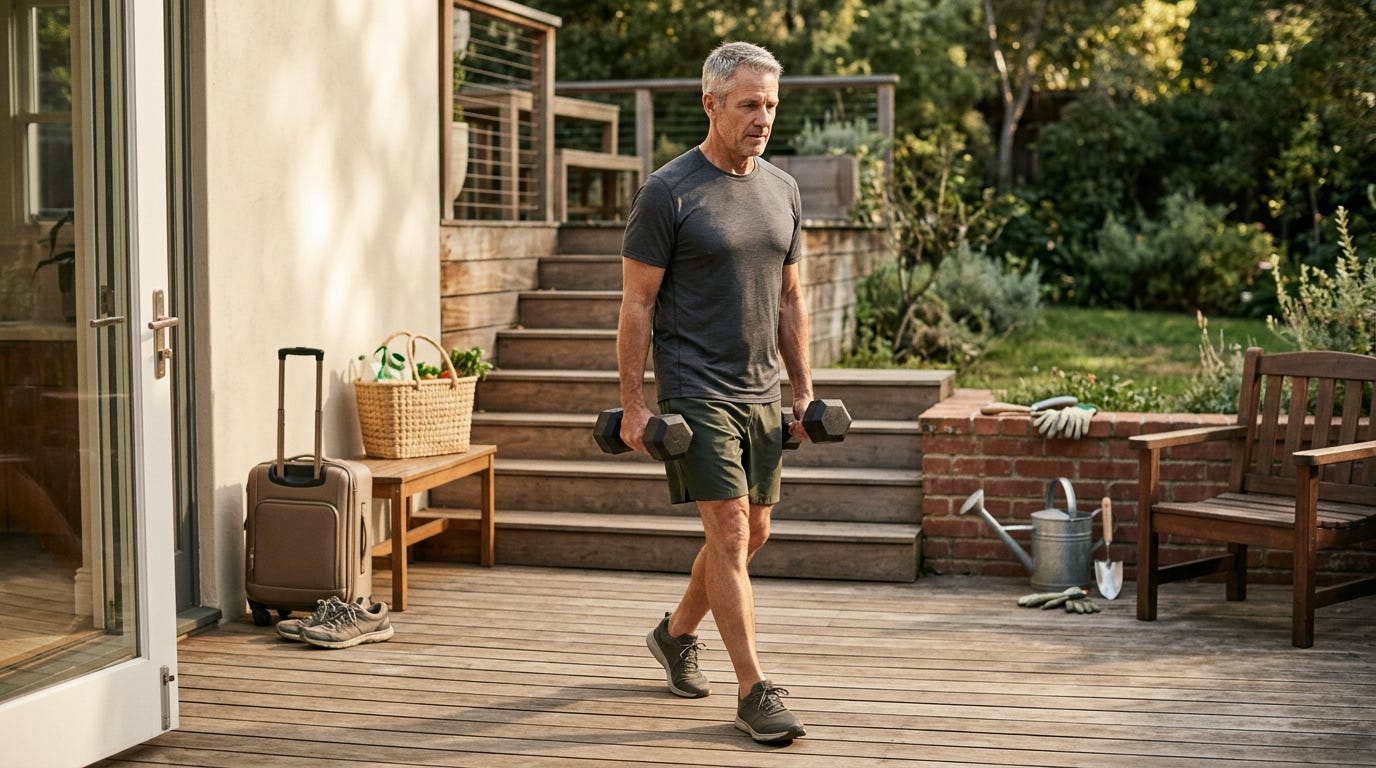
This may be the most useful way to think about strength.
Resistance training isn’t simply about looking muscular today.
You are building reserve capacity.
Imagine you enter older age with substantially more strength than you need for everyday tasks.
Normal age-related decline can occur and you may still remain comfortably above the level required for independence.
But if you enter older age already close to that minimum threshold, even relatively modest declines can become meaningful.
That makes muscle similar to many other aspects of health.
Having some reserve gives you room to absorb setbacks.
Illness happens. Injuries happen. Travel happens. Busy periods happen. Weeks of reduced activity happen.
Building strength before you desperately need it gives your body more room to handle those interruptions.
Grip Strength Is Interesting Because It Represents Something Bigger
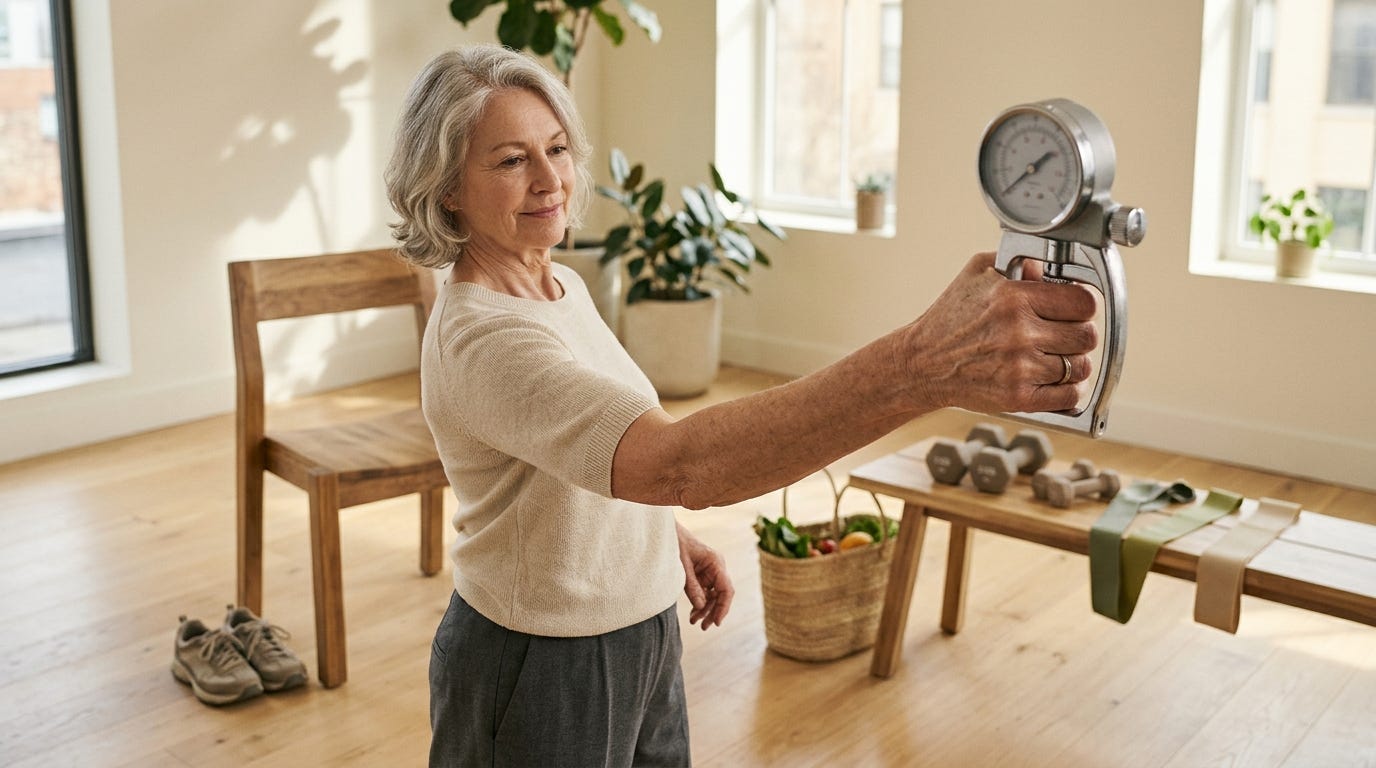
Researchers aren’t measuring grip strength because humans need extraordinary hand strength to live long lives.
They measure it because it provides a remarkably simple glimpse into something much larger.
Your capacity to generate force.
And your capacity to generate force affects almost every physical task required for independence.
Grip strength reflects muscle, neurological function, activity, and physical reserve.
And because it takes only seconds to measure, researchers can use it across enormous populations.
That combination makes it unusually valuable.
Bringing It Together

There’s nothing magical about squeezing a dynamometer.
Grip strength won’t tell you exactly how long you’ll live, whether you’re healthy, or what your future will look like.
But it does provide researchers with an incredibly simple measurement of physical capability.
And decades of research have taught us something important:
Strength matters as we age.
Not simply bigger muscles. Not simply lower body fat. Not simply what the scale says.
The ability to generate force matters. The ability to stand up matters. The ability to carry things matters. The ability to catch yourself matters. The ability to move your own body confidently matters.
So instead of obsessing about having the strongest handshake in the room, focus on the larger message behind the research.
Walk, carry things, lift weights, train your legs, use your hands, eat enough protein, keep challenging your muscles, and build as much physical reserve as you reasonably can while you have the opportunity.
Your grip is simply one small window into something much bigger: your ability to remain strong, capable, and independent as you age.