

I. UNDERSTANDING HOW FOOD PREPARATION CHANGES NUTRITION
Food Preparation Is Part of Nutrition
Nutrition is often described in terms of what you eat.
We talk about protein, fiber, vitamins, minerals, healthy fats, carbohydrates, fruits, vegetables, and whole grains.
But there is another part of nutrition that receives far less attention.
How you prepare your food.
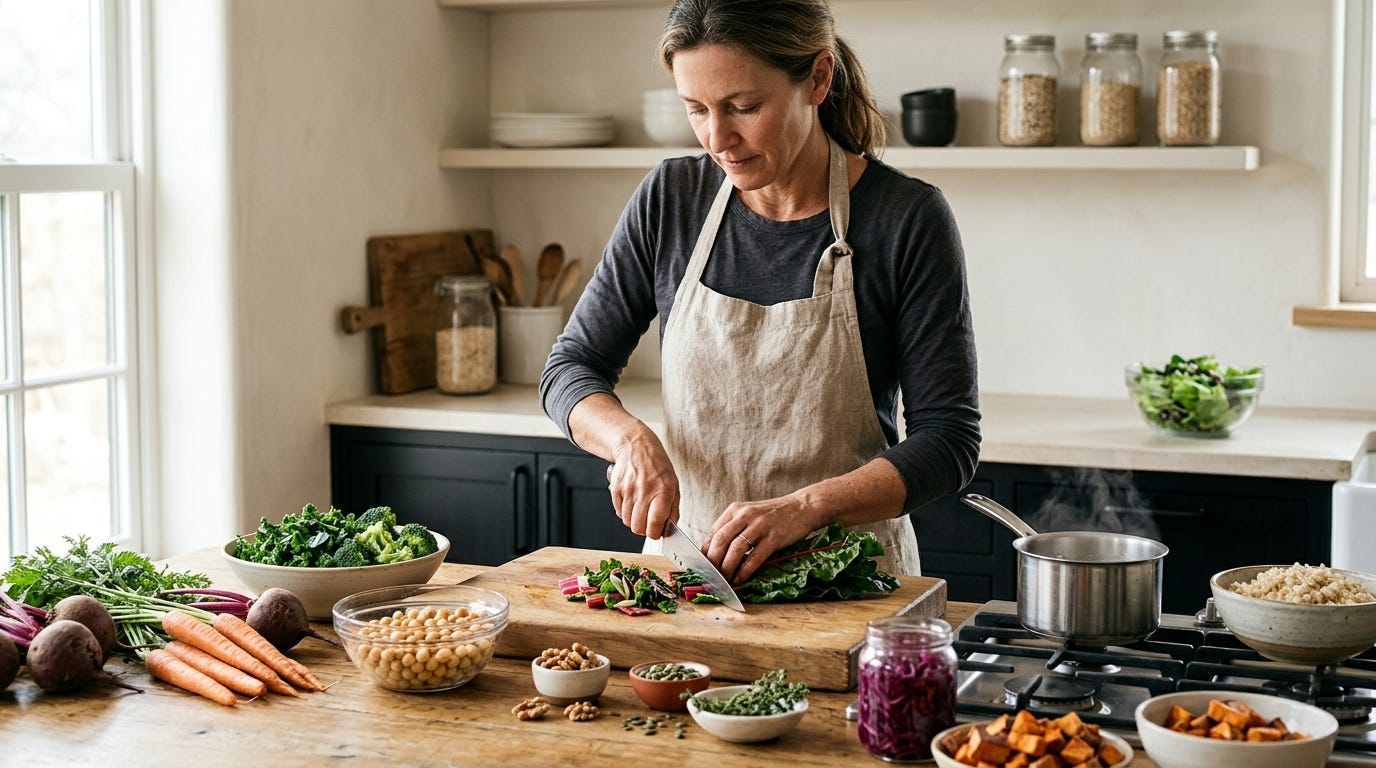
The same ingredient can behave differently depending on whether it is eaten raw, steamed, boiled, roasted, soaked, fermented, chopped, ground, or cooled after cooking.
Food preparation changes the physical structure of food.
Heat can soften plant tissues and alter proteins and starches.
Chopping can bring naturally occurring enzymes into contact with other compounds.
Soaking can change the properties of grains, beans, nuts, and seeds.
Fermentation can transform carbohydrates and other components through microbial activity.
Cooling certain cooked starches can increase the formation of resistant starch.
Combining foods can also influence how well certain nutrients and plant compounds are absorbed.
This does not mean one preparation method is always better than another.
Raw foods can provide valuable nutrients and plant compounds.
Cooked foods can make certain nutrients easier to access.
Different methods simply create different nutritional outcomes.
The goal of this guide is not to make food preparation complicated.
Instead, it is to help you understand what happens to food in the kitchen so you can make simple choices that improve variety, flavor, digestibility, and overall nutritional quality.
Throughout this guide, we’ll explore practical ways to prepare everyday foods while getting the most value from the ingredients you already eat.
What Happens to Food When You Prepare It?
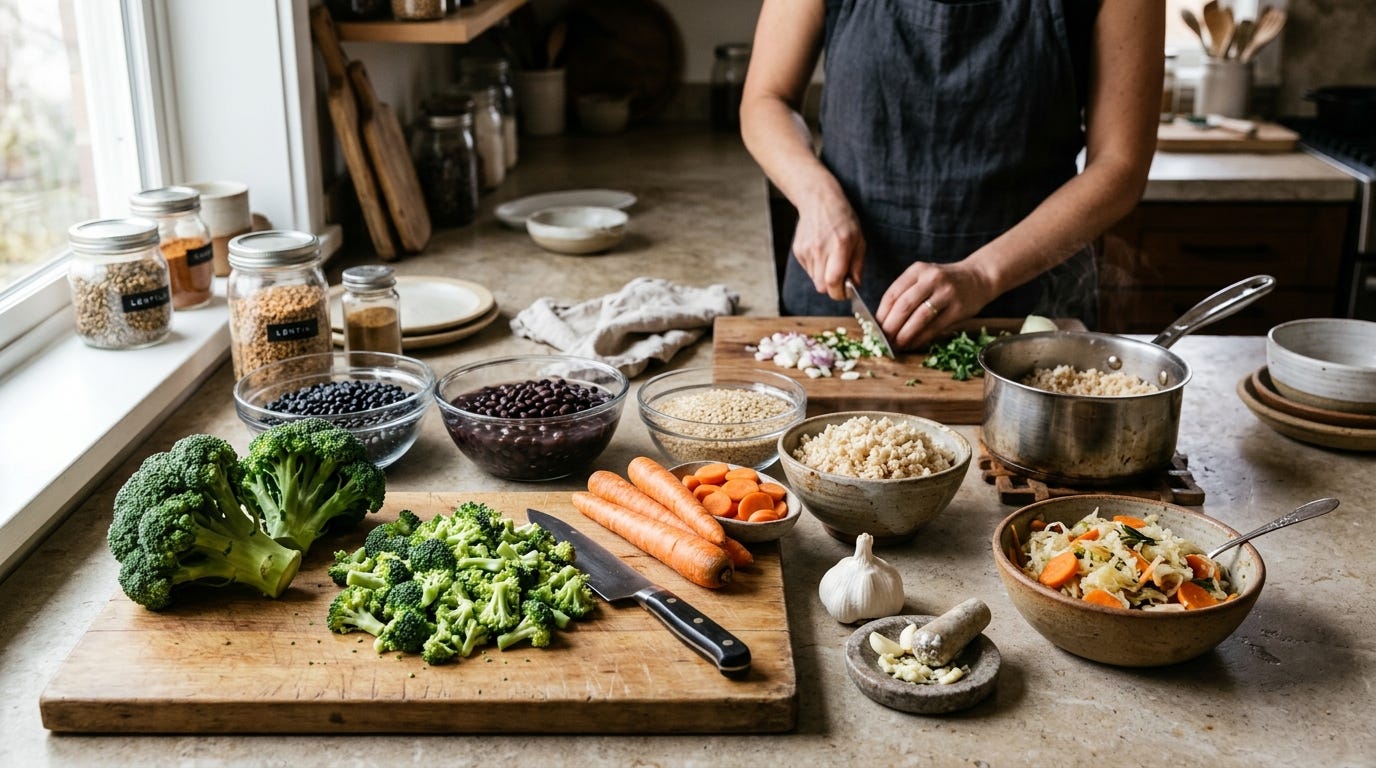
Food is not simply a collection of isolated nutrients.
Vitamins, minerals, proteins, carbohydrates, fats, and plant compounds are contained within complex physical structures.
Preparation changes those structures.
When vegetables are cooked, their cell walls soften.
When grains and legumes are soaked, they absorb water and become easier to cook.
When foods are chopped or crushed, their internal components are exposed to oxygen and enzymes.
When starches are cooked and later cooled, some of their structure changes.
When foods are fermented, microorganisms transform portions of the original ingredients.
These changes can influence digestion, nutrient availability, texture, flavor, and how quickly certain foods are broken down.
The effect depends on the food and the preparation method.
Cooking one vegetable may increase the availability of certain compounds while reducing others.
Boiling may cause some water-soluble nutrients to move into the cooking water.
Fermentation may create new compounds while changing the original food.
This is why nutrition cannot always be judged by looking at a food in its raw form.
The journey from ingredient to meal matters too.
Understanding that process allows you to use different preparation methods strategically rather than following rigid rules about what is “healthy” or “unhealthy.”
