


Hi friends,
Blood sugar spikes have become one of the biggest topics in nutrition. People are wearing continuous glucose monitors, avoiding foods because they raise glucose, eating vegetables before carbohydrates, adding vinegar to meals, and trying to keep their blood sugar curves as flat as possible. And there is some good reasoning behind that interest.
When you eat carbohydrates, your body breaks many of them down into glucose. That glucose enters your bloodstream, your pancreas releases insulin, and insulin helps move glucose into your cells where it can be used or stored. But seeing your blood sugar rise after eating does not automatically mean something went wrong. Your blood sugar is supposed to rise after a meal.

The bigger question is what happens before, during, and after that rise. How high does it go? How quickly does it come back down? How much insulin does your body need to manage it? How active are your muscles, what else was in the meal, how well did you sleep, and how metabolically healthy are you overall?
Blood sugar is a system, not a single number. So today, let’s look at what glucose spikes actually mean, why perfectly flat blood sugar is not the goal, and the habits that matter much more for long-term metabolic health.
In Less Than 10 Minutes, We’ll Cover:
Why blood sugar naturally rises after meals
What insulin actually does
Why one glucose spike does not define metabolic health
Why insulin sensitivity matters
How muscle helps clear glucose from your bloodstream
Why protein, fiber, and fat change the way a meal affects blood sugar
How sleep and stress influence glucose
Why walking after meals can make a difference
Foods that support better blood sugar balance
Why long-term patterns matter more than obsessing over individual foods
Before we begin, we’re excited to introduce Dr. Ian Quitadamo + MIDRA Health — the next chapter of Holistic Magazine.
Join us for our first free live health webinar on Wednesday, October 7 at 4 PM PT / 7 PM ET.
We’ll talk about why you can do everything “right” and still not feel your best, and how a more personalized approach to your health may help uncover what is actually going on.
Join our FREE health webinar and save your spot here:
https://events.midrahealth.com/training
First, Why Does Blood Sugar Rise After You Eat?

Blood glucose is not supposed to remain perfectly flat. After you eat carbohydrates, digestive enzymes break many of them into smaller sugars, including glucose. That glucose moves through your intestinal wall and enters your bloodstream, and your pancreas responds by releasing insulin.
Insulin acts like a metabolic signal telling tissues throughout your body that energy is available. Your muscles can take up glucose and burn it for energy or store it as glycogen, while your liver can also store glucose and release it later when needed. Other tissues throughout your body use glucose as well.
Eventually, as glucose moves out of the bloodstream and into tissues, your blood sugar begins returning toward its previous level. That rise and fall is normal physiology. The goal is not to prevent glucose from ever increasing. The goal is for your body to handle that glucose effectively.
Insulin Matters Just as Much as Glucose

Blood sugar gets most of the attention because it is easy to visualize, but insulin tells another important part of the story. Imagine two people eat the exact same meal and their glucose rises by roughly the same amount. One person’s body may need only a modest amount of insulin to manage that glucose, while the other person’s body may need substantially more insulin to accomplish the same job.
Their glucose curves might look similar, but their underlying metabolic health may not be. This is where insulin sensitivity becomes important. When your cells respond efficiently to insulin, your body can manage glucose with relatively little effort.
When cells become less responsive to insulin, your pancreas may compensate by producing more. Blood sugar can remain relatively normal for years while insulin levels are gradually rising behind the scenes. That is why metabolic health cannot be judged from one glucose spike alone.
Your Muscles Are One of Your Biggest Glucose Sinks

One of the most overlooked blood sugar tools is muscle. Your skeletal muscles can take up large amounts of glucose, and when you walk, lift weights, climb stairs, or simply contract your muscles, they need energy. That increases glucose demand.
Exercise also helps muscles take up glucose through mechanisms that are partly independent of insulin. This is one reason physical activity is so powerful for metabolic health. You are not simply “burning calories.” You are giving glucose somewhere useful to go.
Maintaining muscle as you age becomes especially important because muscle is one of the major tissues involved in glucose disposal. Think of muscle as metabolic storage space. The more metabolically active tissue you maintain, the more capacity your body has to use incoming fuel.
Join our FREE health webinar and save your spot here:
https://events.midrahealth.com/training
Meal Composition Changes the Glucose Response

A bowl of plain white rice and a meal containing rice, vegetables, protein, and healthy fats do not behave exactly the same way in your digestive system. Protein, fiber, and fat generally slow digestion and change how quickly nutrients reach the bloodstream.
Fiber is particularly important because many forms of fiber slow carbohydrate digestion and absorption while also feeding microbes in your digestive system. Protein stimulates satiety hormones and helps preserve muscle, while fat slows gastric emptying and can reduce how quickly carbohydrates from a mixed meal enter circulation.
This is why it often makes more sense to look at the entire meal than to label an individual carbohydrate as good or bad. A potato is not eaten by a laboratory. It is eaten by a person, usually alongside other foods and under completely different metabolic circumstances.
Food Preparation Matters Too

The exact same carbohydrate can affect your body differently depending on how it is prepared. Grinding grains into flour increases the surface area available to digestive enzymes, while cooking softens food structures and can make starch easier to digest. Cooling certain cooked starches can also increase resistant starch.
Leaving fruit intact generally preserves more of its physical structure compared with turning it into juice. That means food structure matters. An apple and apple juice contain many of the same carbohydrates, but your digestive system does not experience them in exactly the same way.
Foods That Are Good for Blood Sugar Balance

You do not need a special “blood sugar diet.” A good place to start is building meals around minimally processed foods that provide protein, fiber, healthy fats, minerals, and slower-digesting carbohydrates.
Join our FREE health webinar and save your spot here:
https://events.midrahealth.com/training
Beans and Lentils

Black beans, lentils, chickpeas, and other legumes provide a powerful combination of fiber, protein, resistant starch, magnesium, and slowly digested carbohydrates. They are one of the easiest foods to add when you want a meal that is filling without relying heavily on refined carbohydrates.
Eggs
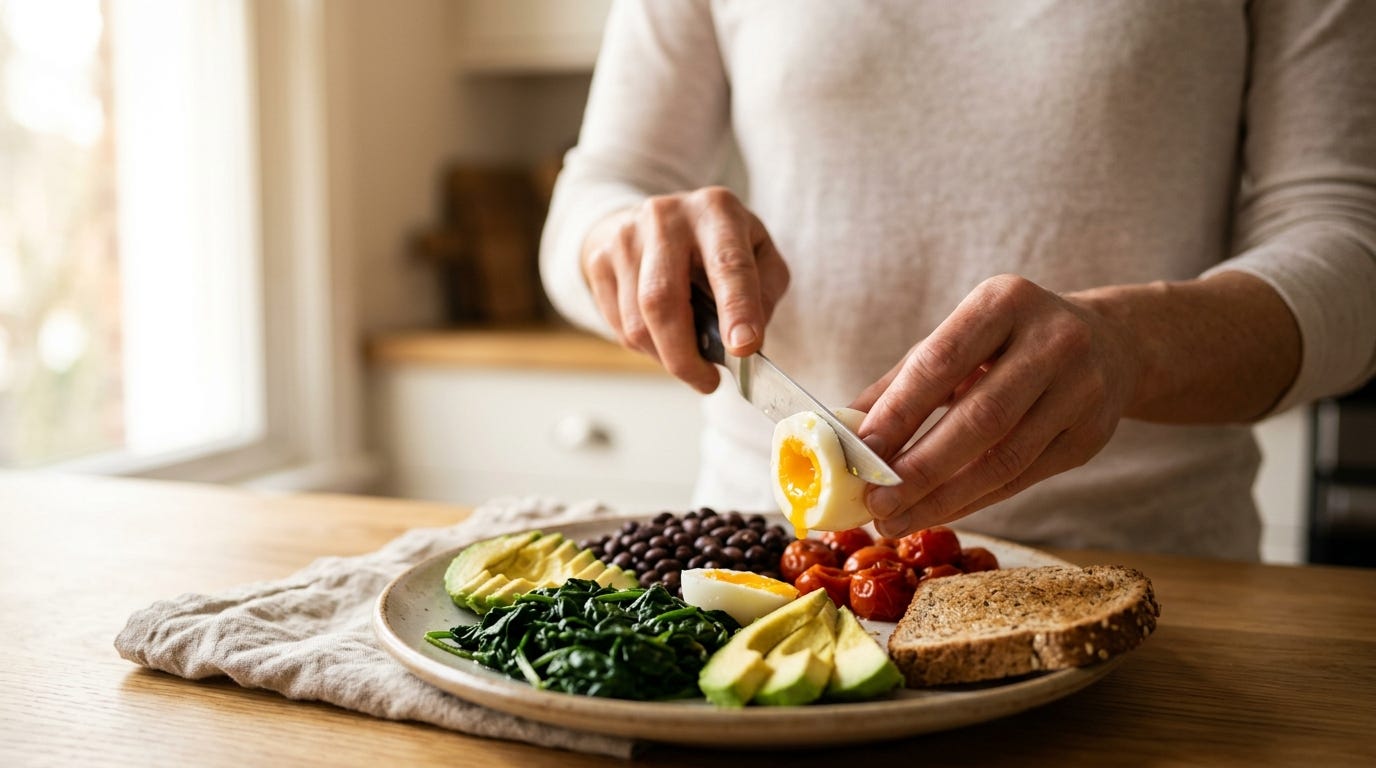
Eggs provide protein and fat with very little carbohydrate. Pairing eggs with vegetables, beans, or a fiber-rich carbohydrate can create a much more balanced breakfast than eating refined carbohydrates alone.
Greek Yogurt

Plain Greek yogurt provides protein and can be paired with berries, nuts, seeds, or cinnamon. Choosing unsweetened versions helps keep added sugar lower while still giving you a filling base for breakfast or a snack.
Berries

Blueberries, raspberries, strawberries, and blackberries provide fiber and polyphenols while generally containing less sugar per serving than many highly processed snacks. They also pair well with protein-rich foods such as Greek yogurt.
Avocado
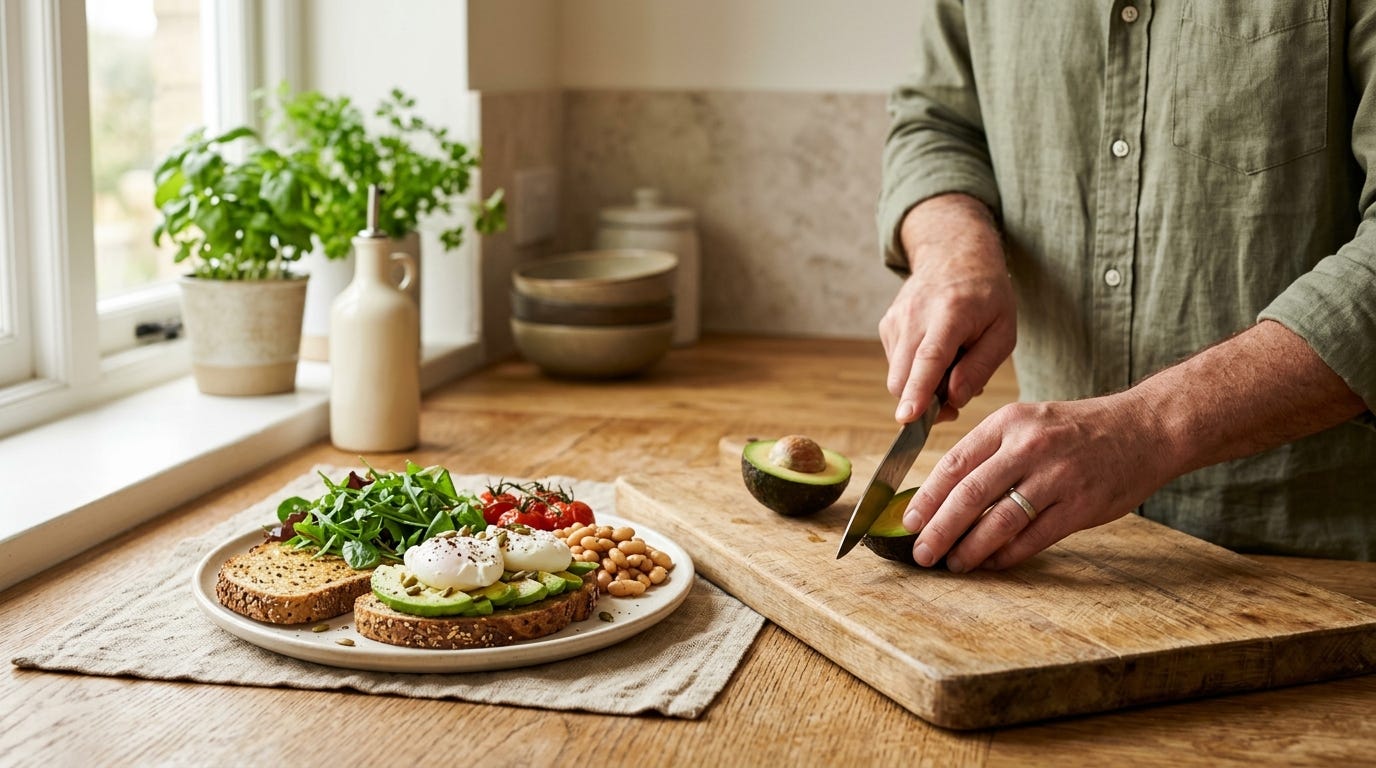
Avocado contains fiber, monounsaturated fat, potassium, and very little sugar. Adding avocado to a meal can make it more filling while replacing more refined sources of fat or carbohydrate.
Nuts and Seeds

Walnuts, almonds, pumpkin seeds, chia seeds, flaxseeds, and other nuts and seeds provide combinations of healthy fats, protein, fiber, magnesium, and other minerals. They are easy to add to meals that would otherwise be mostly carbohydrate.
Leafy Greens

Spinach, arugula, kale, collard greens, and other leafy vegetables add fiber, potassium, magnesium, folate, and plant compounds with very little carbohydrate. They also add more volume to a meal without relying on refined starches.
Cruciferous Vegetables

Broccoli, cabbage, Brussels sprouts, cauliflower, and related vegetables provide fiber and can add significant volume to meals without large amounts of rapidly digested carbohydrate. They pair easily with protein, beans, and healthy fats.
Extra Virgin Olive Oil

Extra virgin olive oil provides monounsaturated fats and polyphenols and works well as part of meals built around vegetables, legumes, fish, and other whole foods. It can also help make vegetable-heavy meals more satisfying.
Fish

Salmon, sardines, trout, and other fish provide protein and, depending on the variety, omega-3 fats. Protein-rich foods help make carbohydrate-containing meals more balanced and satisfying.
Join our FREE health webinar and save your spot here:
https://events.midrahealth.com/training
Whole Fruit

Whole fruit comes packaged with water, fiber, vitamins, minerals, and plant compounds. For most people, an orange is metabolically very different from drinking a large glass of orange juice because the physical structure of the food affects how quickly it is eaten and digested.
Sweet Potatoes

Sweet potatoes provide carbohydrates, but they also contain fiber, potassium, carotenoids, and other nutrients. They can fit comfortably into a balanced meal when paired with protein, vegetables, and healthy fats.
The goal is not to eliminate carbohydrates. It is to build better meals.
Walking After Meals Is Surprisingly Powerful

You do not always need an intense workout. Even light movement after eating gives your muscles an immediate reason to use glucose. A short walk after a meal activates large muscles in your legs, and those contracting muscles begin using available fuel.
That can reduce the amount of glucose that remains circulating in your bloodstream after eating. You do not have to turn every meal into an exercise session either. Even a simple habit like walking for 10 minutes after dinner can add up when repeated consistently.
Sleep Changes Blood Sugar Too

You can eat exactly the same food on two different days and potentially respond differently depending on how well you slept. Sleep deprivation affects insulin sensitivity, stress hormones, appetite, and food choices.
Poor sleep can also make you hungrier and increase your preference for energy-dense foods. This is one reason metabolic health cannot be reduced to carbohydrates alone. Your metabolism remembers how you slept.
Stress Can Raise Glucose Without Food

Food is not the only thing capable of raising blood sugar. When your body perceives stress, hormones including cortisol and adrenaline help make energy available. One way they do that is by encouraging your liver to release glucose into the bloodstream.
That makes sense biologically. If you suddenly need to run from danger, your muscles need readily available fuel. But modern stress is different.
You can sit completely still while deadlines, emails, financial worries, poor sleep, and psychological stress trigger many of the same systems. Sometimes a glucose change is not about the food you just ate.
Your Liver Is Constantly Managing Blood Sugar

Your liver acts like a glucose storage and distribution center. After meals, it can store some glucose as glycogen, while between meals and overnight, it can release glucose to keep your blood sugar from dropping too low.
Your liver can even manufacture glucose from other compounds through a process called gluconeogenesis. That is why your blood sugar does not fall to zero when you sleep for eight hours.
Your liver is quietly maintaining the system. And once again, this shows why glucose regulation is much bigger than the carbohydrate content of your last meal.
Not Every Spike Is Equal

A temporary glucose increase after eating fruit or potatoes is not necessarily equivalent to repeatedly eating refined carbohydrates while being sedentary, sleep deprived, chronically stressed, and insulin resistant.
Context matters. Frequency matters. Baseline metabolic health matters. Physical activity and meal composition matter. The overall dietary pattern matters too.
One food does not determine metabolic health. Patterns do.
You Do Not Need Perfectly Flat Blood Sugar

This may be the most important takeaway. Your body is designed to handle changing fuel availability. Blood glucose rises, insulin rises, cells take up nutrients, and glucose falls again.
Later, your liver releases stored glucose, your muscles burn it, and your brain uses it. Then you eat again. The system is supposed to move.
The goal is not to force your glucose line to resemble a ruler. The goal is metabolic flexibility: your body being able to handle carbohydrates, fats, periods between meals, activity, rest, and changing energy demands without constantly struggling to maintain balance.
Bringing It Together

Blood sugar spikes are real, and chronically poor glucose regulation deserves attention. But reducing metabolic health to whether one food caused your glucose to rise misses most of the picture.
Your insulin sensitivity matters. Your muscle mass and activity level matter. Your liver, sleep, stress, and meal composition all matter too.
And what you repeatedly do over months and years matters far more than one glucose reading after lunch.
Instead of trying to eliminate every blood sugar spike, focus on building a body that handles glucose well. Eat plenty of protein and fiber, build meals around whole foods, maintain your muscle, move throughout the day, walk after meals when you can, and sleep consistently.
And remember that carbohydrates are not automatically the problem. Your body was built to use glucose.
The real goal is helping it use glucose well.
—
Don’t forget to save your spot for our first free live health webinar on Wednesday, October 7 at 4 PM PT / 7 PM ET.
We’ll talk about why you can do everything “right” and still not feel your best, and how a more personalized approach to your health may help uncover what is actually going on.
Join our FREE health webinar and save your spot here: