


Hi friends,
Bone broth has existed for thousands of years, long before wellness trends, collagen powders, or modern health marketing.

Yet despite how simple it is, many people still notice meaningful changes when they consistently add it back into their routine.
Interestingly, some of the oldest foods are now becoming some of the most overlooked foods in modern diets.
Bone broth is naturally rich in amino acids, collagen compounds, minerals, gelatin, and slow-cooked nutrients that support multiple systems throughout the body at once, especially digestion, hydration, connective tissue, recovery, and overall nutrient density.

Many modern diets contain large amounts of calories but very little slow-cooked mineral-rich nourishment.
At the same time, people are dealing with more digestive issues, higher stress loads, poor sleep, ultra-processed foods, blood sugar instability, and lower intake of traditional whole-food meals overall.
Bone broth is not magic, and it is not a cure-all.
But many people notice meaningful changes when they consistently incorporate it into their routine because the body often responds well to simple nutrient-dense foods prepared traditionally.
In Less Than 10 Minutes, We’ll Cover:
Why bone broth was used in traditional diets
The amino acids naturally found in bone broth
How bone broth supports digestion and the gut lining
The connection between collagen and connective tissue
Why warm mineral-rich foods affect hydration differently
How bone broth supports recovery and satiety
The difference between real bone broth and highly processed versions
Before we begin, if you enjoy practical wellness breakdowns that connect nutrition, physiology, and real-world habits without the wellness fluff, consider subscribing to Holistic Magazine.
Free subscribers get structured, science-backed wellness articles each week.
Paid subscribers get the deeper protocols, advanced nutrition guides, meal systems, and premium breakdowns we usually cannot fit into regular posts.
Here’s what paid subscribers are reading right now:
Bone Broth Naturally Contains Collagen Compounds
When bones, joints, cartilage, and connective tissue are simmered slowly over time, compounds like collagen, gelatin, glycine, proline, and glucosamine begin releasing into the broth.
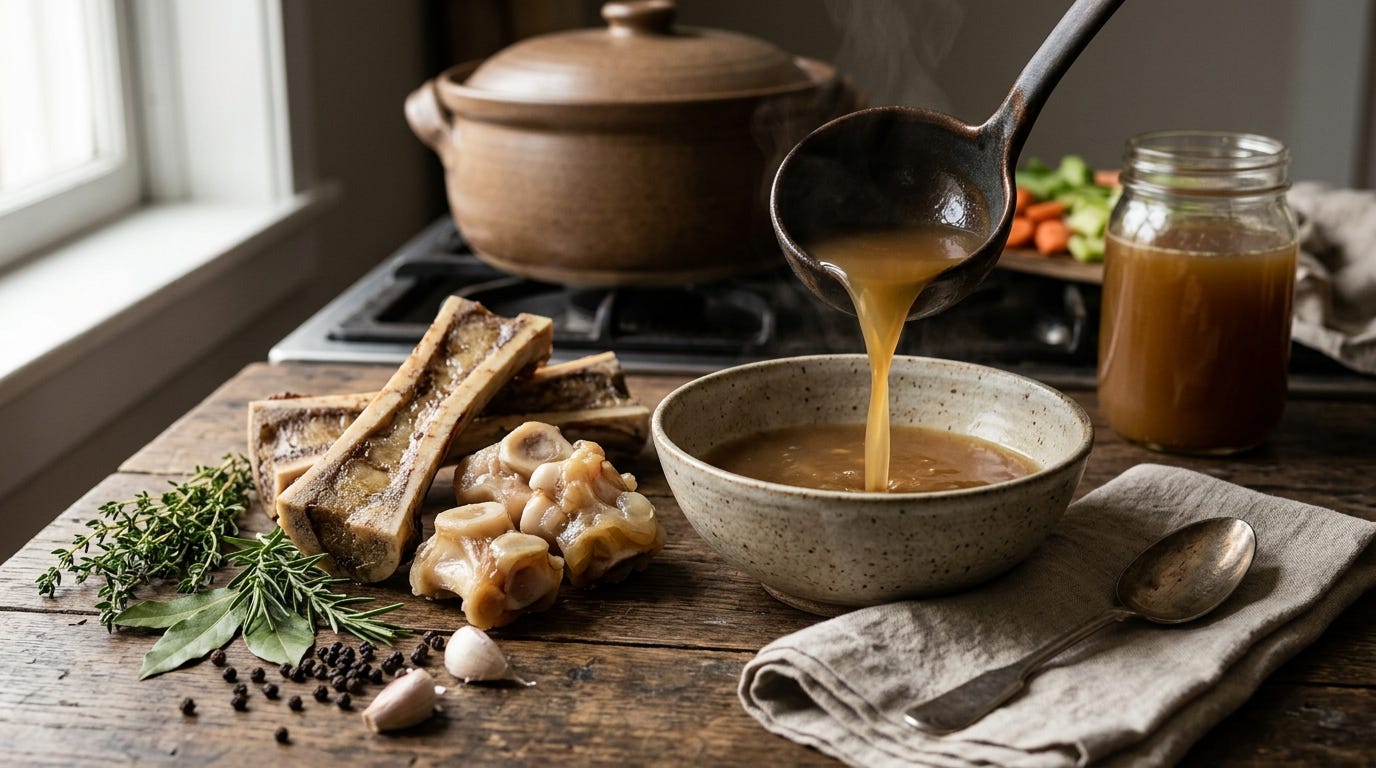
These compounds help support connective tissues throughout the body including joints, skin, tendons, ligaments, and the gut lining.
Collagen is one of the most abundant proteins in the human body, yet many modern diets contain very little of the slow-cooked connective tissue foods traditional diets naturally included.
Traditional cultures rarely wasted these parts of the animal. Bones, skin, cartilage, marrow, and connective tissue were often viewed as some of the most nourishing components.
Bone Broth and the Gut Lining Connection

Gelatin and amino acids naturally found in bone broth are heavily studied for their role in supporting the digestive tract and gut lining.
The digestive system constantly faces stress from processed foods, alcohol, medications, chronic stress, poor sleep, infections, and inflammation.
Many people today experience bloating, indigestion, reflux, irregular digestion, or discomfort after meals, and digestion is deeply connected to nutrient absorption, inflammation, immune signaling, and even nervous system regulation.
Warm slow-cooked foods are often easier for many people to tolerate because they require less digestive effort compared to highly processed fast foods or heavily fried meals.
Bone broth is also naturally hydrating because it contains both fluids and minerals together rather than plain water alone.
Why Glycine Matters More Than People Realize

One of the most interesting amino acids found in bone broth is glycine.
Glycine plays roles in collagen production, nervous system regulation, detoxification pathways, sleep quality, and glutathione production, which is one of the body’s major antioxidant systems.
Interestingly, many modern diets contain large amounts of muscle meat but relatively fewer glycine-rich connective tissue foods compared to traditional eating patterns.
Some researchers believe older diets naturally created more balance between different amino acids because people consumed more parts of the animal overall rather than only lean muscle cuts.
Bone Broth Supports Satiety and Stable Energy

Many people feel surprisingly satisfied after drinking bone broth despite it being relatively light.
Part of this may come from the protein content, amino acids, minerals, warmth, and slower pace that often accompanies drinking broth-based meals.
Ultra-processed foods are often engineered to be hyper-palatable while digesting quickly and leaving people unsatisfied shortly afterward.
Slow-cooked foods tend to create a very different physiological response.
Warm broths are also commonly used during illness because they help provide fluids, minerals, sodium, amino acids, and nourishment in forms that are often easier to tolerate when appetite is lower.
The Mineral Content Matters Too

Real bone broth also naturally contains minerals like sodium, potassium, magnesium, calcium, and phosphorus depending on how it is prepared.
These minerals help regulate hydration, nerve signaling, circulation, muscle function, and fluid balance throughout the body.
Hydration is not simply about drinking more water.
Electrolytes help determine how fluids move inside and outside cells, which partly explains why many people can drink large amounts of water while still feeling fatigued, thirsty, or depleted underneath the surface.
Traditional meals often naturally combined fluids and minerals together through soups, broths, roots, herbs, seafood, and slow-cooked foods.
The Difference Between Real Bone Broth and Processed Versions
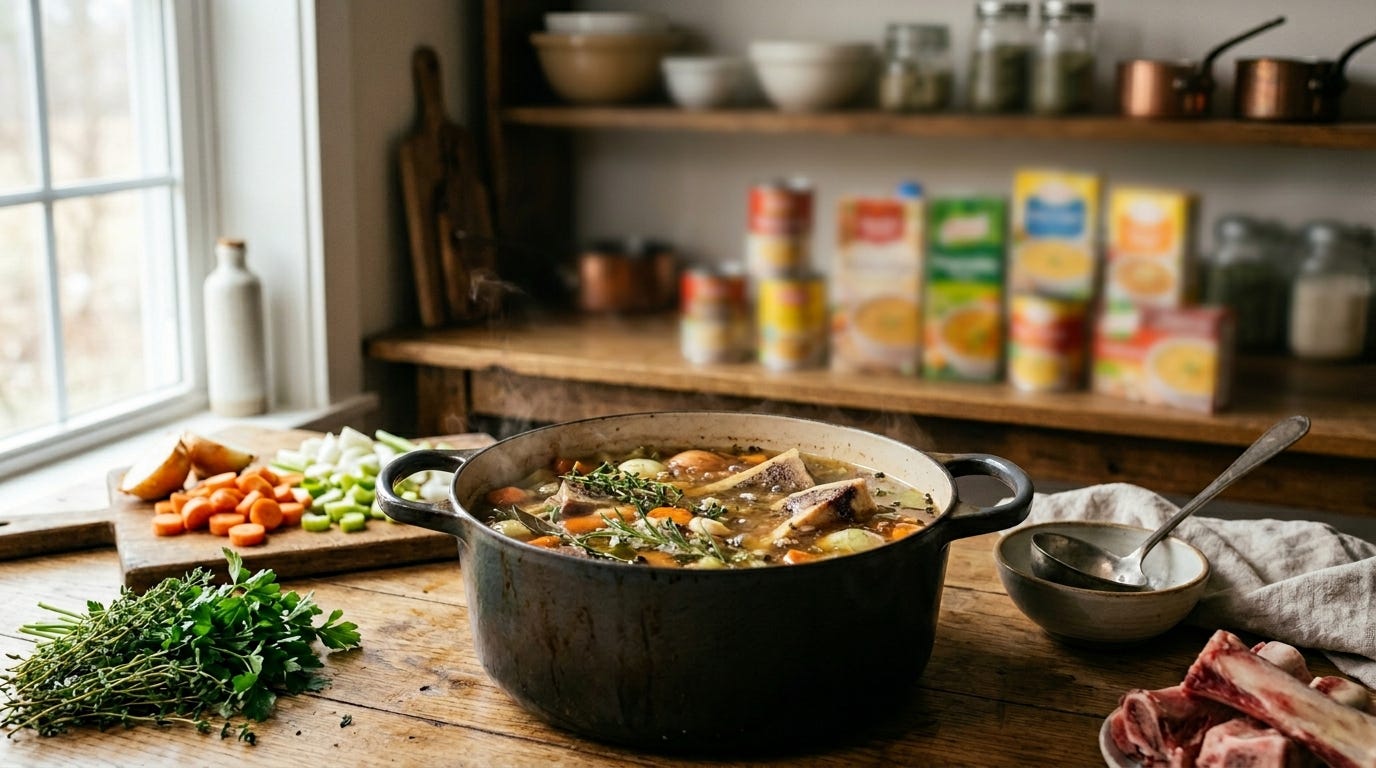
Not every product labeled “bone broth” is prepared traditionally.
Many commercial versions contain lower amounts of collagen compounds, higher sodium additives, flavor enhancers, starches, gums, or shortened cooking methods that create a very different nutritional profile compared to long-simmered broth.
Traditional broth was often simmered for many hours using bones, connective tissue, herbs, vegetables, and time.
Quality matters more than marketing.
Bringing It Together

Bone broth is not a miracle food.
But it is one of the few traditional foods that naturally combines hydration, minerals, amino acids, collagen compounds, warmth, and nourishment together in a single meal.
Many people today are undernourished in ways that are not always obvious because modern diets often prioritize convenience over nutrient density and traditional preparation methods.
Sometimes the body responds well to going back to slower, simpler foods that humans have used for generations.
If you want deeper breakdowns on digestion, hydration, minerals, inflammation, nervous system health, nutrient density, and traditional food systems, paid subscribers get access to the full premium guides and advanced wellness breakdowns we don’t publish publicly.
Here’s what paid subscribers are reading right now:
In 2017, I healed my whole G.I. system from mouth to anus with bone broth. I had read a lot about it and it actually became my daily nutrition for about three weeks as I suffered from trauma/PTSD over the loss of my brother. Thank you for writing this article.