


Hi friends,
Cravings are often treated like a lack of willpower, but the body is constantly sending signals underneath the surface, and sometimes cravings can reflect deeper patterns involving blood sugar, stress, sleep, hydration, minerals, hormones, habits, gut bacteria, and even emotional associations built over years.

That does not mean every craving directly points to a specific deficiency. The body is more complex than that. But cravings can still reveal important clues about what may be happening physiologically behind the scenes.
Interestingly, many modern lifestyles create the perfect environment for stronger cravings. Poor sleep affects hunger hormones. Chronic stress changes blood sugar regulation. Ultra-processed foods are engineered to stimulate reward pathways. Highly restrictive dieting can increase food fixation. Even dehydration can sometimes feel like hunger.
And because many modern foods are calorie-dense but nutrient-light, people can end up constantly eating while still feeling unsatisfied afterward.
In Less Than 10 Minutes, We’ll Cover:
What different cravings may sometimes indicate
The connection between stress and food cravings
Why blood sugar swings increase cravings
The hidden role minerals and hydration play
Why ultra-processed foods intensify appetite
The difference between emotional and physiological cravings
How sleep and nervous system health influence appetite
Before we begin, if you enjoy practical wellness breakdowns that connect nutrition, physiology, and real-world habits without the wellness fluff, consider subscribing to Holistic Magazine.
Free subscribers get structured, science-backed wellness articles each week.
Paid subscribers get the deeper protocols, advanced nutrition guides, meal systems, and premium breakdowns we usually cannot fit into regular posts.
Here’s what paid subscribers are reading right now:
Sugar Cravings Often Reflect Energy Instability

One of the most common cravings people experience is sugar, but the craving itself is often more connected to energy regulation than people realize.
Highly processed foods digest quickly and can rapidly spike blood sugar levels. The body then releases insulin to bring blood sugar back down, and when that drop happens too quickly, many people experience fatigue, shakiness, irritability, brain fog, or the desire for another quick source of energy shortly afterward.
This cycle can quietly repeat itself all day long.
Sleep deprivation can intensify this even further because poor sleep affects hormones like ghrelin and leptin that help regulate hunger and fullness. Researchers have found that people who sleep less often crave more calorie-dense and sugary foods the following day because the brain is looking for fast energy.
Stress also influences this process heavily. Cortisol affects blood sugar regulation, appetite, and reward pathways in the brain, which partly explains why cravings often feel much stronger during stressful periods.
Many people think they simply “lack discipline,” when in reality their nervous system, sleep quality, stress load, and blood sugar patterns are all influencing appetite underneath the surface.
Salt Cravings and Electrolytes
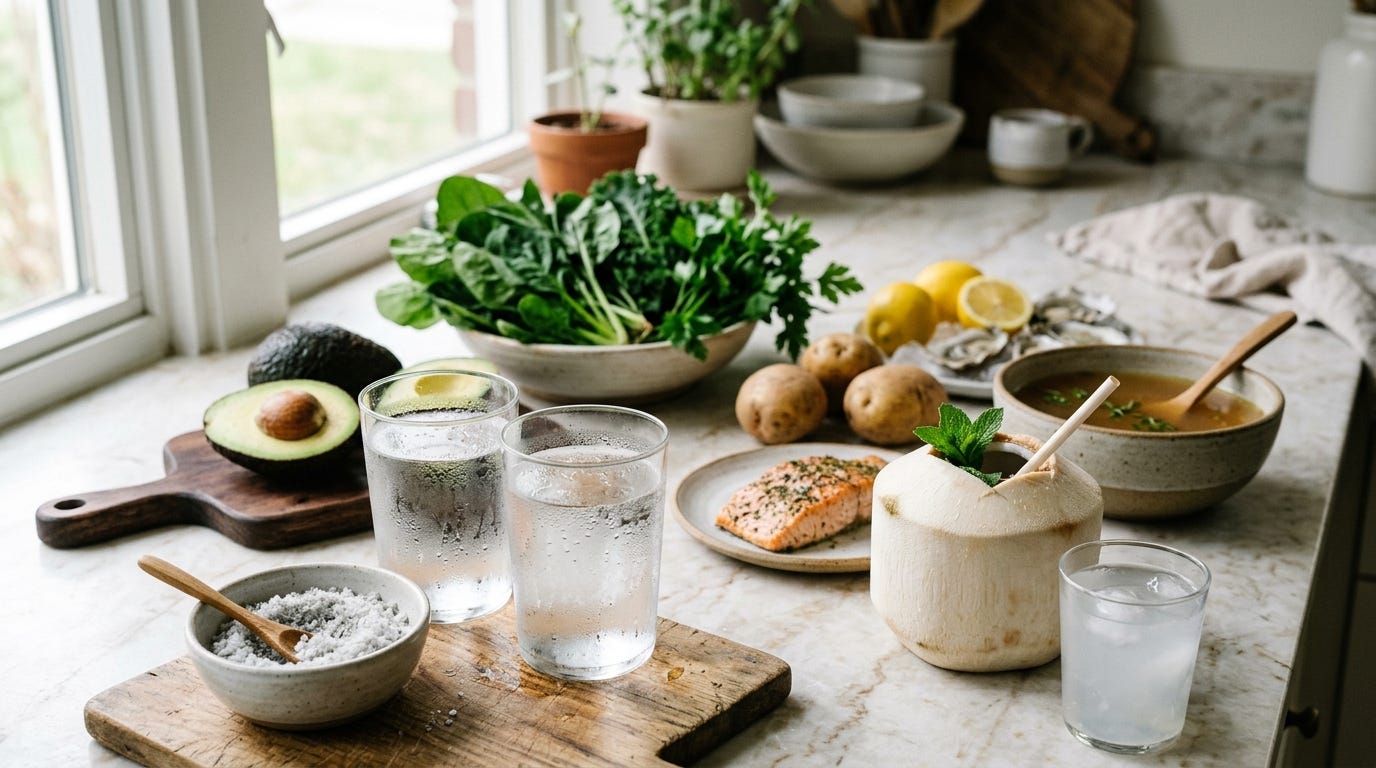
The body relies heavily on sodium, potassium, and magnesium to regulate hydration, circulation, nerve signaling, and muscle function.
Heavy sweating, excessive exercise, sauna use, chronic stress, illness, low-carb diets, dehydration, or drinking large amounts of plain water without adequate electrolytes can sometimes increase salt cravings.
Interestingly, many people today are drinking more water than ever while still consuming relatively low amounts of mineral-rich foods.
Hydration is not simply about water volume. Electrolytes help determine how fluids move inside and outside cells. Without enough minerals, people can sometimes feel tired, lightheaded, foggy, or constantly thirsty even while drinking large amounts of water.
Foods naturally rich in electrolytes include:
Mineral-rich broths
Coconut water
Sea salt
Avocados
Potatoes
Leafy greens
Seafood
Pumpkin seeds
Traditional diets often naturally contained more minerals because meals centered around broths, roots, seafood, slow-cooked foods, and less processed ingredients overall.
Chocolate Cravings and Magnesium

Chocolate cravings are extremely common, especially during stressful periods.
Cacao naturally contains magnesium alongside polyphenols and other biologically active compounds. While cravings are never perfectly diagnostic, researchers have explored whether magnesium demand may partly contribute to chocolate cravings in certain individuals.
Stress itself also increases magnesium utilization throughout the body, which may help explain why cravings sometimes intensify during emotionally demanding periods.
Dark chocolate also interacts with dopamine and serotonin pathways that influence mood, reward, and emotional regulation, which may partly explain why many people emotionally associate chocolate with comfort or relaxation.
Why Stress Changes Appetite

One of the most overlooked parts of cravings is the nervous system.
When the body perceives chronic stress, survival systems become prioritized. Cortisol and adrenaline influence blood sugar regulation, digestion, inflammation, and appetite signaling simultaneously.
Some people lose their appetite under stress.
Others crave sugar, salt, carbs, or highly rewarding foods more intensely.
Many people also crave crunchy foods during stressful periods because crunching and chewing can temporarily stimulate the nervous system in ways that feel regulating psychologically. Sometimes the craving is less about the food itself and more about the sensory experience attached to it.
This is also why people often crave comfort foods tied to emotional memory. The brain constantly builds associations between foods and emotional states over time.
Cravings Can Also Reflect Low Satiety Meals

Meals low in protein, healthy fats, fiber, and minerals often digest quickly and may leave people feeling unsatisfied not long afterward.
The body uses protein for repair, enzymes, neurotransmitters, hormones, muscle tissue, immune function, and satiety signaling. Healthy fats help support hormones, cellular membranes, brain function, and longer-lasting energy.
This partly explains why ultra-processed foods can feel strangely unsatisfying despite containing large amounts of calories. Many are engineered for hyper-palatability while digesting rapidly and providing relatively low satiety compared to whole-food meals.
Foods that naturally improve fullness often contain combinations of:
Protein
Fiber
Healthy fats
Minerals
Slower-digesting carbohydrates
Traditional meals naturally combined many of these factors together without people consciously thinking about “macros” or calorie tracking.
The Gut-Brain Connection and Cravings

The gut and brain constantly communicate through hormones, neurotransmitters, inflammation signals, and the vagus nerve.
Researchers continue studying how gut bacteria may influence appetite, cravings, and food preferences through these signaling systems.
Interestingly, many ultra-processed foods appear to alter the gut microbiome differently than whole-food diets rich in fiber diversity, fermented foods, and plant compounds.
Digestive health may influence cravings more than people realize because nutrient absorption, blood sugar stability, inflammation levels, and nervous system regulation are all connected to gut function.
The body functions more like an interconnected ecosystem than separate isolated systems.
Bringing It Together

Cravings are not always random.
Sometimes they reflect blood sugar instability, poor sleep, stress overload, dehydration, emotional conditioning, low satiety meals, nervous system dysregulation, or nutrient gaps developing slowly underneath the surface.
The body is constantly communicating through appetite, mood, digestion, energy, cravings, and behavior patterns.
Understanding cravings becomes easier when you stop viewing the body as separate systems and start viewing it more like an interconnected ecosystem influenced by stress, food quality, sleep, movement, hydration, and overall metabolic health together.
If you want deeper breakdowns on hydration, minerals, gut health, metabolism, appetite regulation, stress physiology, and food systems, paid subscribers get access to the full premium guides and advanced wellness breakdowns we don’t publish publicly.
Here’s what paid subscribers are reading right now: