

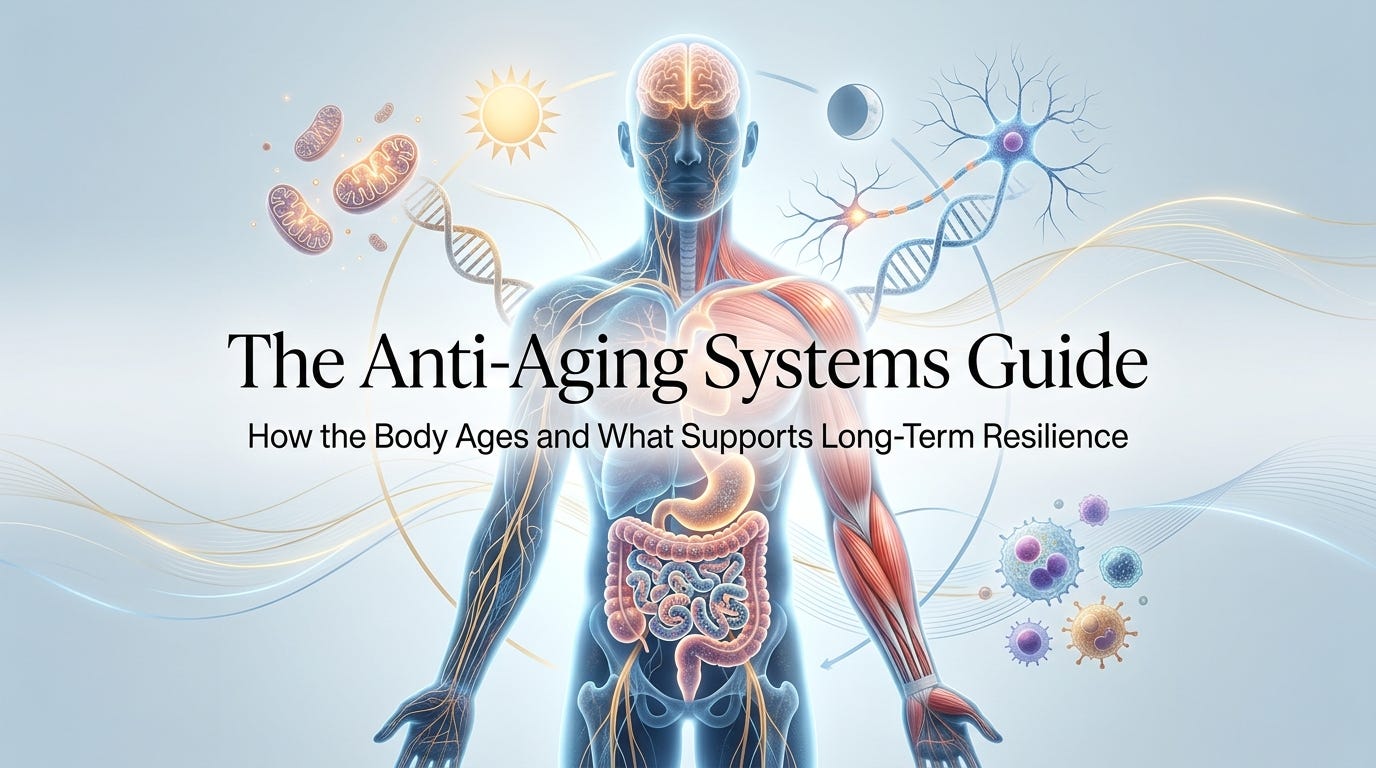
This guide is designed to be read from beginning to end for a full understanding. A one-page summary and actionable cheat sheet is included at the end for quick reference.
Aging Is Not One Process
Aging is often described as a single process.
In reality, it reflects changes across several biological systems.
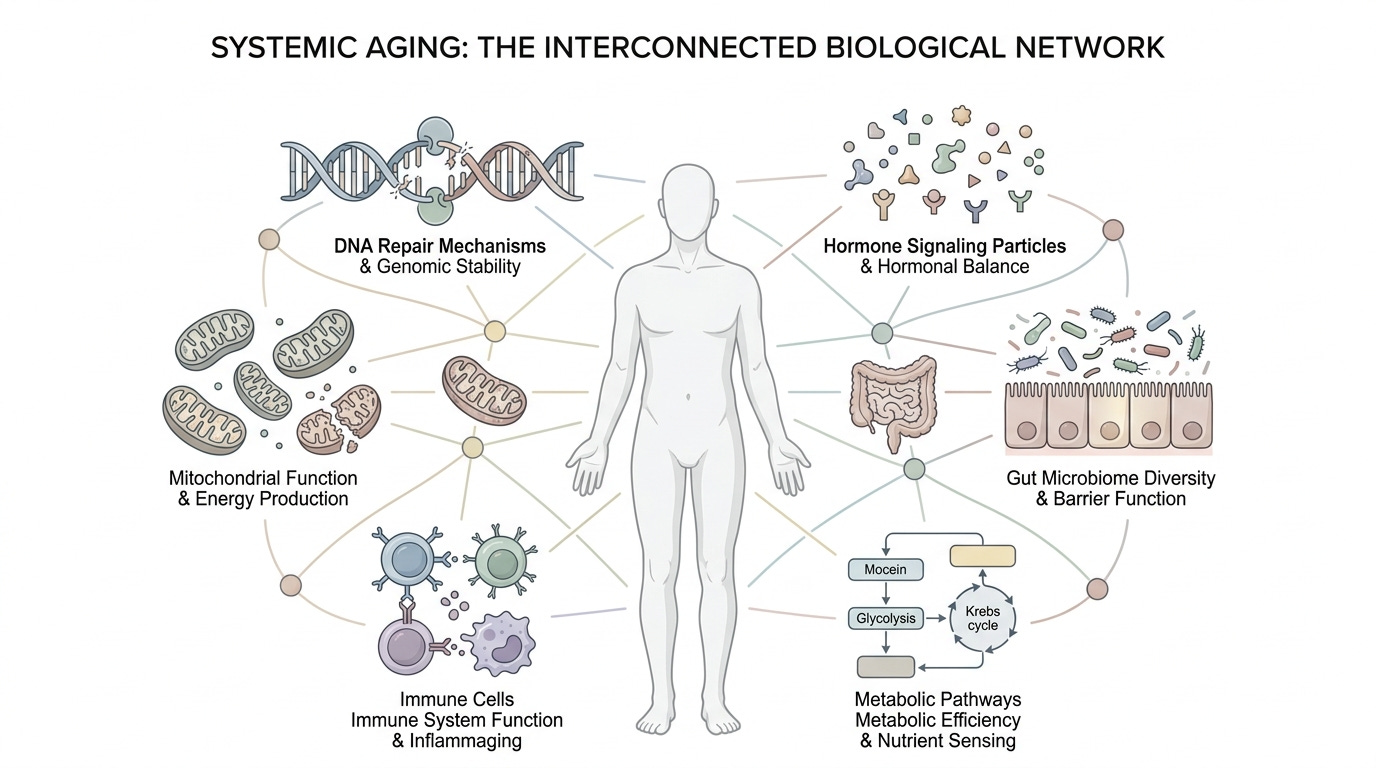
These include:
cellular repair capacity
mitochondrial energy production
hormone regulation
immune balance
metabolic flexibility
gut microbiome stability
When these systems function well, aging progresses more slowly and resilience remains high.
When they become dysregulated, signs of aging often appear earlier.
These signs may include:
declining energy
reduced muscle mass
slower recovery
metabolic dysfunction
skin and connective tissue changes
Anti-aging strategies work best when they support the systems that maintain cellular repair and metabolic stability.
The Body Is Constantly Repairing Itself
The body contains several repair systems that operate continuously.
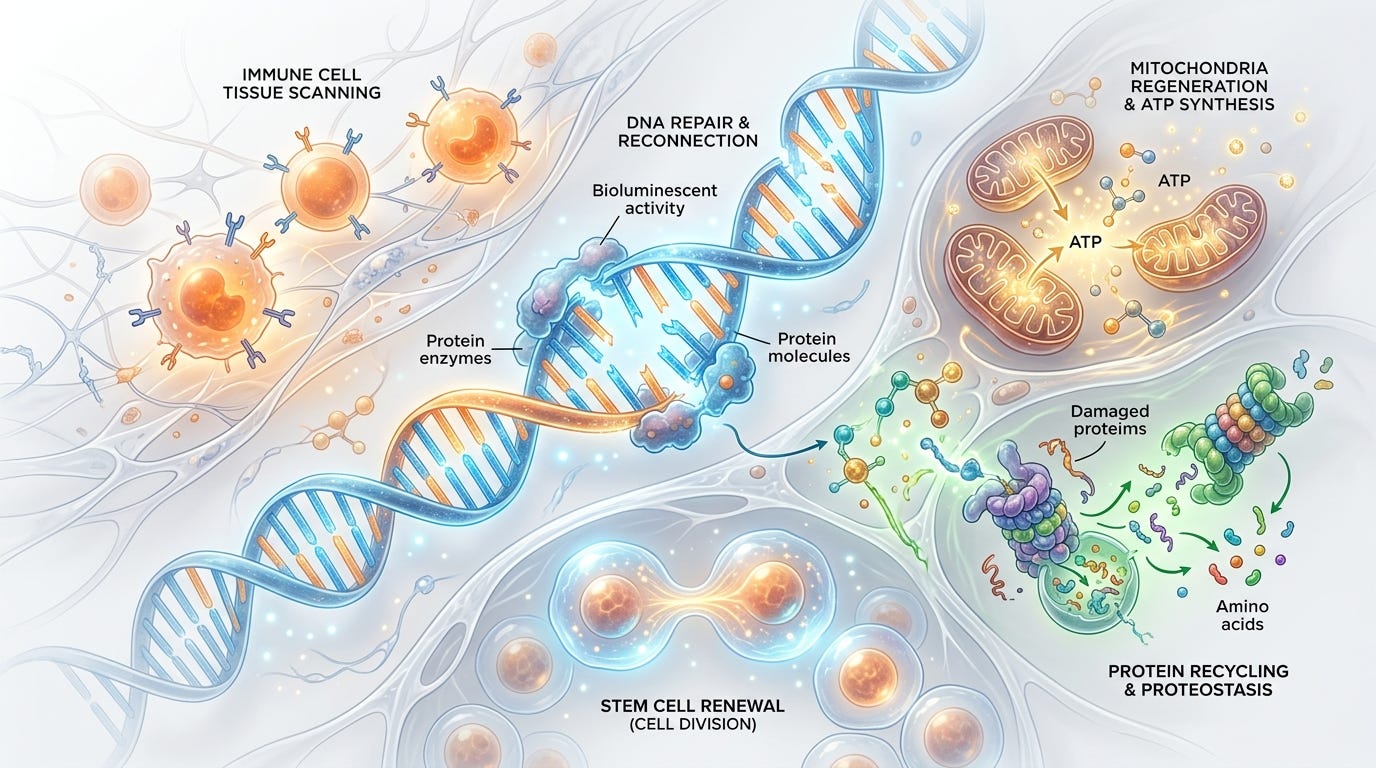
These include:
DNA repair
protein recycling
mitochondrial renewal
immune surveillance
stem cell regeneration
These systems repair damage caused by normal metabolism and environmental stress.
Over time, repair efficiency gradually declines.
This is a normal part of aging.
However, lifestyle factors strongly influence how efficiently repair systems function.
Sleep, nutrition, movement, and circadian rhythm all influence these processes.
Anti-aging strategies focus on supporting the body’s repair mechanisms rather than simply masking symptoms.
The Hallmarks of Aging
Scientists often describe aging using a framework known as the hallmarks of aging.
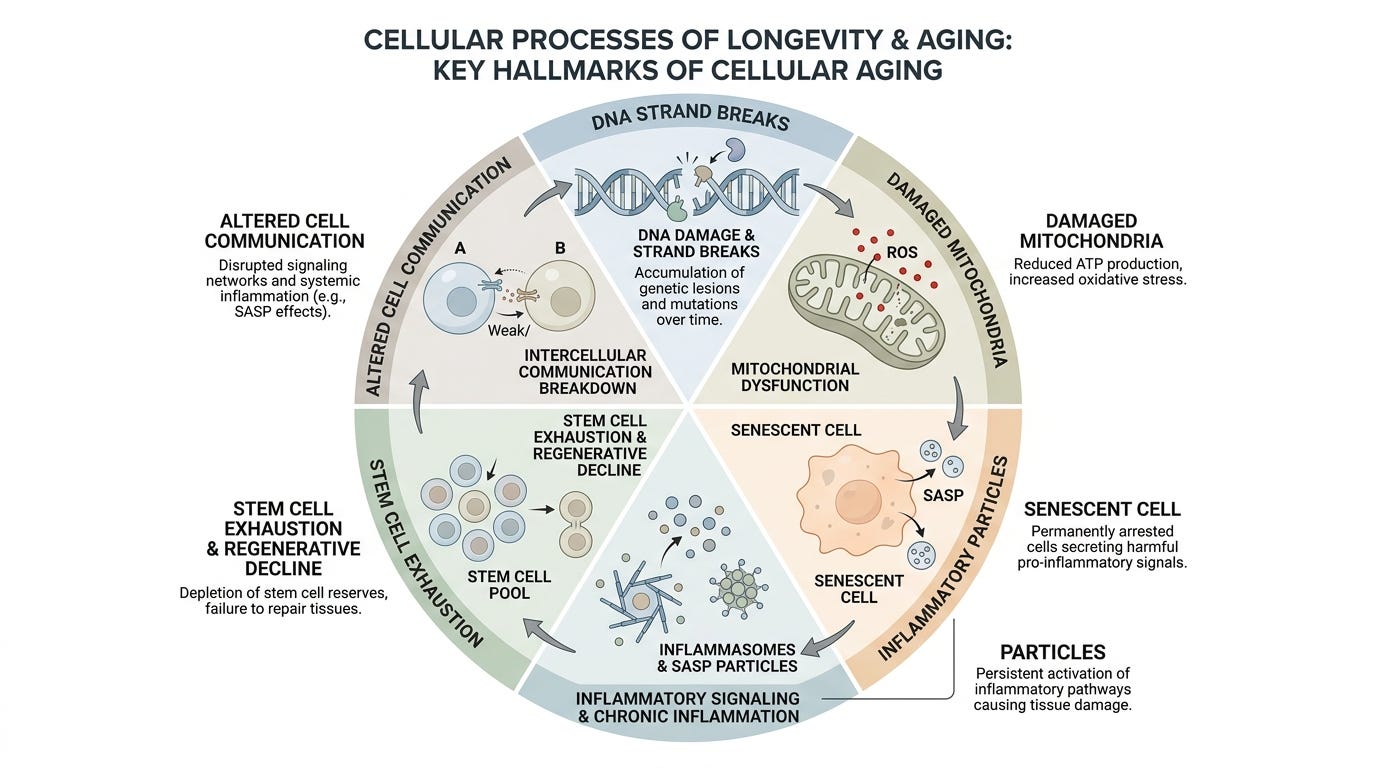
These include:
mitochondrial dysfunction
cellular senescence
impaired DNA repair
chronic inflammation
stem cell exhaustion
altered cellular communication
Each of these processes contributes to gradual functional decline.
But many of them are influenced by environmental signals.
These signals include:
nutrient intake
physical activity
light exposure
sleep quality
stress levels
Small daily behaviors can influence how quickly these aging mechanisms progress.
