


The Core Mistake: Treating Magnesium as One Thing
Magnesium is often discussed as a single nutrient with a single effect. In practice, magnesium supplements behave very differently depending on their chemical form.
Most people assume:
more magnesium is better
any form is interchangeable
side effects mean magnesium “doesn’t work for them”
In reality, the form of magnesium determines absorption, tolerance, and where it acts in the body.
The most common mistake is choosing a form based on price or popularity rather than physiological behavior.
Why Magnesium Deficiency Is Common

Magnesium deficiency is widespread, even without obvious symptoms.
Contributing factors include:
soil mineral depletion
food processing
chronic stress
high caffeine or alcohol intake
high sugar diets
sweating and exercise
certain medications
Deficiency often shows up as:
muscle tension or cramps
poor sleep quality
stress sensitivity
headaches
digestive sluggishness
fatigue
But correcting deficiency requires the right form, not just supplementation.
Absorption Depends on the Carrier
Magnesium must be bound to another compound to be absorbed.
That carrier determines:
how well magnesium is absorbed
how much reaches tissues
whether it stays in the gut
whether it causes GI side effects
This is why two supplements with the same milligram dose can feel completely different.
Magnesium Oxide: The Most Common and Least Helpful
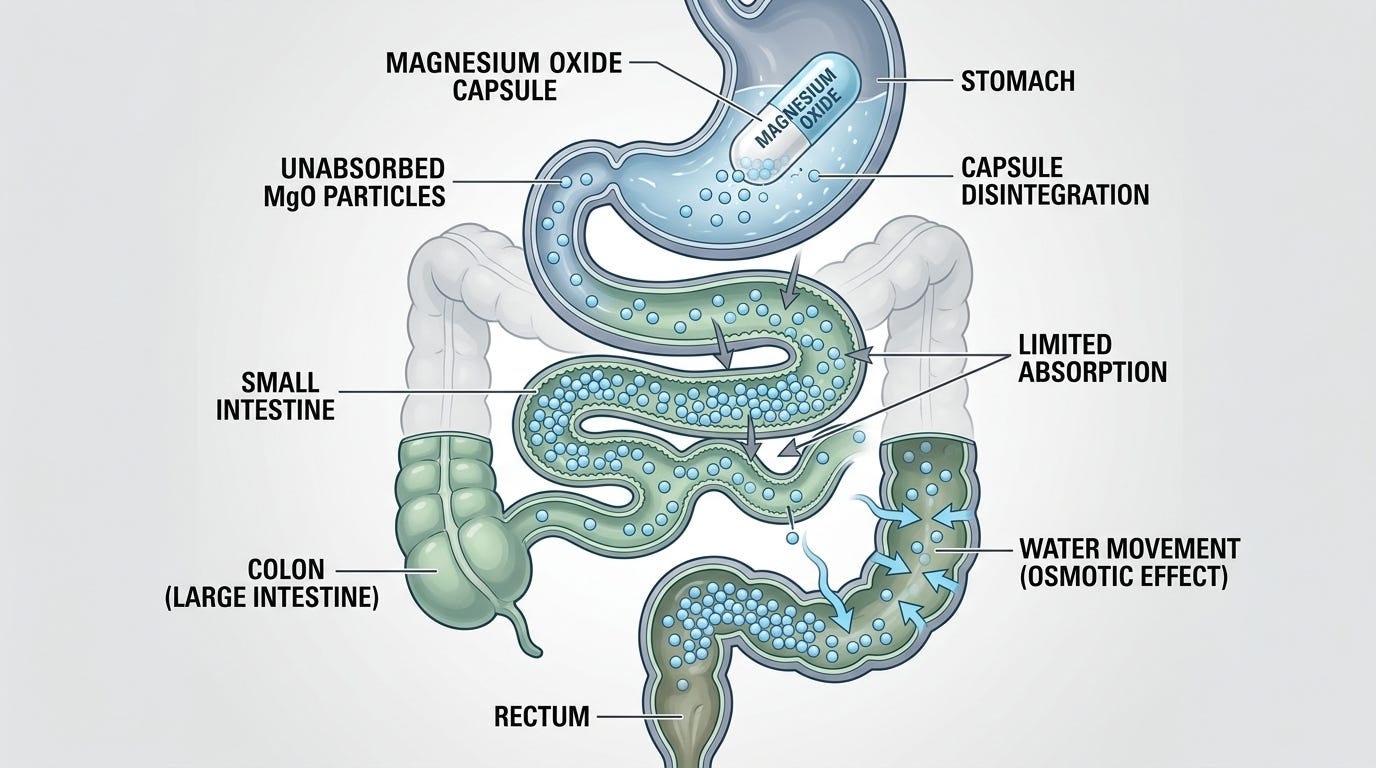
Magnesium oxide is widely used because it is:
inexpensive
compact
high in elemental magnesium
However, research consistently shows:
poor absorption
most remains in the gut
high likelihood of laxative effects
Best understood as:
a stool softener
not a reliable magnesium repletion tool
This is the form most often responsible for people believing magnesium “doesn’t agree with them.”
