

I. WHY BROTHS AND SOUPS MATTER

Introduction
Broths and soups have existed in nearly every traditional food culture for thousands of years.
Long before modern nutrition science existed, people slow-cooked bones, roots, herbs, vegetables, spices, seaweeds, and connective tissues into deeply nourishing meals that were warming, hydrating, filling, and easier to digest.
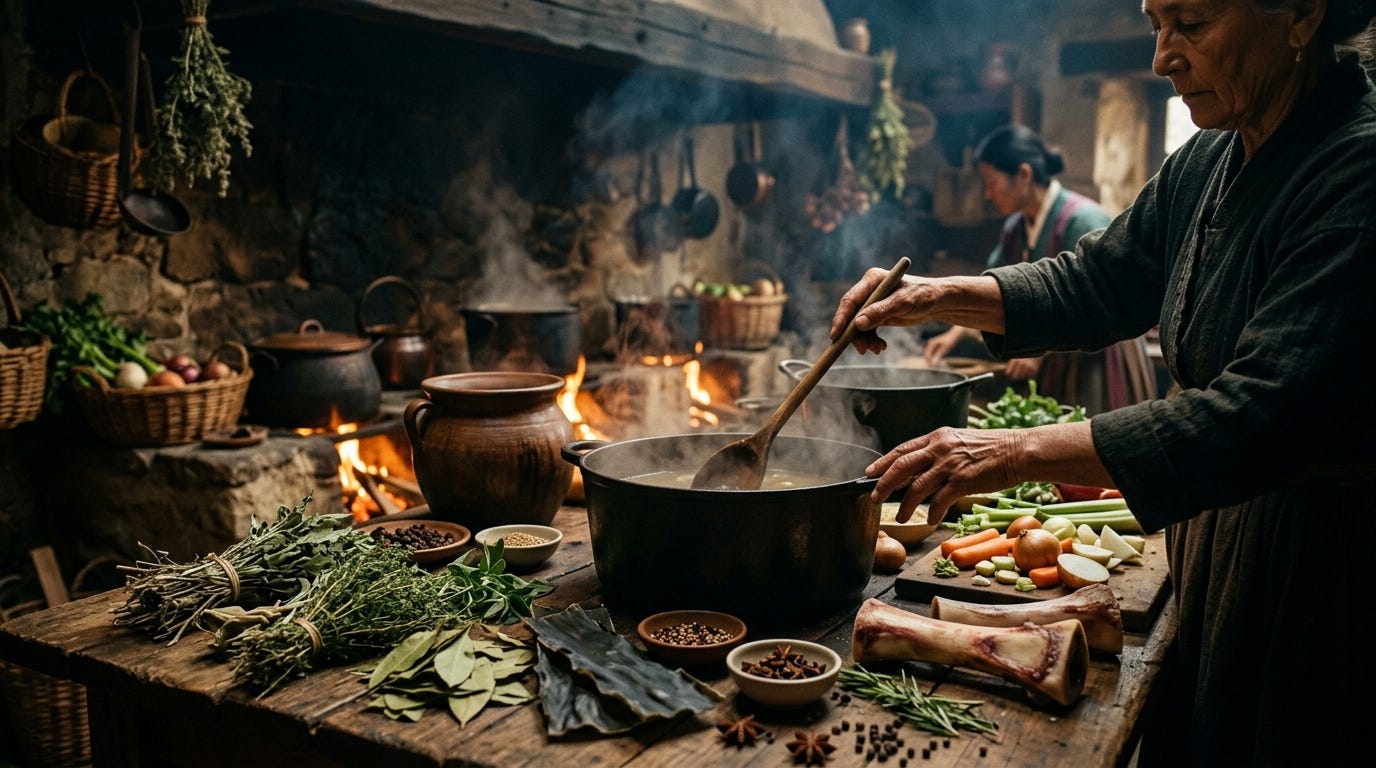
These meals were practical.
They stretched ingredients further, softened tougher foods, extracted flavor and minerals, reduced waste, and created nutrient-dense meals from simple ingredients.
But they also influenced the body differently than many modern processed foods.
Warm broths naturally combine:
fluids
minerals
amino acids
herbs
electrolytes
cooked fibers
digestion-supportive compounds
within one meal structure.
This is one reason soups often feel restorative during:
illness
stress
cold weather
recovery periods
fatigue
digestive discomfort
The body tends to respond differently to warmth, hydration, minerals, and slow-cooked foods compared to heavily processed convenience meals.
Modern nutrition conversations often focus heavily on isolated nutrients while overlooking food structure and preparation methods.
But traditional broth-based meals naturally created:
hydration support
mineral replenishment
digestion support
satiety
slower eating rhythms
nervous system comfort
all within a single bowl.
The goal of this guide is not to romanticize the past or claim broth is a cure-all.
The goal is to understand why these meals have persisted across cultures for generations and how thoughtfully prepared soups and broths may help support:
hydration
digestion
recovery
nervous system regulation
mineral balance
overall resilience
Because sometimes the simplest traditional meals continue to exist for a reason.
The Physiology of Warm Foods
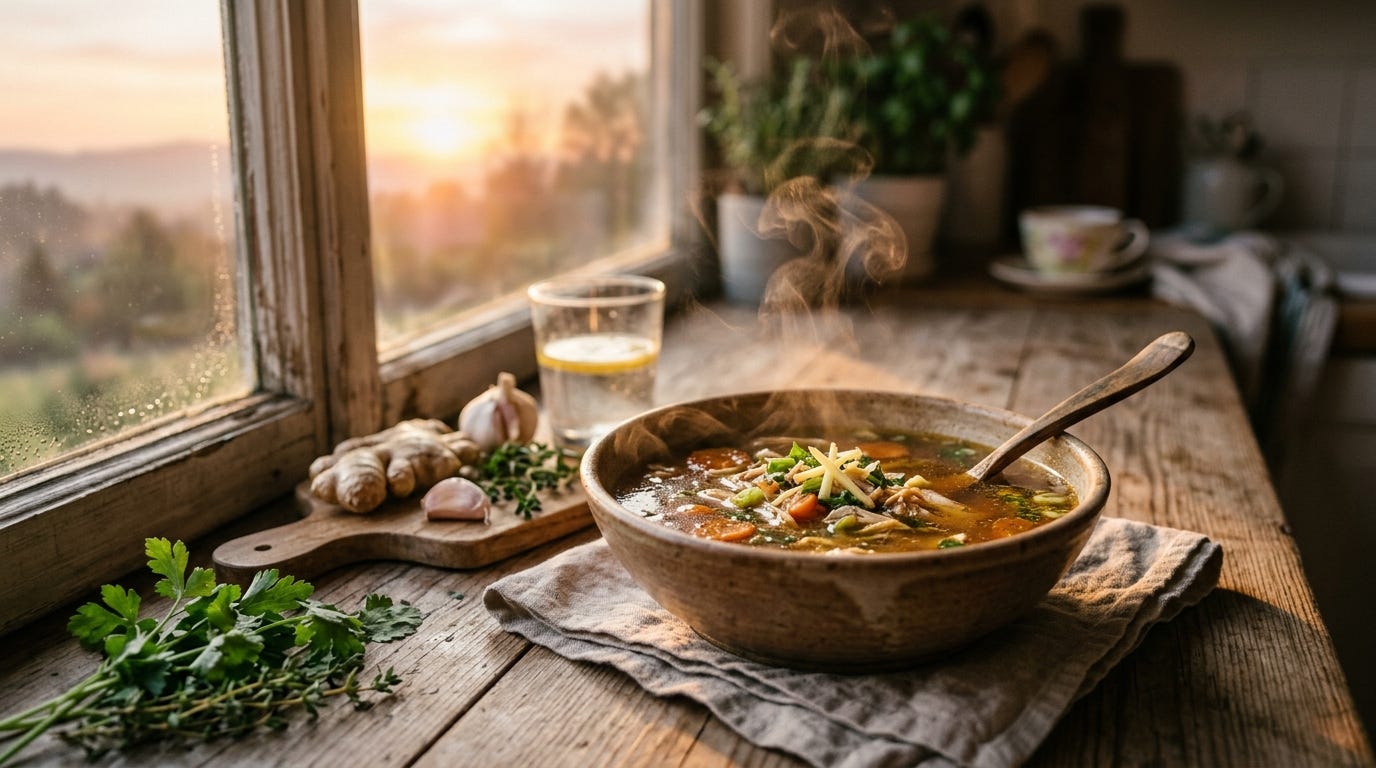
The body responds differently to warm foods than cold foods.
Temperature influences digestion, circulation, sensory signaling, and nervous system response in ways many people intuitively feel but rarely think about physiologically.
Warm meals often slow eating pace naturally.
This matters because digestion begins before food even reaches the stomach. Smell, taste, chewing, and nervous system state all influence:
stomach acid production
digestive enzyme release
bile flow
motility patterns
Warm foods may also feel easier to digest for some individuals because cooking softens fibers, connective tissues, and plant structures.
Slow-cooked soups and broths often require less mechanical digestion than heavily processed fast foods or large raw meals eaten quickly under stress.
This becomes especially noticeable during:
illness
stress
fatigue
digestive irritation
colder weather
nervous system exhaustion
Warm liquids may also influence circulation and relaxation differently than cold beverages.
The nervous system constantly monitors temperature, hydration, and internal balance. Warm meals often create a calming sensory experience that encourages slower eating and greater parasympathetic nervous system activity.
This “rest-and-digest” state supports:
digestion
absorption
nutrient utilization
recovery
bowel motility
Many traditional food systems understood this intuitively.
Cold seasons often brought:
stews
broths
root vegetable soups
slow-cooked meats
warming herbs and spices
while hotter climates often balanced warming foods with herbs, citrus, fermented ingredients, and lighter broths.
The body responds to rhythm, environment, and seasonality continuously.
Food temperature is part of that interaction.
Warmth influences not only comfort, but digestion and nervous system behavior as well.
Hydration Beyond Water
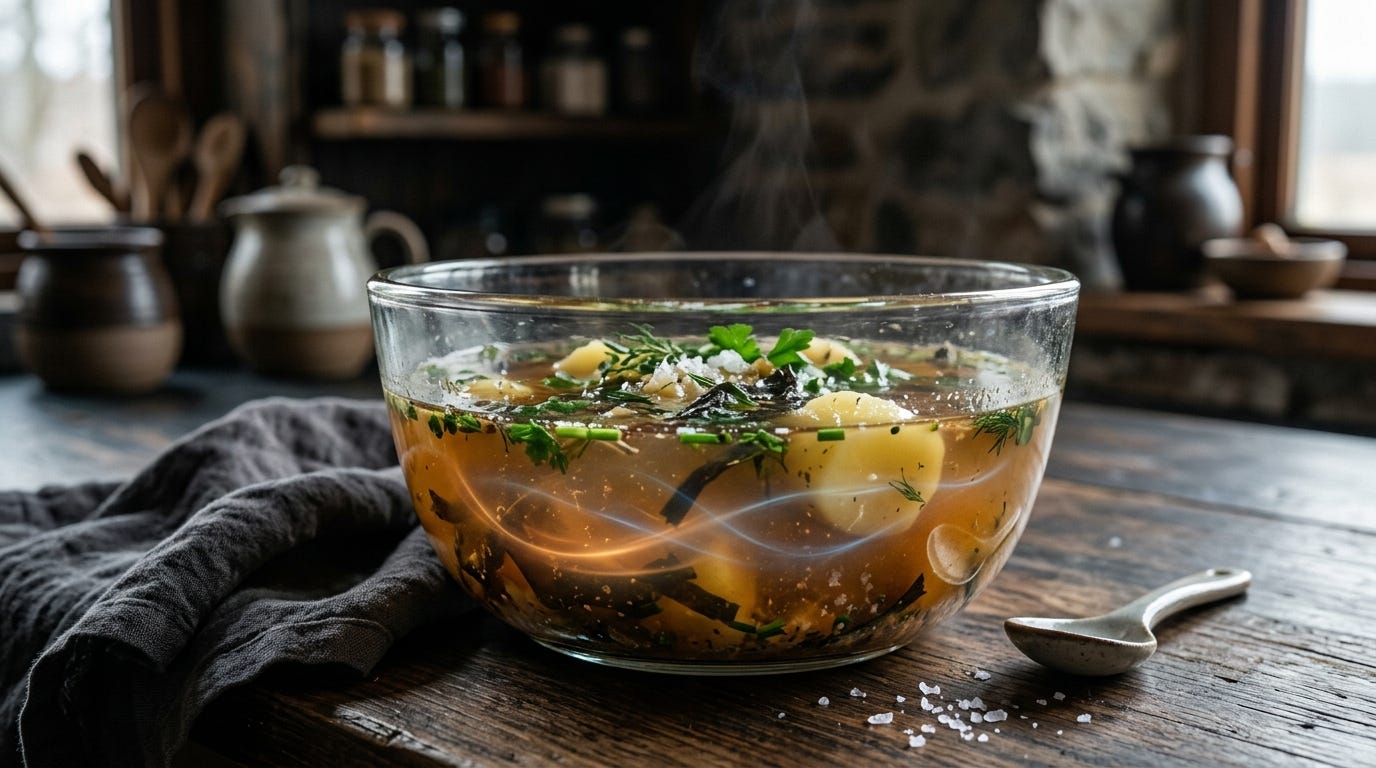
Hydration involves more than drinking fluids.
The body relies on electrolytes and minerals to regulate where water moves, how cells communicate, how muscles contract, and how nerves transmit signals.
Water alone does not fully control hydration status.
Sodium, potassium, magnesium, chloride, and other minerals help determine:
fluid balance
blood volume
cellular hydration
muscle function
energy production
nervous system signaling
This is one reason some people continue feeling:
fatigued
dizzy
cramp-prone
thirsty
mentally foggy
despite drinking large amounts of water.
Broths naturally combine:
fluids
sodium
trace minerals
amino acids
warming compounds
within one structure.
Traditional cultures frequently used:
broths
soups
mineral-rich stews
salted foods
fermented liquids
to support hydration during:
illness
physical labor
heat exposure
winter seasons
fasting periods
Slow simmering helps release minerals and compounds from ingredients into the liquid itself.
Vegetables, bones, herbs, roots, seaweeds, and salts all contribute to the mineral composition of broth-based meals.
Warm broths may also encourage slower fluid intake and greater fluid retention compared to rapidly consuming plain water alone.
The body regulates hydration carefully.
Electrolytes help determine whether water:
stays within circulation
enters cells efficiently
is rapidly excreted
supports muscular and nervous system function
Hydration is not simply about quantity.
It is about balance, retention, mineral status, and fluid distribution throughout the body.
Slow Cooking and Nutrient Extraction
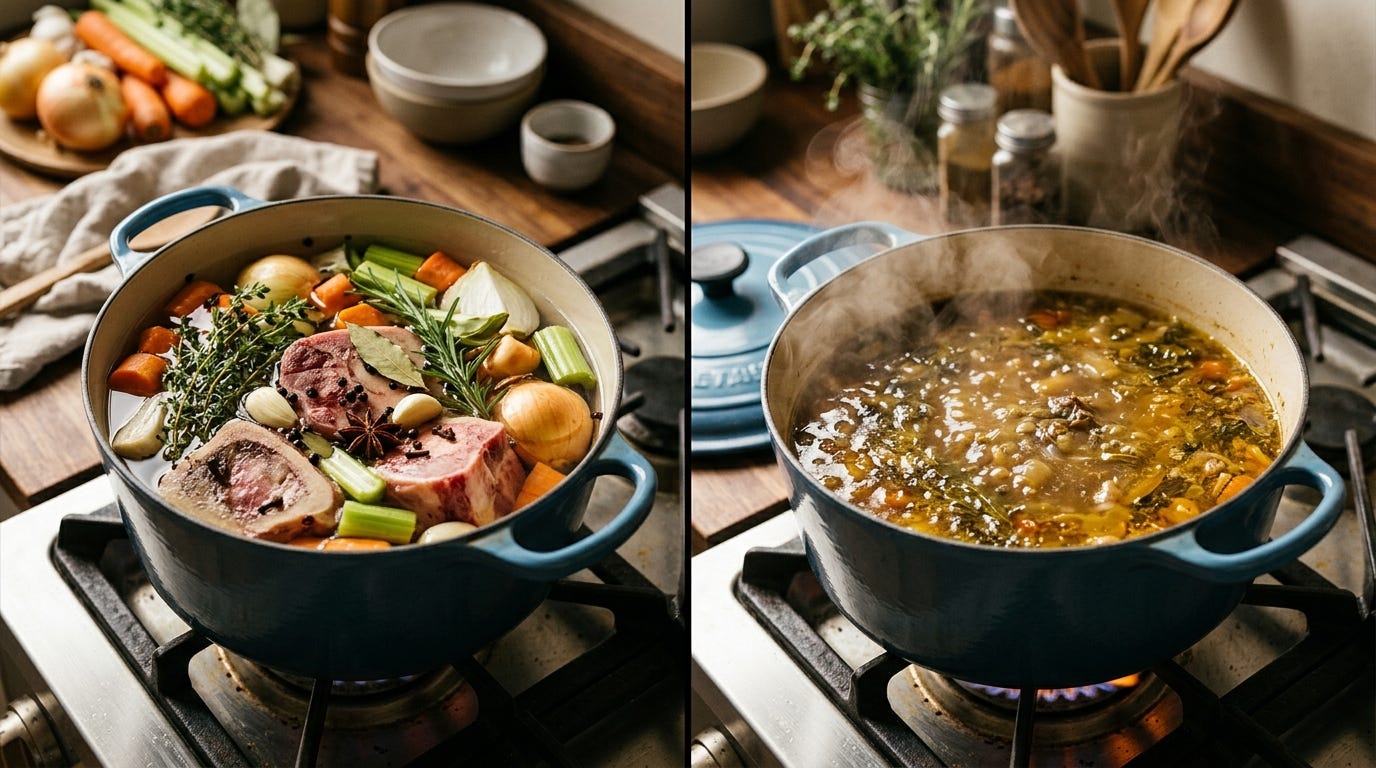
Cooking changes food chemistry.
Heat, moisture, time, acidity, and preparation methods all influence how nutrients, fibers, proteins, and minerals behave during digestion.
Slow cooking is one of the oldest preparation methods in human history because it transforms foods in multiple ways simultaneously.
Long simmering softens:
connective tissues
plant fibers
roots
legumes
tougher cuts of meat
while gradually releasing flavor compounds, amino acids, gelatin, and minerals into the cooking liquid itself.
This process creates meals that are often:
easier to digest
deeply flavorful
warming
hydrating
nutrient-dense
Bones and connective tissues contain collagen-rich structures that gradually break down into gelatin and amino acids during prolonged cooking.
Vegetables release:
potassium
aromatic compounds
minerals
plant antioxidants
into the broth over time.
Herbs and spices also behave differently during slow cooking.
Garlic mellows. Onions sweeten. Ginger softens. Herbs infuse the liquid with aromatic compounds that change both flavor and digestion experience.
Acidic ingredients such as:
vinegar
tomatoes
lemon
may help increase mineral extraction during cooking.
Traditional food systems often understood this practically without needing modern terminology.
Long simmering allowed people to:
maximize food resources
soften difficult-to-digest foods
create satisfying meals
preserve warmth during colder seasons
nourish large families affordably
The liquid itself becomes part of the nourishment.
Unlike many modern meals where liquids and solids are separated entirely, broth-based meals naturally combine:
fluids
minerals
amino acids
salts
cooked fibers
into one integrated structure.
Slow cooking changes not only flavor, but digestibility and nutrient accessibility as well.
Why Soups Are Often Easier to Digest

Digestion requires energy.
Before nutrients can support muscles, hormones, recovery, energy production, or brain function, food first needs to be mechanically and chemically broken down throughout the digestive tract.
Soups and broths often reduce part of this digestive workload naturally.
Cooking softens plant fibers, connective tissues, starches, and proteins. Liquids also help distribute heat and moisture evenly throughout food, changing texture and digestibility.
This is one reason soups often feel gentler during:
illness
stress
fatigue
digestive discomfort
recovery periods
Warm liquids may also stimulate digestive processes differently than cold foods.
The smell, warmth, and flavor of soup can activate digestive signaling before the first bite is even swallowed. Saliva production increases. Stomach acid begins responding. Digestive enzymes prepare for incoming food.
The nervous system plays a major role here.
Meals eaten calmly and slowly in a warm state often digest differently than meals eaten quickly under stress or distraction.
Many soups naturally encourage:
slower eating
more chewing
warmth
hydration
calmer pacing
which may further support digestion.
Certain soup ingredients have traditionally been paired together because they complement digestive function:
ginger
garlic
herbs
onions
fermented additions
mineral salts
slow-cooked vegetables
Broth-based meals also allow nutrients to remain suspended within the liquid itself.
Minerals, gelatin, amino acids, and flavor compounds become distributed throughout the broth rather than remaining isolated within solid foods alone.
This creates a different digestive experience compared to heavily processed foods that are:
rapidly eaten
low in fiber
low in hydration
highly refined
disconnected from mineral balance
The body often responds well to meals that combine warmth, hydration, minerals, and slower digestion rhythms together.
