

I. UNDERSTANDING HONEY
Introduction
Honey has been valued across cultures for thousands of years because it offered far more than sweetness alone.
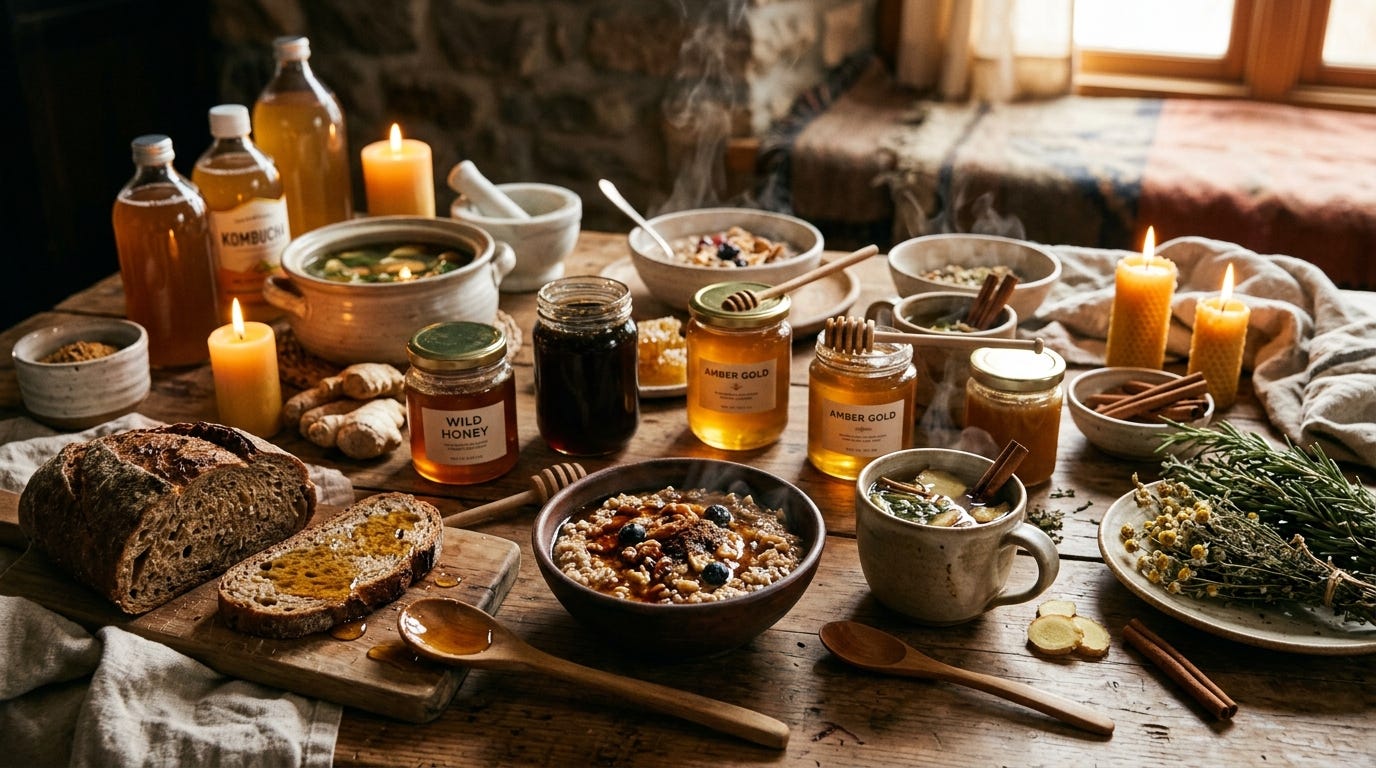
Long before refined sugar became a daily staple, honey was used in teas, broths, herbal preparations, fermented drinks, porridges, desserts, and recovery foods because it added flavor, aroma, preservation, and nourishment all at once. Traditional cultures often viewed honey as something to use thoughtfully and intentionally rather than excessively.
The relationship between honey and traditional wellness practices developed naturally over time.
Warm honey drinks were paired with ginger and herbs during colder seasons. Honey was stirred into teas and broths during illness and exhaustion. Fermented garlic honey, herbal tonics, and honey mixed with warming spices appeared repeatedly across many cultures because these combinations created foods and drinks that felt grounding, soothing, and restorative.
Different honeys also developed distinct reputations depending on where they came from.
Some honeys were light and floral while others were dark, earthy, and deeply aromatic. The flowers visited by bees influenced the flavor, color, texture, and overall character of the honey itself, which is why honey from one region could taste completely different from honey produced somewhere else.
Modern sweeteners are often heavily refined and disconnected from the original food source. Honey, especially when minimally processed, remains much closer to its natural structure. This gives it a level of complexity that extends beyond sweetness alone.
This guide explores honey through the lens of:
traditional food wisdom
digestion
warming foods
herbal pairings
recovery recipes
hydration
balanced nourishment
while keeping the focus practical and grounded.
Honey remained one of the world’s most valued foods for generations because it fit naturally into slower, more nourishing food traditions centered around balance and moderation.
What Makes Honey Unique
Honey reflects the environment it comes from.
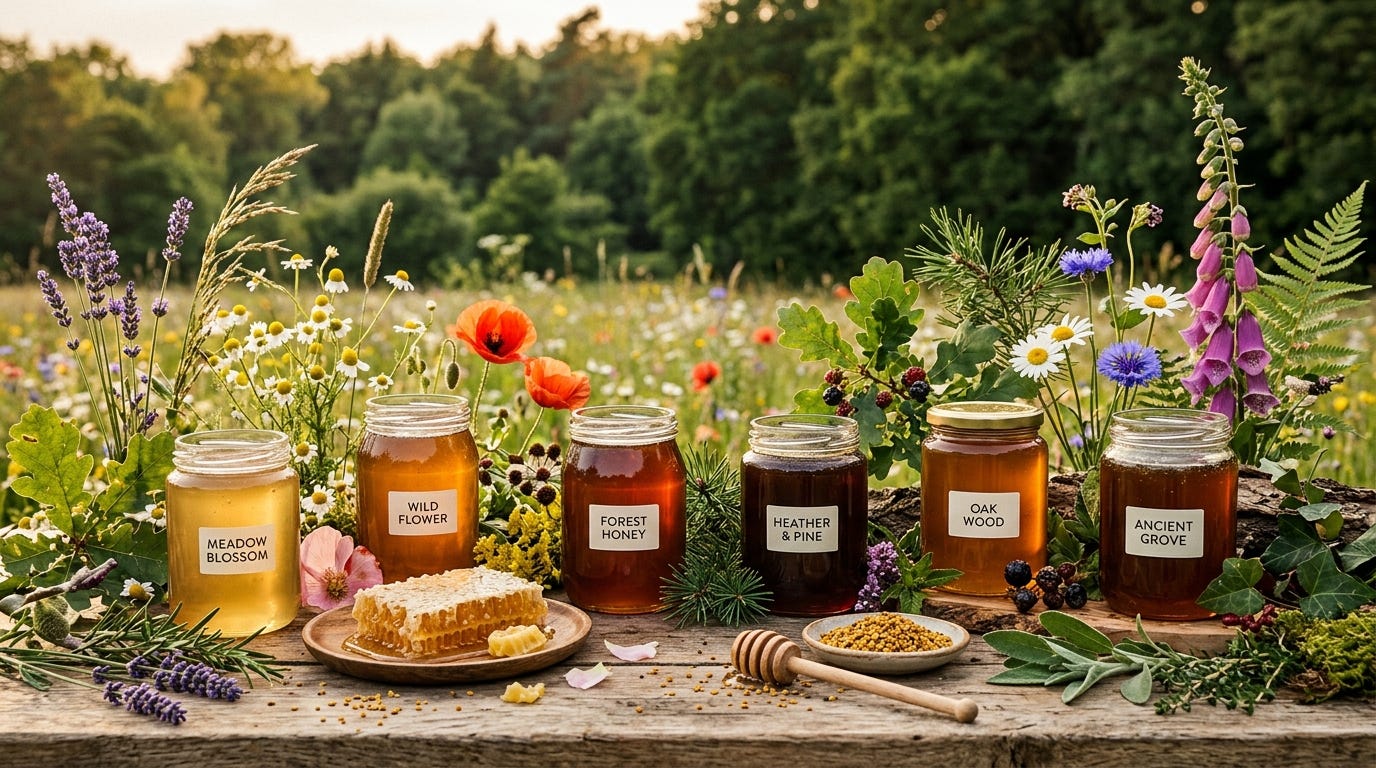
The flowers visited by bees, the surrounding climate, the season, and the region all shape the flavor, aroma, texture, and color of the final honey. Every jar carries traces of the plants and ecosystems the bees interacted with while collecting nectar.
This is one reason honey varies so dramatically.
Some honeys are pale, delicate, and floral while others are dark, mineral-rich, earthy, and deeply aromatic. Wildflower honey changes depending on the season and diversity of flowers available. Forest honeys develop richer flavors than lighter blossom honeys because they contain different plant compounds and nectar sources.
Raw honey naturally contains sugars alongside enzymes, organic acids, trace minerals, aromatic compounds, polyphenols, and small amounts of pollen and plant particles carried from flowers. These components contribute to the flavor complexity and sensory experience that make traditional honey feel very different from highly refined sugar.
Color often signals differences in flavor and composition.
Darker honeys such as buckwheat honey tend to taste richer and more robust, while lighter honeys such as acacia or clover feel milder and softer. Traditional cultures frequently used darker honeys during colder months and lighter floral honeys in teas, yogurts, and lighter preparations.
Honey also behaves differently in food preparation compared to refined sweeteners.
Its floral compounds interact naturally with:
herbs
citrus
teas
warming spices
fermented foods
broths
creating layered flavors rather than one-dimensional sweetness.
This is one reason honey paired so naturally with ingredients like ginger, cinnamon, lemon, garlic, mint, and herbal teas throughout traditional food systems.
Honey’s complexity comes from the relationship between bees, plants, climate, and preparation methods all working together. That connection to nature and seasonality is part of what made honey so valued across generations.
Raw Honey vs Processed Honey
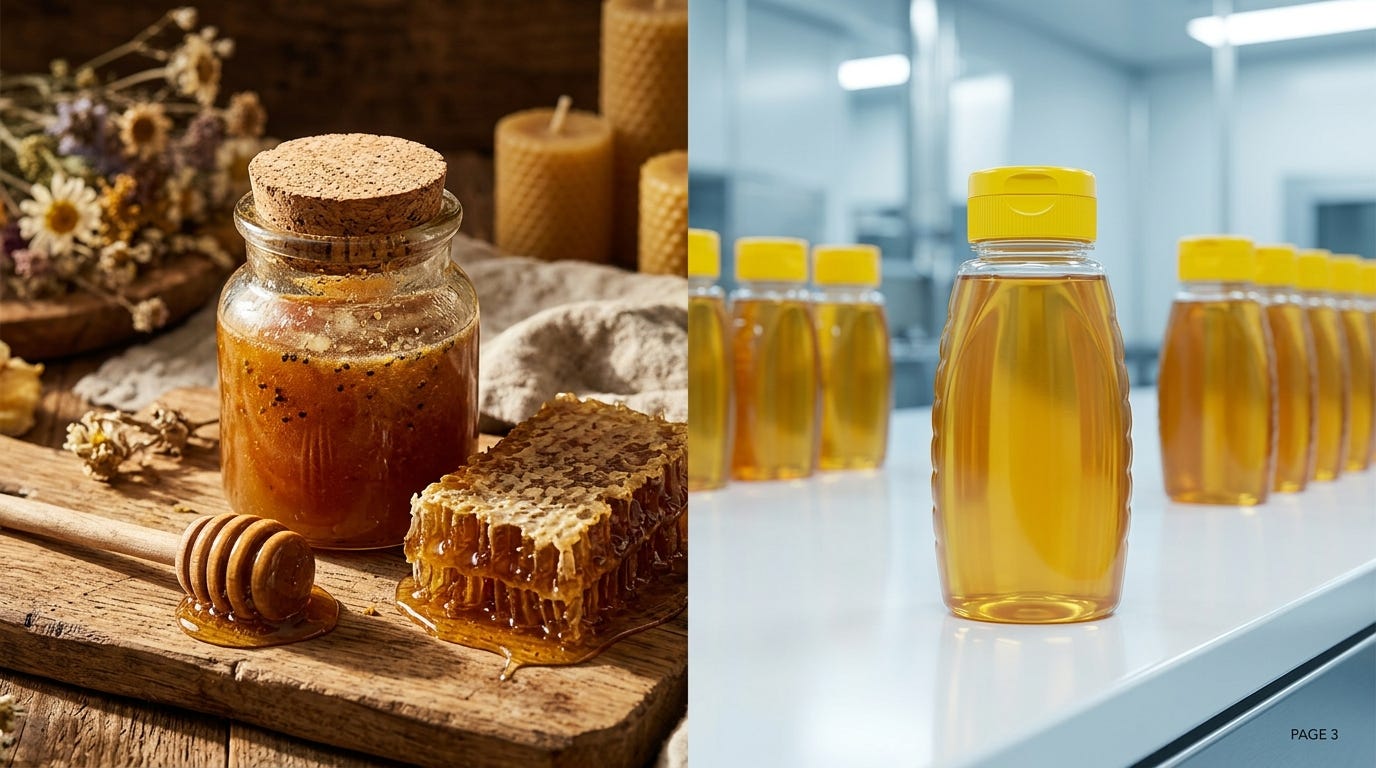
Honey changes significantly depending on how it is handled after harvesting.
Raw honey is typically strained with minimal processing, allowing more of its natural aroma, texture, enzymes, and plant compounds to remain intact. Processed honey often undergoes additional heating and filtration designed to improve consistency, shelf appearance, and large-scale commercial stability.
