

This guide is designed to be read from beginning to end for a full understanding. A one-page summary and actionable cheat sheet is included at the end for quick reference.
I. WHAT FIBER ACTUALLY IS
Fiber Is Not One Substance
Fiber is often described as a single nutrient.
In reality, it is a category.
The word fiber refers to a wide range of plant compounds that resist digestion in the small intestine. Because human digestive enzymes cannot break them down directly, these compounds travel into the large intestine where they become substrate for the gut microbiome.
This is where fiber begins to influence physiology.
The gut microbiome is an ecosystem composed of trillions of microorganisms. These microbes rely on plant fibers as fuel. When fiber reaches the colon, bacteria ferment it and convert it into metabolic signals known as short-chain fatty acids.
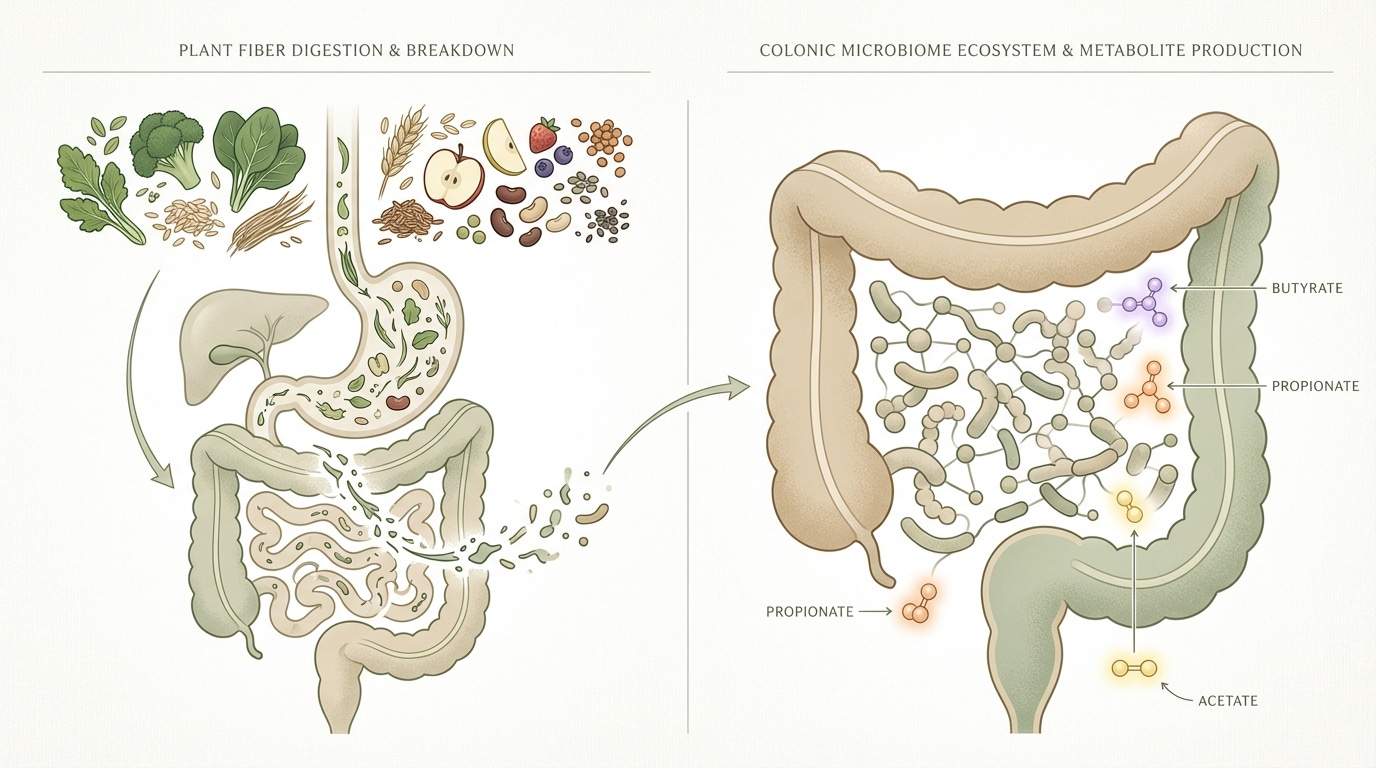
The most important of these include:
Butyrate
Propionate
Acetate
These molecules influence far more than digestion. They regulate inflammation, support the intestinal barrier, influence metabolism, and communicate with the immune system.
Fiber therefore functions less like a simple nutrient and more like an environmental signal for the microbiome.
But not all fibers behave the same way.
Different fibers feed different microbial species. Each type produces distinct fermentation patterns and metabolic outputs.
Understanding this distinction is the foundation of fiber diversity.
Why Modern Diets Lack Fiber Diversity
For most of human history, fiber intake was naturally varied.
Traditional diets included a rotating mixture of vegetables, roots, legumes, fruits, seeds, and wild plants. Each plant contributed different fiber structures and polyphenols that supported a wide range of microbes.
Modern diets are far more repetitive.
Many people rely on a narrow set of plant foods, often limited to a few staples such as wheat products, lettuce, bananas, or potatoes. Even individuals who attempt to increase fiber intake may do so by repeatedly consuming the same foods or fiber supplements.
This pattern changes the microbial environment.
When fiber diversity narrows, microbial diversity often narrows as well. Certain bacterial species flourish while others decline due to lack of substrate.
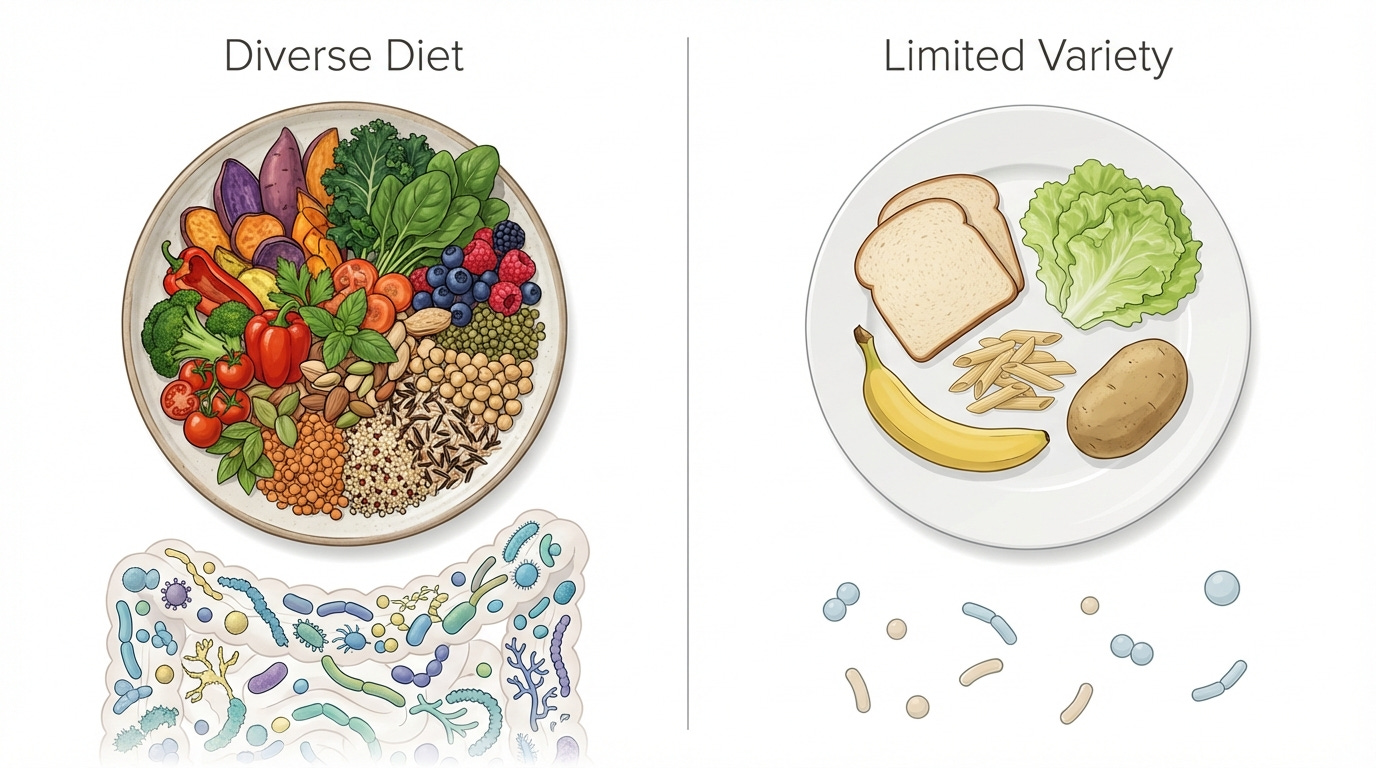
Reduced diversity in the gut ecosystem has been associated with:
Lower production of beneficial metabolites
Increased fermentation imbalance
Reduced metabolic flexibility
Greater susceptibility to digestive symptoms
The goal of fiber intake is therefore not simply more fiber, but more types of fiber.
Variety shapes the ecosystem.
The Difference Between Fiber Volume and Fiber Variety
Nutrition advice often focuses on total fiber intake.
Common recommendations suggest approximately 25 to 38 grams per day, depending on sex and body size.
While total intake matters, quantity alone does not determine microbial diversity.
A diet providing 35 grams of fiber from one or two foods does not support the same microbial ecosystem as a diet providing the same amount from a wide range of plants.
Fiber structures differ chemically.
Some fibers dissolve in water and form gels.
Others remain intact and provide mechanical bulk.
Some ferment rapidly.
Others ferment slowly over time.
These differences influence:
Which microbial species grow
Where fermentation occurs in the colon
What metabolites are produced
Large amounts of a single fiber source may increase fermentation pressure without increasing microbial diversity.
Small amounts of varied fibers often produce more balanced microbial signaling.
In other words, diversity often matters more than volume.
