


Hi friends,
Seeds don’t usually get the same attention as colorful berries, leafy greens, fermented foods, or trendy superfoods.
They’re small. They’re inexpensive. And most of us probably don’t think much about them.
But biologically, seeds are fascinating.
A seed contains the nutrients a young plant needs to begin growing before it can produce energy on its own. That means many edible seeds naturally contain concentrated stores of minerals, fats, protein, fiber, and protective plant compounds.

Pumpkin seeds are packed with magnesium. Chia seeds contain remarkable amounts of fiber. Flaxseeds provide lignans and omega-3 fats. Sesame seeds contain minerals like copper and calcium. Hemp seeds provide protein and magnesium.
Tiny foods can carry a surprising amount of nutrition.
That doesn’t make seeds miracle foods. Eating a tablespoon of chia seeds won’t transform your health overnight, and adding pumpkin seeds to an otherwise poor diet doesn’t erase everything else you eat.
But incorporating a variety of seeds into your diet is one remarkably simple way to add nutrients that many of our bodies depend on every single day.
So today, let’s look at some of the most interesting seeds you can eat, what makes each one different, and why these tiny foods deserve a little more attention.
In Less Than 10 Minutes, We’ll Cover
Why seeds are so nutritionally concentrated
Why pumpkin seeds are packed with minerals
What makes chia seeds so interesting for your gut
Why flaxseeds are different from most seeds
What makes hemp seeds unusually rich in protein
Why sesame seeds deserve more attention
Where sunflower seeds fit in
How to actually eat more seeds
Before we begin, a quick note for readers who want to go deeper…
If you enjoy practical wellness breakdowns that connect nutrition, physiology, and everyday habits without the wellness fluff, consider subscribing to Holistic Magazine.
Free subscribers receive structured, science-backed wellness articles each week.
Paid subscribers receive our deeper protocols, advanced nutrition guides, meal systems, and premium wellness breakdowns.
Why Are Seeds So Nutritionally Dense?
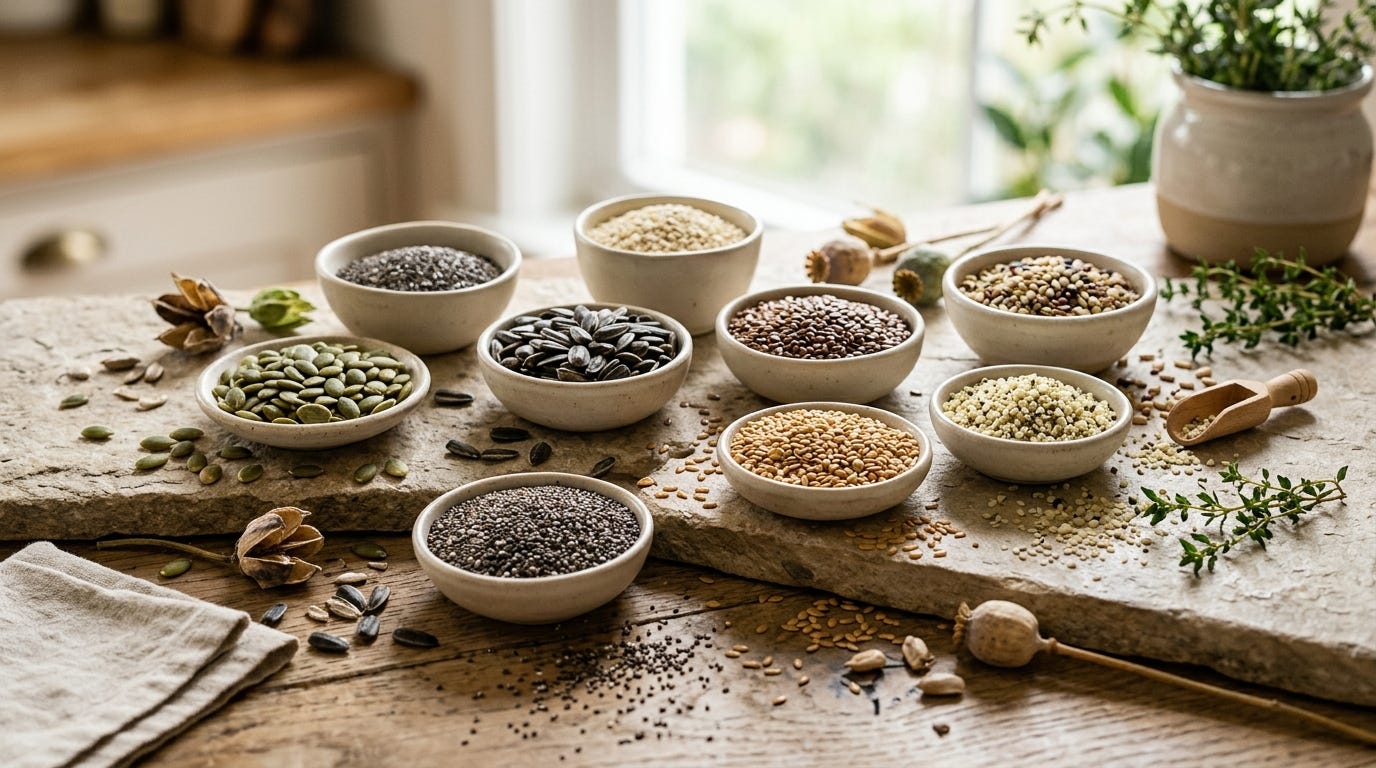
Think about what a seed actually is.
It’s essentially a tiny biological starter kit.
Before a young plant develops roots and leaves capable of gathering nutrients and producing energy, it needs stored resources to begin growing.
That’s one reason seeds can contain such an interesting combination of fats, carbohydrates, protein, minerals, and other compounds.
And while different seeds have dramatically different nutritional profiles, there’s a pattern.
Seeds tend to pack a lot of nutrition into a very small package.
They’re particularly interesting sources of minerals. Magnesium, zinc, iron, copper, manganese, selenium, phosphorus, and calcium can all be found in different seeds.
Many also provide fiber, unsaturated fats, plant protein, and phytochemicals.
But here’s where it gets more interesting.
Different seeds specialize in different things.
Pumpkin Seeds Are Mineral Powerhouses
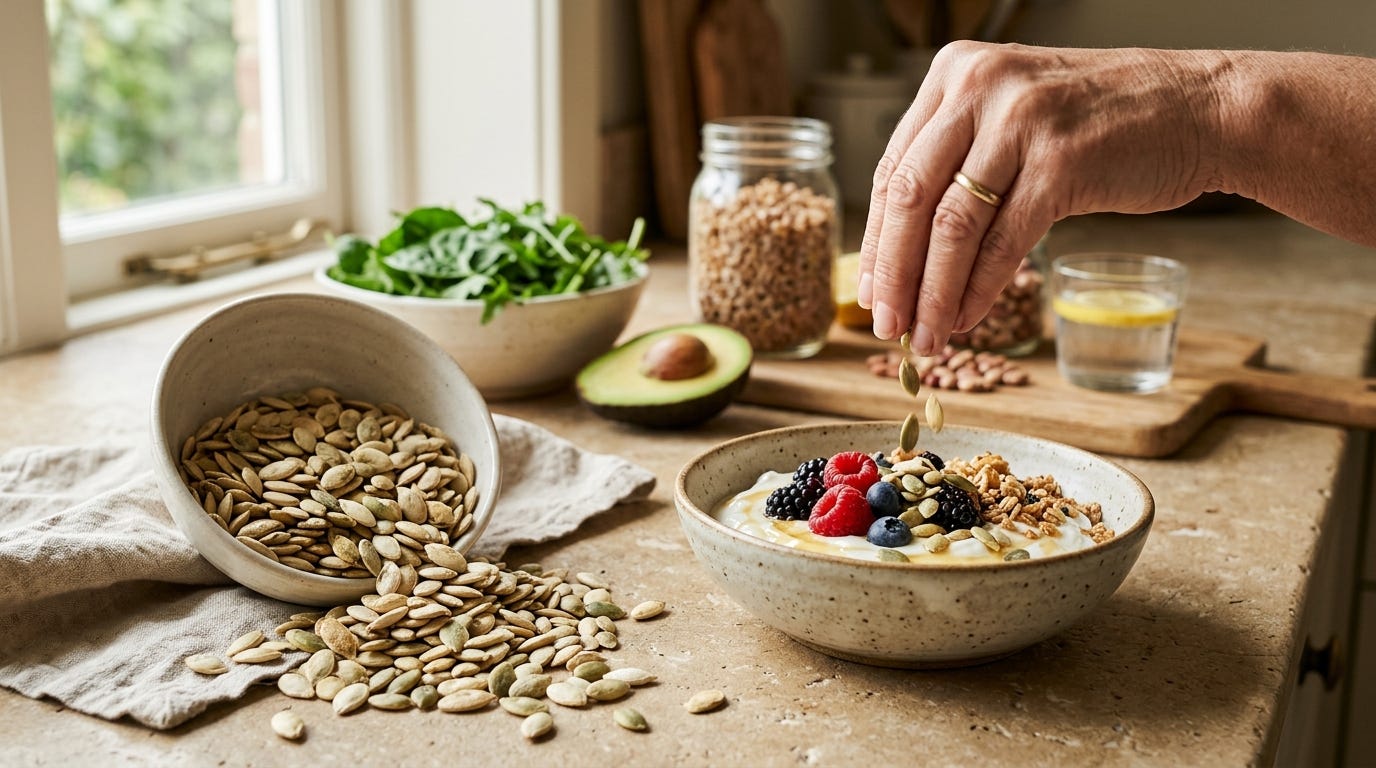
If there’s one seed worth keeping around your kitchen, pumpkin seeds deserve consideration.
They’re particularly notable for magnesium.
Magnesium participates in hundreds of enzyme-driven reactions throughout your body. Your muscles use it. Your nervous system uses it. Your cells need it for energy metabolism, and your bones contain substantial amounts of it.
Pumpkin seeds also provide zinc, iron, copper, phosphorus, protein, and unsaturated fats.
That’s quite a nutritional package for something you can sprinkle over a salad or eat by the handful.
They’re also easy to incorporate into meals. Add them to Greek yogurt. Sprinkle them over vegetables. Toss them onto salads. Add them to homemade trail mix.
Pumpkin seeds aren’t exotic. They’re simply nutrient dense.
And sometimes that’s exactly what makes a food useful.
Chia Seeds Are Basically Tiny Fiber Packages
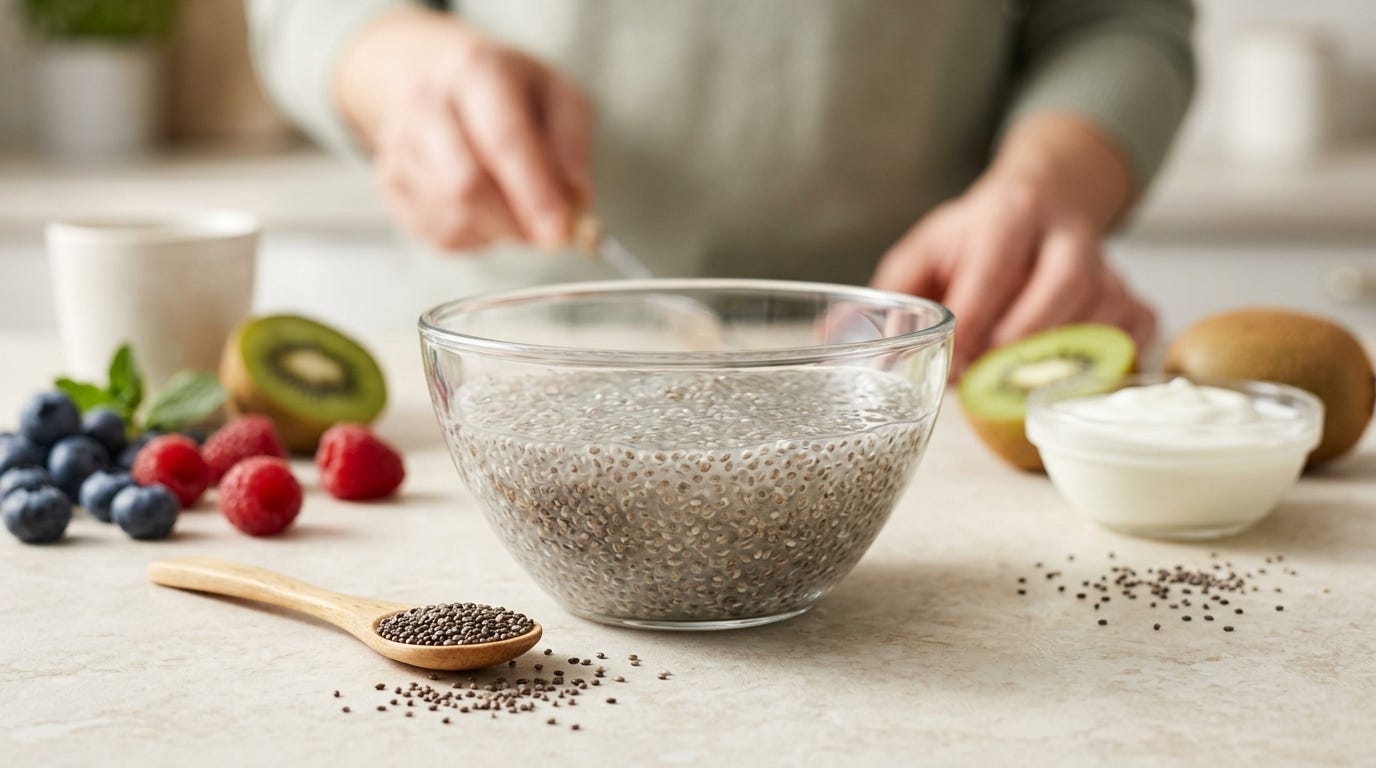
Put chia seeds into water and something strange happens.
They swell.
Within several minutes, each seed develops a gel-like coating. That’s largely because chia seeds contain significant amounts of soluble and gel-forming fiber that interact with water.
And that fiber is one of the most interesting things about them.
Fiber isn’t simply material that passes through your digestive system untouched. Different fibers behave differently.
Some add bulk to stool. Some hold water. Some are fermented by microbes living in your colon. And some can influence how quickly nutrients move through your digestive system.
Chia seeds also provide plant-based omega-3 fatty acids, primarily alpha-linolenic acid, or ALA, along with magnesium, calcium, phosphorus, and some protein.
You don’t need enormous quantities.
A tablespoon or two can easily disappear into yogurt, smoothies, overnight mixtures, or chia pudding.
Sometimes adding nutrition is easier than removing foods from your diet.
Flaxseeds Contain Something Most Foods Don’t
Flaxseeds have been eaten for thousands of years, but modern nutrition research has become particularly interested in two components: ALA omega-3 fats and lignans.
Lignans are plant compounds with antioxidant and phytoestrogen properties.
Flax is one of the richest dietary sources of lignans, which makes it nutritionally unusual even among seeds.
Flaxseeds also contain fiber and plant-based omega-3 fats.
But there’s an important detail.
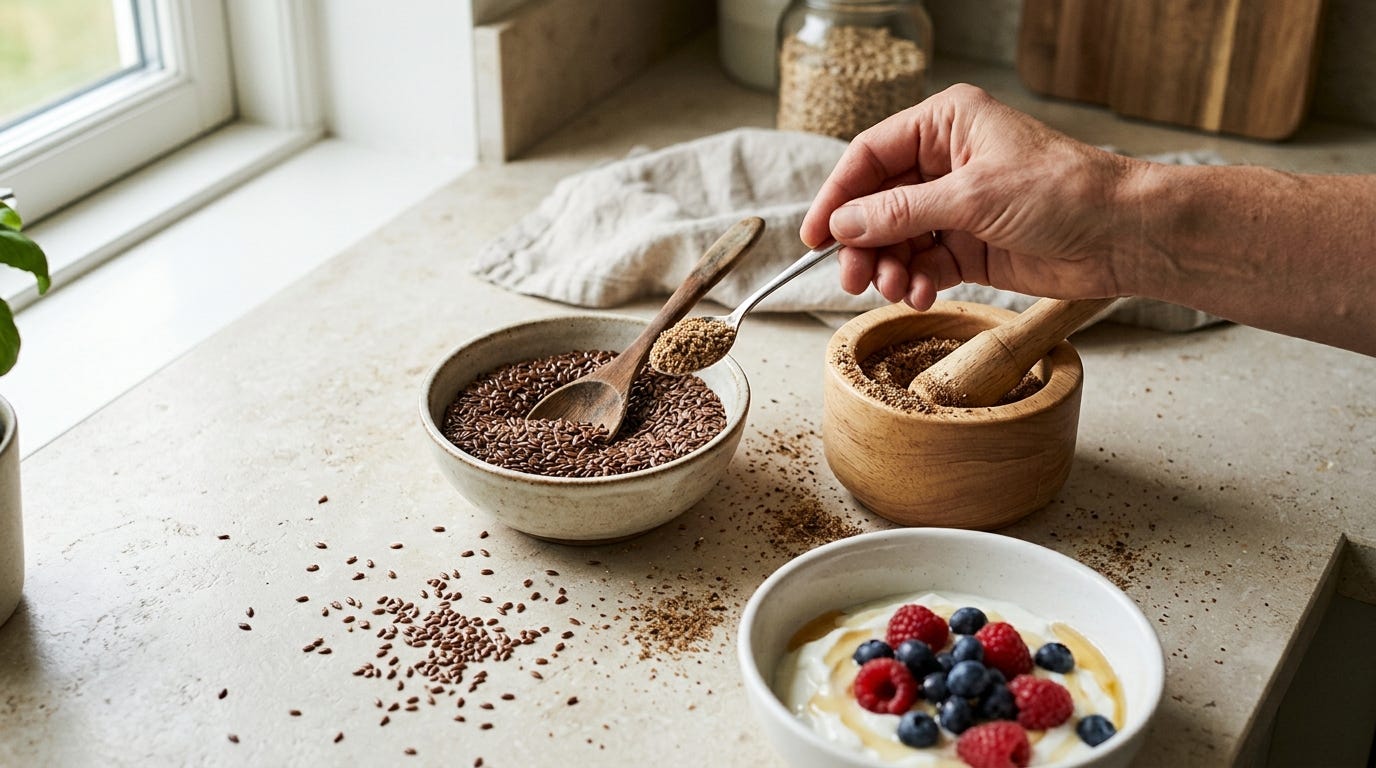
Whole flaxseeds can sometimes pass through the digestive tract relatively intact.
Grinding them makes their nutrients much more accessible.
That’s why ground flaxseed is generally more useful nutritionally than simply swallowing whole flaxseeds.
Try stirring ground flax into Greek yogurt, adding it to smoothies, sprinkling it over berries, or incorporating it into baked foods.
A tiny change in food preparation can sometimes change how much nutrition your body can actually access.
Hemp Seeds Are Surprisingly Rich in Protein

Hemp seeds are different.
While many seeds provide some protein, hemp seeds contain a particularly useful combination of protein and healthy fats.
They’re also rich in magnesium and provide phosphorus, iron, zinc, and other minerals.
And unlike chia and flax, hemp hearts have a soft texture and mild, slightly nutty flavor.
That makes them incredibly easy to use.
You can sprinkle hemp hearts over eggs, yogurt, salads, vegetables, soups, or avocado.
A few spoonfuls won’t replace an entire protein-rich meal.
But they can quietly increase the nutritional density of foods you’re already eating.
That’s an important concept.
Healthy eating doesn’t always require completely changing your meals. Sometimes you simply make the meals you already eat more nutritious.
Sesame Seeds Deserve More Attention
Sesame seeds are easy to overlook.
We see them sprinkled on hamburger buns or bread and rarely think about what they actually contain.
But sesame seeds are nutritionally interesting.
They provide copper, calcium, magnesium, iron, zinc, fiber, healthy fats, and plant compounds known as lignans.
Two lignans found in sesame, sesamin and sesamolin, have received particular scientific interest.
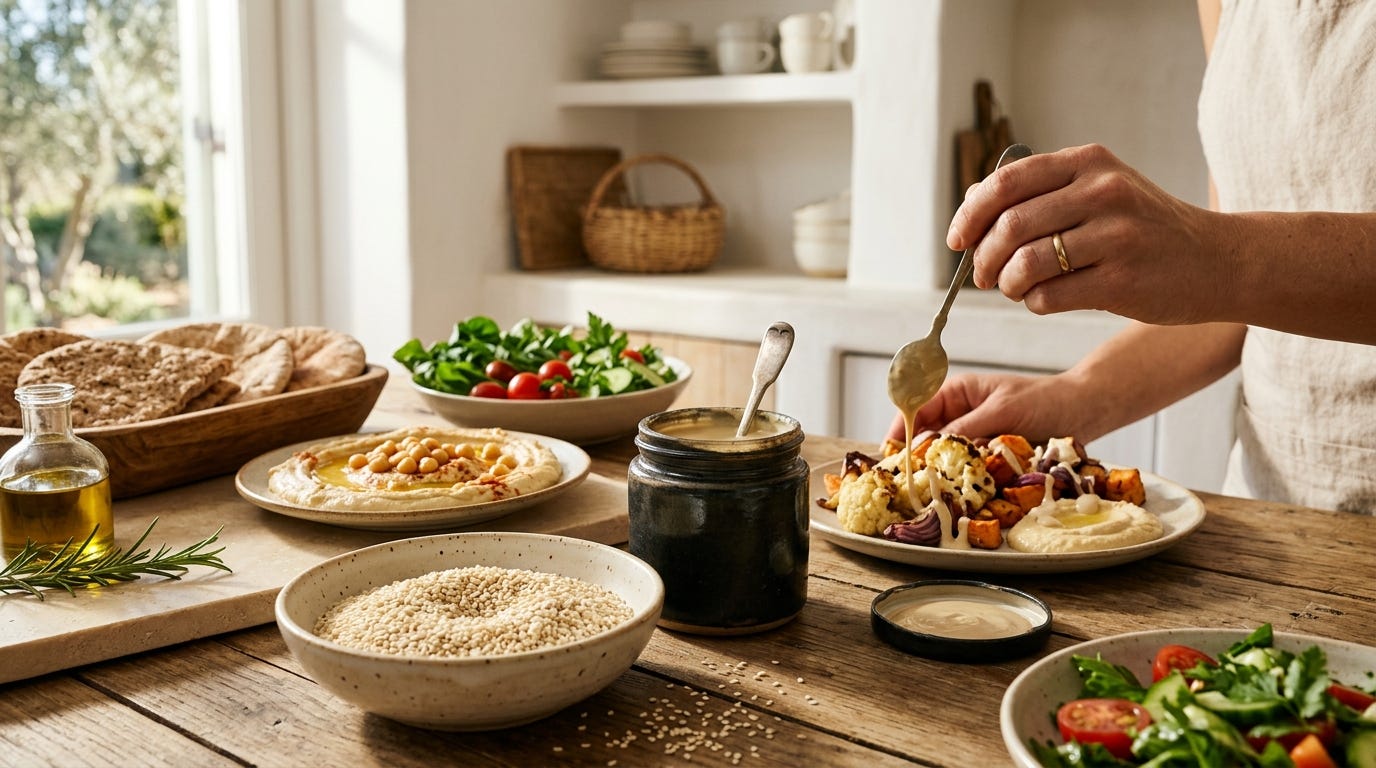
And there’s another interesting way to eat sesame seeds: tahini.
Tahini is simply a paste made primarily from ground sesame seeds.
Because the seeds are ground, you can incorporate a meaningful amount into sauces, hummus, dressings, or spreads without thinking much about it.
Once again, we’re seeing the same pattern.
A very ordinary food can contain an extraordinary variety of nutrients.
Don’t Forget Sunflower Seeds
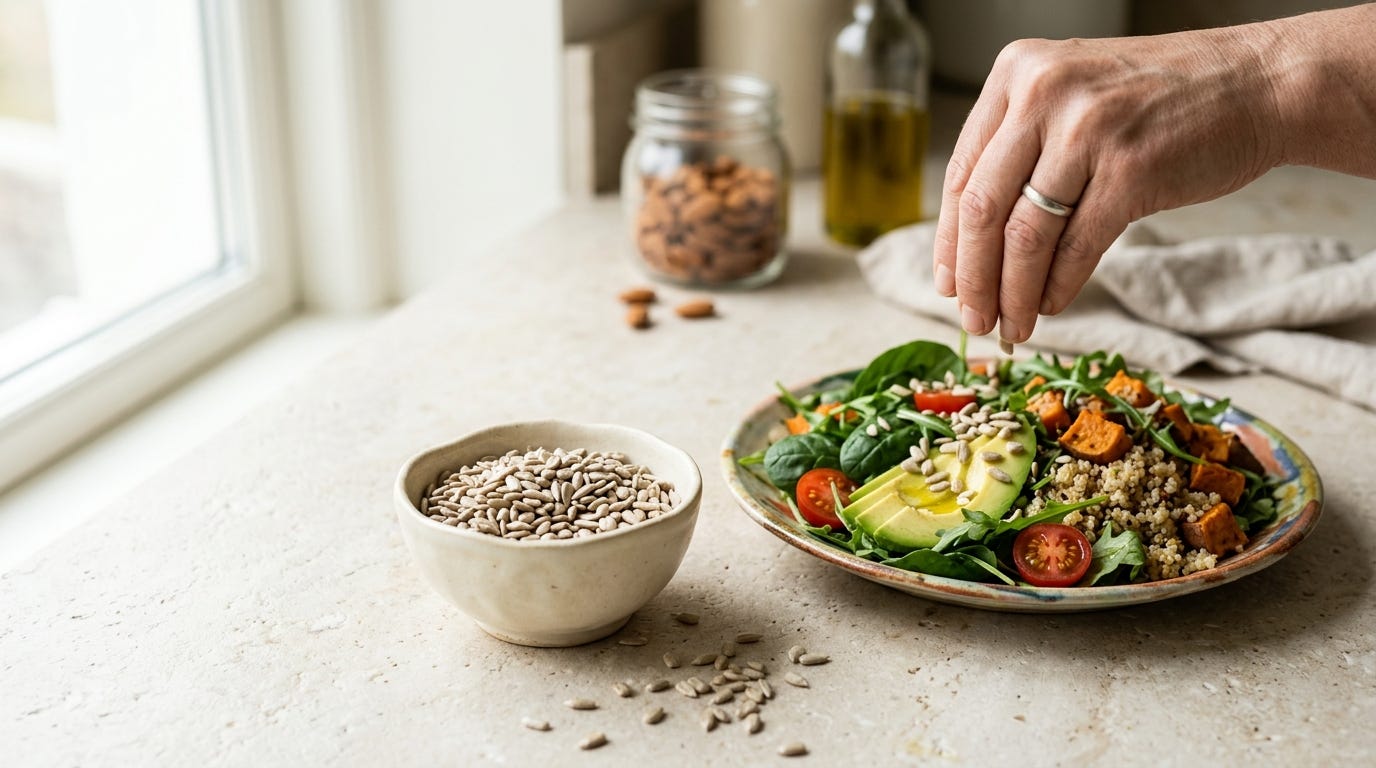
Sunflower seeds bring something slightly different to the table.
They’re particularly notable for vitamin E.
Vitamin E is a fat-soluble antioxidant that helps protect cell membranes from oxidative damage.
Sunflower seeds also provide magnesium, selenium, copper, healthy fats, protein, and several B vitamins.
A small handful can provide meaningful nutrition without requiring any complicated preparation.
Just keep an eye on heavily salted versions if you’re already consuming plenty of sodium elsewhere in your diet.
Plain or lightly salted sunflower seeds are an easy addition to salads, vegetables, yogurt bowls, or trail mixes.
Seeds Also Feed Your Gut
One of the most interesting things about seeds isn’t a vitamin or mineral.
It’s their fiber.
Your digestive system isn’t simply a tube that processes food.
Your colon contains an enormous ecosystem of microorganisms that interact with components of your diet, particularly certain fibers and resistant carbohydrates.
When gut bacteria ferment certain fibers, they can produce compounds called short-chain fatty acids, including butyrate, acetate, and propionate.
These compounds participate in numerous processes related to intestinal and metabolic health.
Not every type of fiber behaves the same way, and seeds aren’t the only foods your gut microbes need.
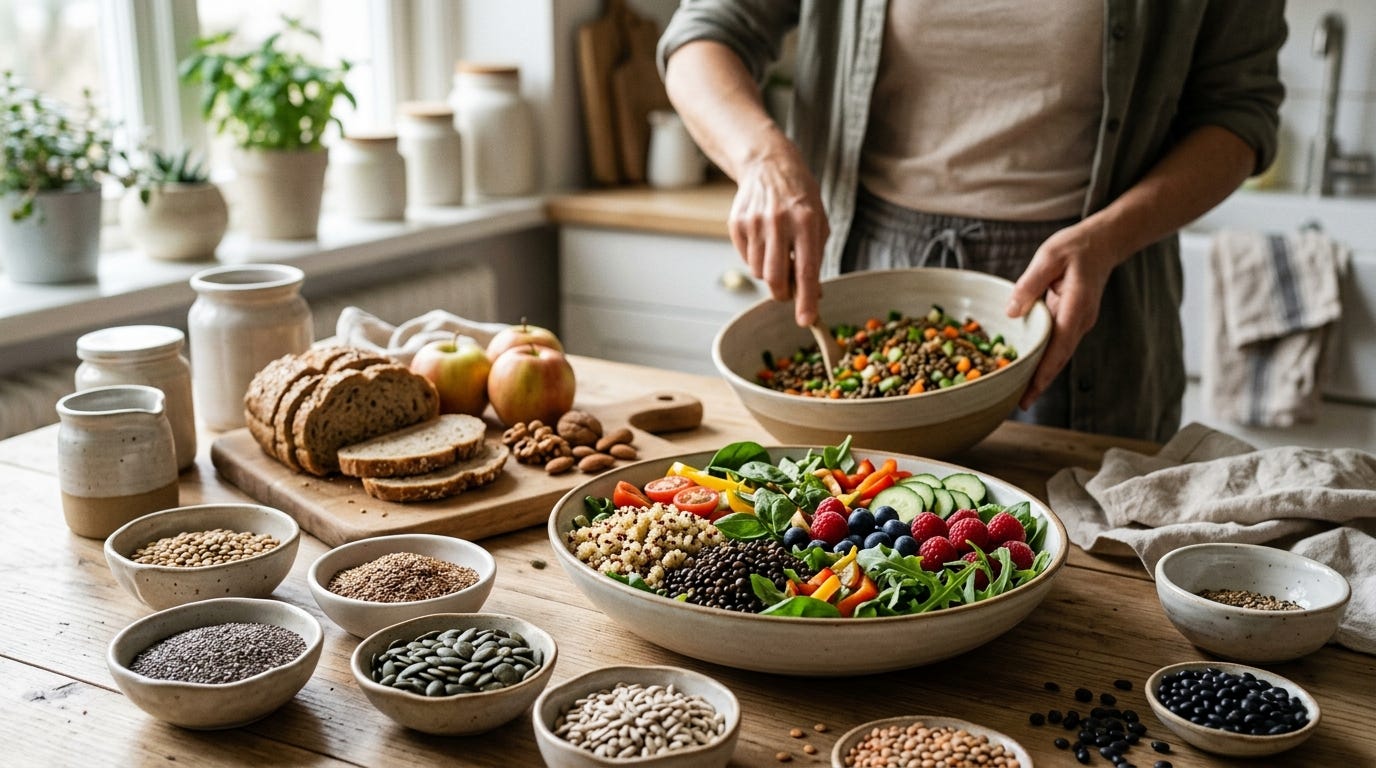
Vegetables, fruits, beans, lentils, whole grains, nuts, and other plant foods all contribute different fibers.
That’s why variety matters.
Your gut doesn’t need one magical fiber. It benefits from a diverse food environment.
Seeds can simply be one part of that environment.
The Fats in Seeds Matter Too
For decades, dietary fat was something many people tried to avoid.
But the type of fat matters enormously.
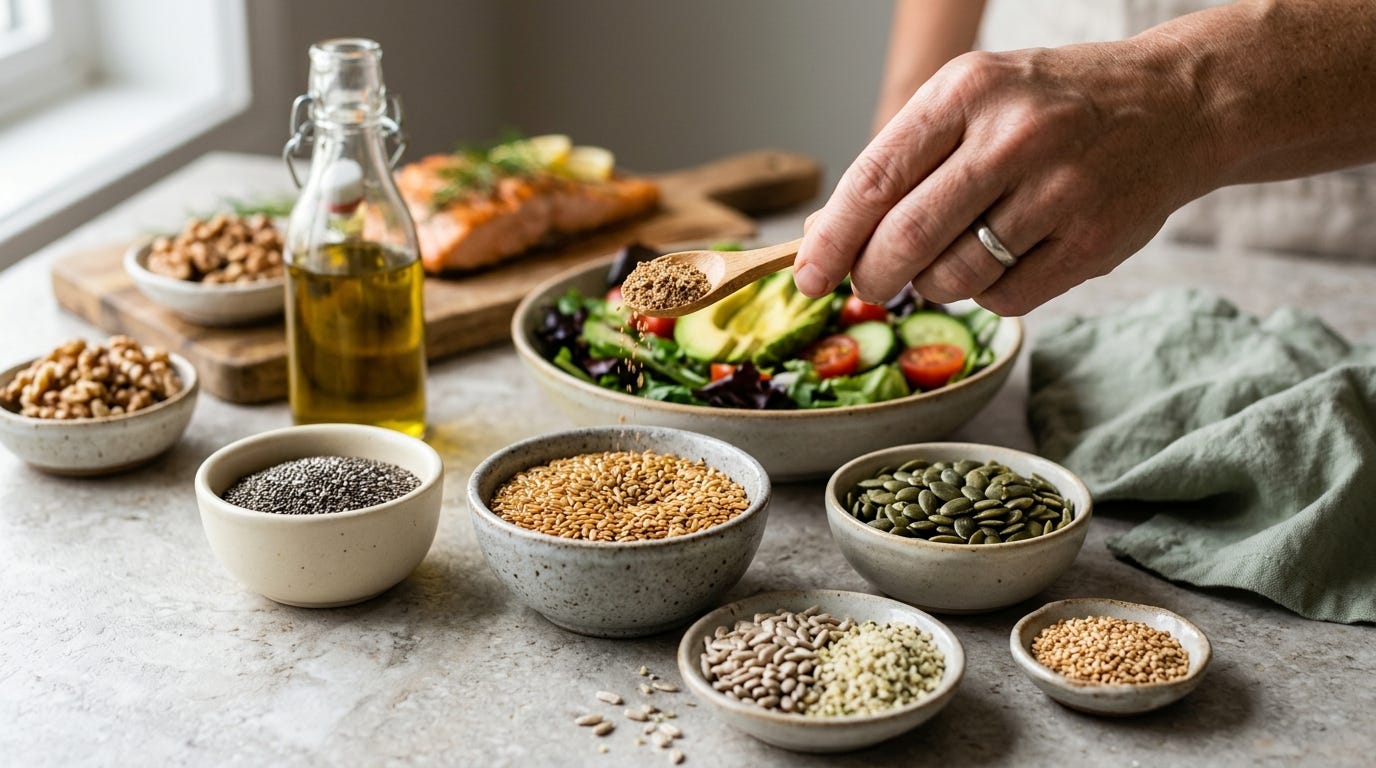
Many seeds contain substantial amounts of unsaturated fats, including polyunsaturated and monounsaturated fatty acids.
Chia and flax are especially interesting because they contain the plant omega-3 fatty acid ALA.
Your body can convert some ALA into the longer-chain omega-3 fats EPA and DHA, although that conversion is limited.
That’s why chia and flax aren’t necessarily nutritional substitutes for fatty fish like sardines or salmon.
But they’re still useful foods.
Seeds don’t have to provide everything.
Nutrition works best when different foods contribute different things.
You Don’t Need Every Seed Every Day
This is where wellness culture sometimes makes nutrition unnecessarily complicated.
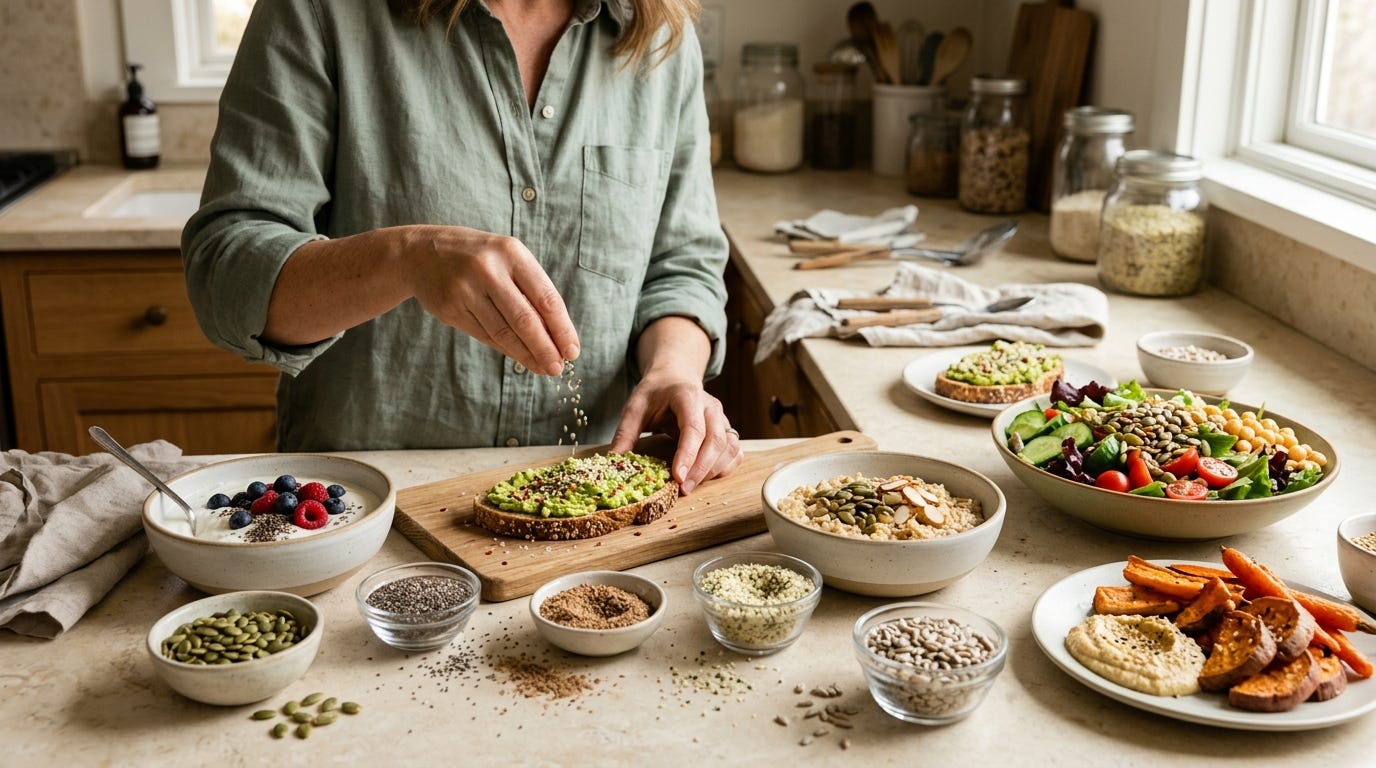
You don’t need pumpkin seeds Monday, chia Tuesday, flax Wednesday, sesame Thursday, and hemp Friday according to some elaborate seed schedule.
Your body doesn’t work that way.
Think about seeds as another category of nutritious foods you can rotate through your diet.
Maybe you add pumpkin seeds to Greek yogurt one morning.
Ground flax goes into a smoothie another day.
Tahini becomes part of a salad dressing.
Hemp hearts get sprinkled over eggs.
Chia seeds become an occasional pudding or yogurt topping.
Over weeks and months, those tiny additions contribute minerals, fiber, healthy fats, protein, and phytochemicals to your overall diet.
Consistency matters more than creating the perfect seed routine.
Bringing It Together
Seeds are easy to underestimate.
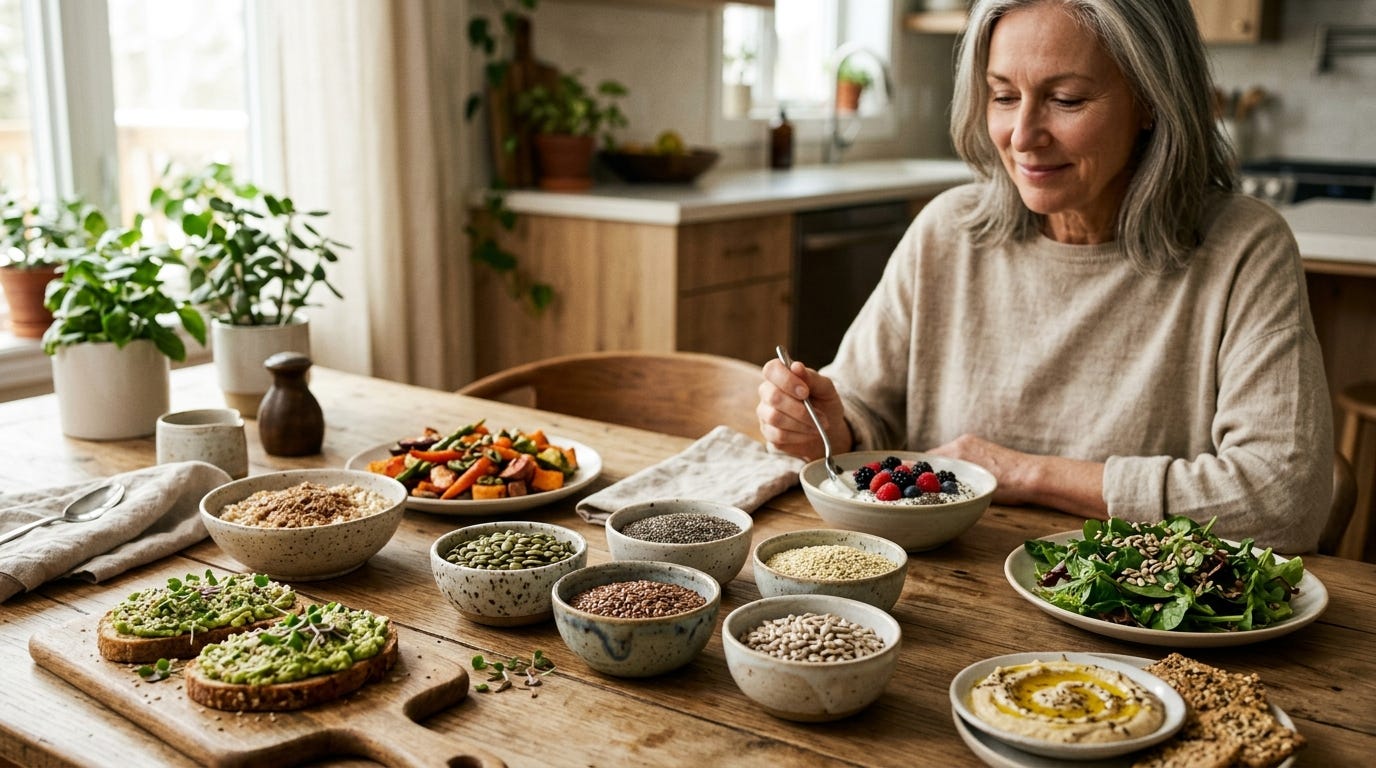
They’re tiny. They’re ordinary. And most of them don’t come with the same health halo as expensive powders or exotic superfoods.
But look closer.
Pumpkin seeds provide magnesium, zinc, iron, protein, and healthy fats.
Chia seeds provide large amounts of fiber along with ALA omega-3 fats and minerals.
Flaxseeds provide fiber, lignans, and ALA.
Hemp seeds contribute protein, magnesium, and healthy fats.
Sesame seeds provide minerals and unique lignans.
Sunflower seeds are particularly rich in vitamin E.
And all of them can fit into an ordinary diet without requiring dramatic changes.
That’s probably the most useful lesson.
Very interesting and informative article! Thank you!