

This guide is designed to be read from beginning to end for a full understanding.
At the end, you’ll find a one-page summary and an actionable cheat sheet for quick reference, along with the complete 7-Day Cortisol Reset Protocol.
I. WHAT CORTISOL ACTUALLY DOES
Cortisol Is Not the Enemy
Cortisol is often described as the body’s stress hormone. Because of that label, many people assume cortisol is something harmful that should simply be reduced.
In reality, cortisol is essential for normal physiology.
It is one of the primary hormones that helps the body regulate energy, metabolism, immune signaling, and the response to daily stress. Without cortisol, the body cannot maintain stable blood pressure, regulate blood sugar effectively, or respond to physical and psychological demands.
Cortisol is produced by the adrenal glands and released into the bloodstream in response to signals from the brain. These signals are coordinated through a system known as the hypothalamic–pituitary–adrenal axis, often abbreviated as the HPA axis.
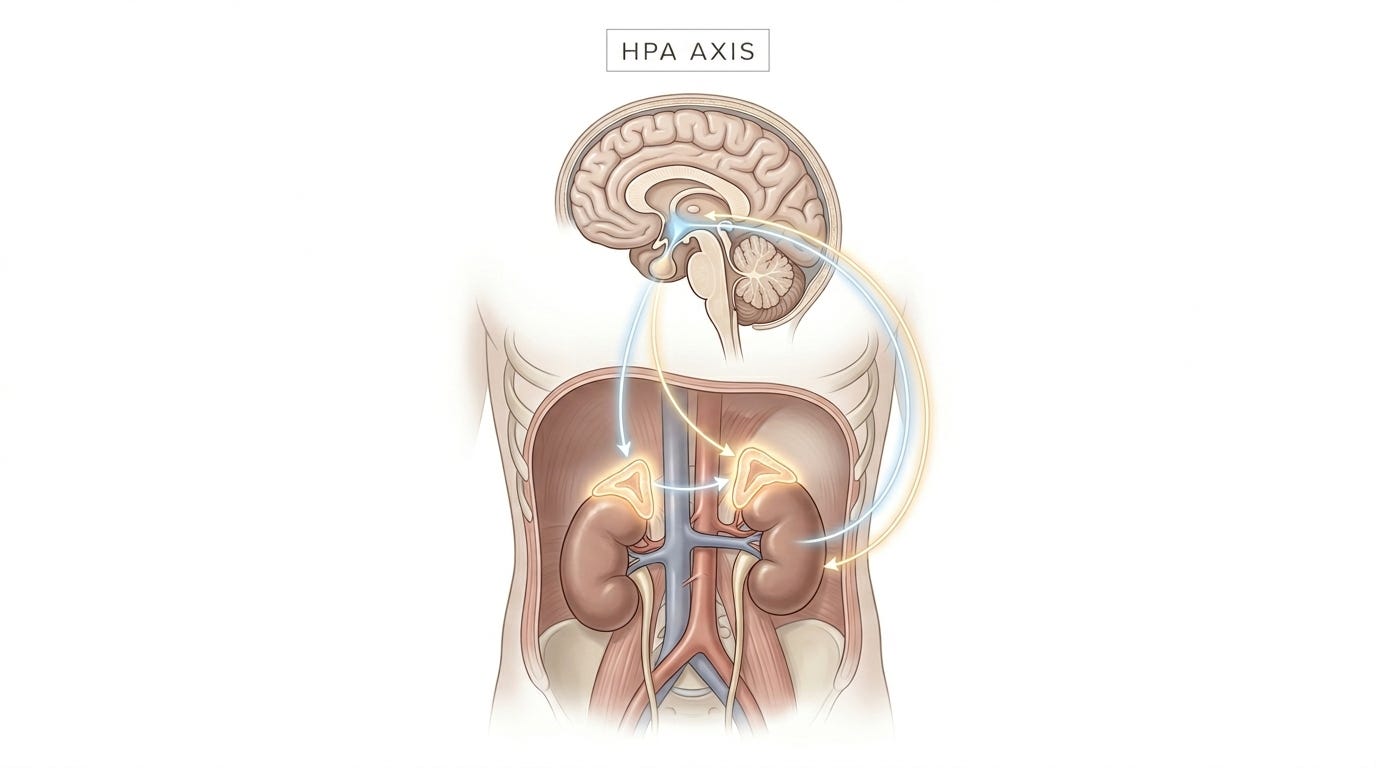
This system acts as a communication network between the brain and the body.
When functioning properly, cortisol helps:
Wake you up in the morning
Mobilize energy during the day
Maintain blood sugar stability
Regulate inflammation
Support the body’s response to stress
The problem is rarely cortisol itself.
The problem is when cortisol levels become chronically elevated or when the daily rhythm becomes disrupted.
Restoring balance therefore means restoring the natural rhythm of cortisol, not eliminating it.
The Natural Cortisol Rhythm
In a healthy system, cortisol follows a predictable daily pattern known as the circadian rhythm.
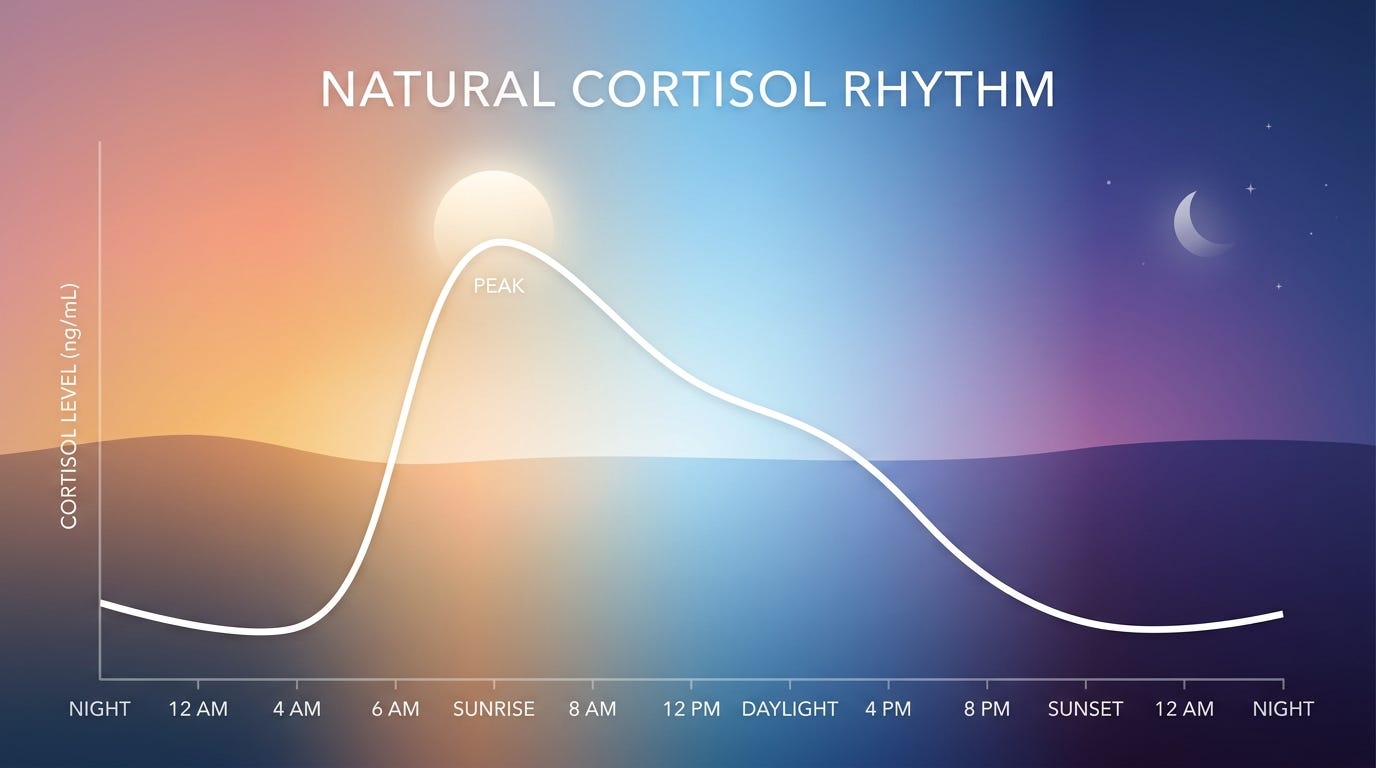
Cortisol is highest in the morning and gradually declines throughout the day.
This pattern is sometimes called the cortisol awakening response.
A typical rhythm looks like this:
Morning
Cortisol rises rapidly within the first hour after waking. This increase helps activate metabolism, raise blood pressure slightly, and signal the body that it is time to begin the day.
Midday
Cortisol gradually declines as the body maintains energy and mental focus.
Evening
Levels continue to fall as the body prepares for rest.
Night
Cortisol reaches its lowest point during sleep, allowing other hormones involved in repair and recovery to dominate.
This daily rhythm helps coordinate many physiological systems, including metabolism, immune signaling, and sleep regulation.
When the rhythm becomes misaligned, the body may begin producing cortisol at the wrong times.
This can lead to symptoms such as feeling exhausted during the day but alert late at night.
