

This guide is designed to be read from beginning to end for a full understanding. A one-page summary and actionable cheat sheet is included at the end for quick reference.
I. WHY BREATHING MATTERS
Breathing Is More Than Oxygen
Most people think breathing is simply the process that delivers oxygen to the body.
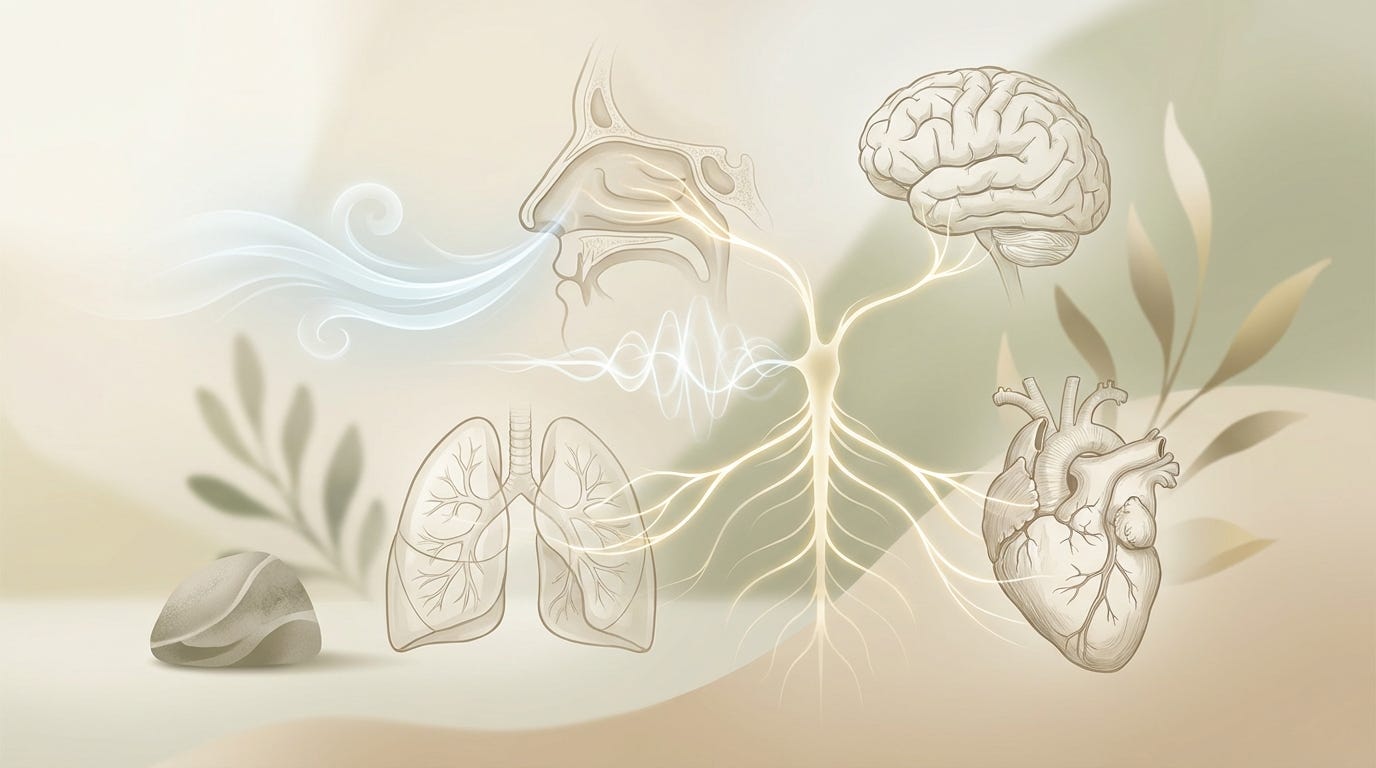
While oxygen exchange is certainly important, breathing also plays another role that is often overlooked. It acts as a regulatory signal for many systems in the body, including the nervous system, heart rate, and stress response.
Every breath you take sends information to the brain.
The rhythm, depth, and speed of breathing help signal whether the body should be alert and active or calm and recovering.
Fast, shallow breathing tends to signal urgency or stress. Slow and controlled breathing tends to signal safety and stability.
This relationship explains why breathing patterns often change automatically during different emotional states.
When a person feels anxious, breathing often becomes quick and shallow.
When a person feels calm and relaxed, breathing naturally slows and deepens.
The important insight is that this relationship works in both directions.
Just as emotions influence breathing, breathing patterns can also influence emotional and physiological states.
Because breathing is both automatic and voluntary, it provides one of the most accessible ways to influence the nervous system.
