

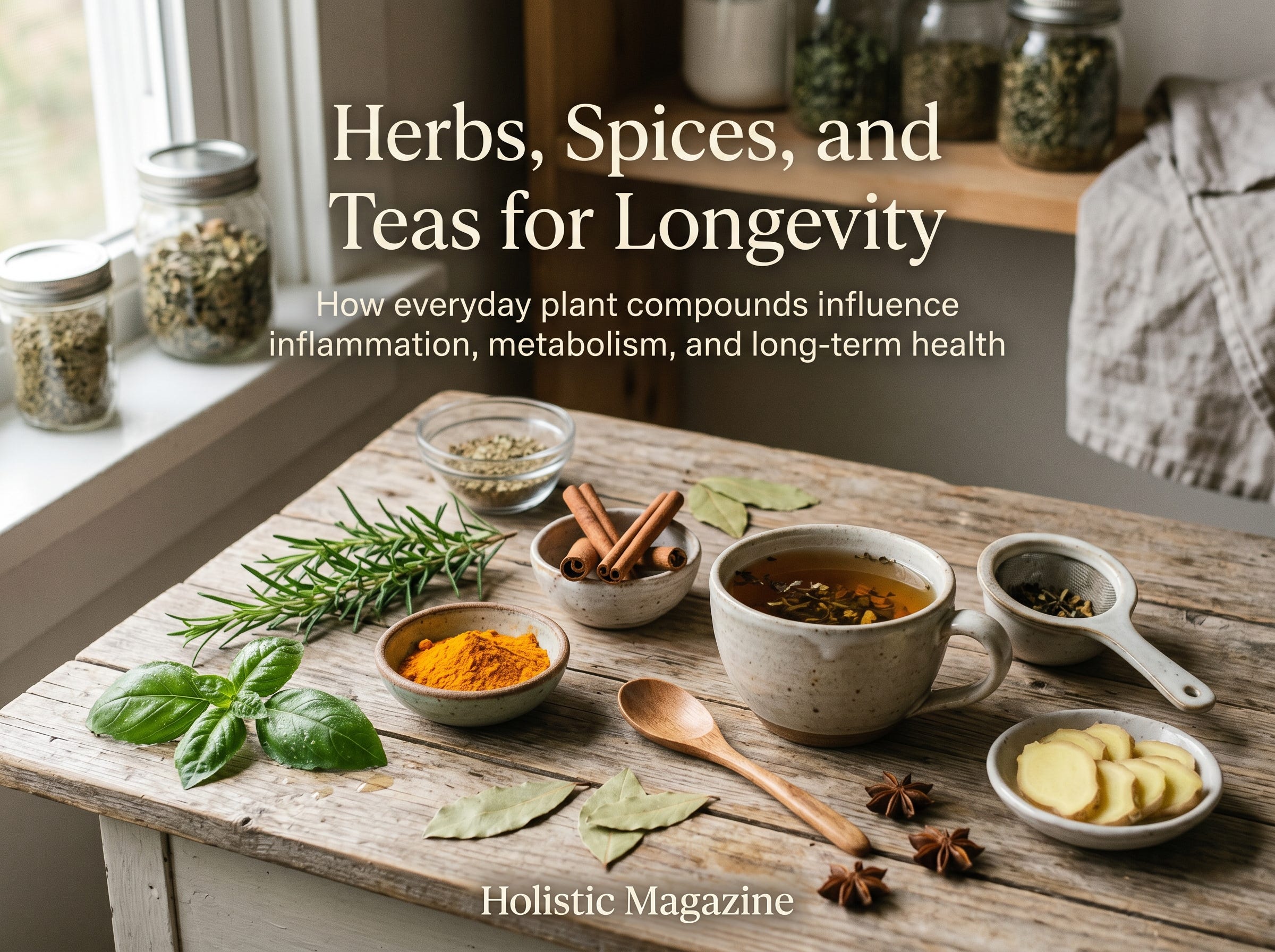
I. What Herbs, Spices, and Teas Are Actually Doing in the Body

Herbs, spices, and teas are often treated like extras.
Something you add to food for flavor, or drink occasionally when you’re trying to clean things up a bit.
But when you look at how they interact with the body, they play a much more active role than people usually expect.
These are concentrated sources of plant compounds that interact with the body in specific ways, often influencing the same systems people are trying to support with supplements.
When you look closer, many of these compounds affect:
inflammation signaling
blood sugar regulation
digestion and gut function
nervous system tone
detox pathways in the liver
oxidative stress at the cellular level
The effects are subtle in the moment, but consistent in how they influence these systems over time.
They Work as Signals
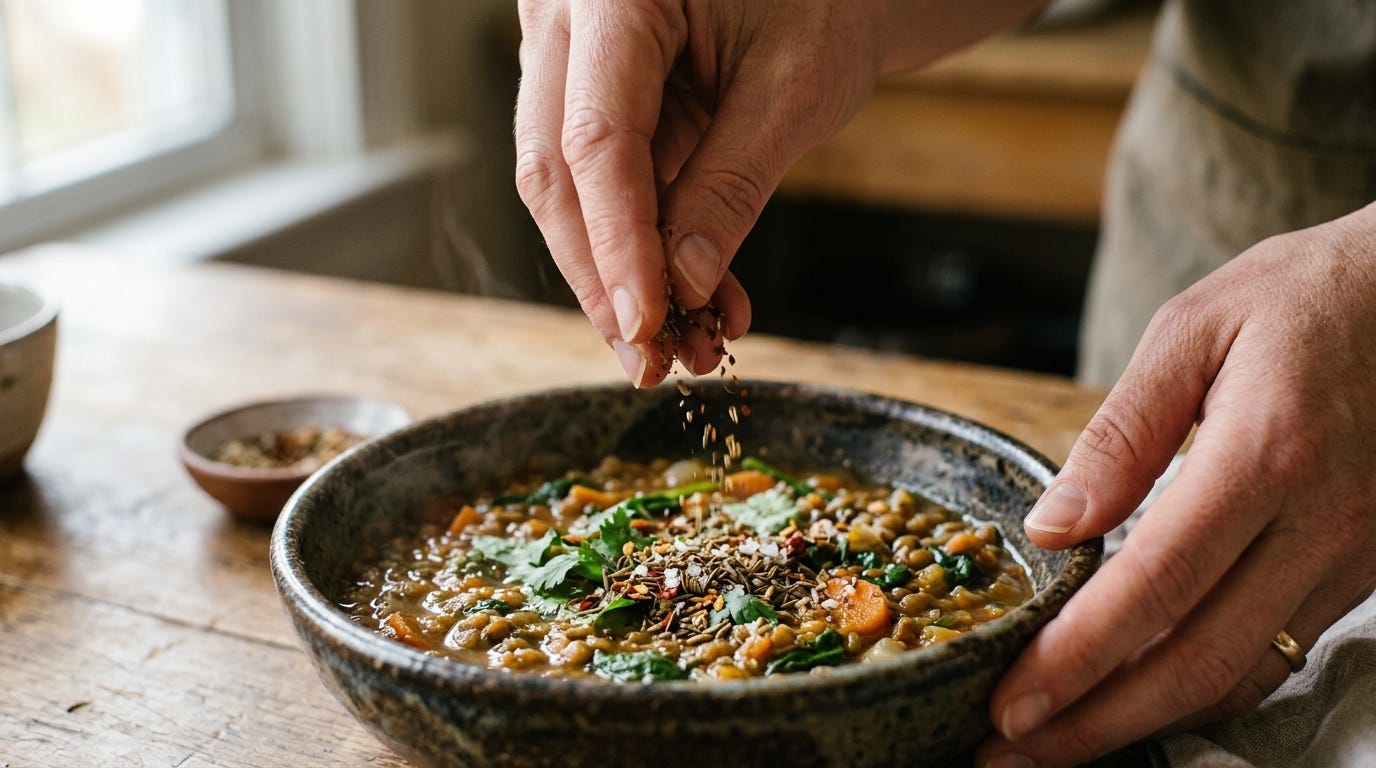
Most people are familiar with vitamins and minerals. You take something, your levels increase, and that’s the outcome you’re aiming for.
Plant compounds influence the body in a different way.
They interact with cellular processes and shift how the body responds to stress, nutrients, and environmental inputs.
Certain polyphenols influence how cells handle oxidative stress. Some compounds in spices affect how glucose is processed after a meal. Others play a role in how the nervous system settles in the evening.
These are small inputs, but they shape how the body operates day to day.
Over time, those patterns become more noticeable.
Small Inputs, Repeated Daily
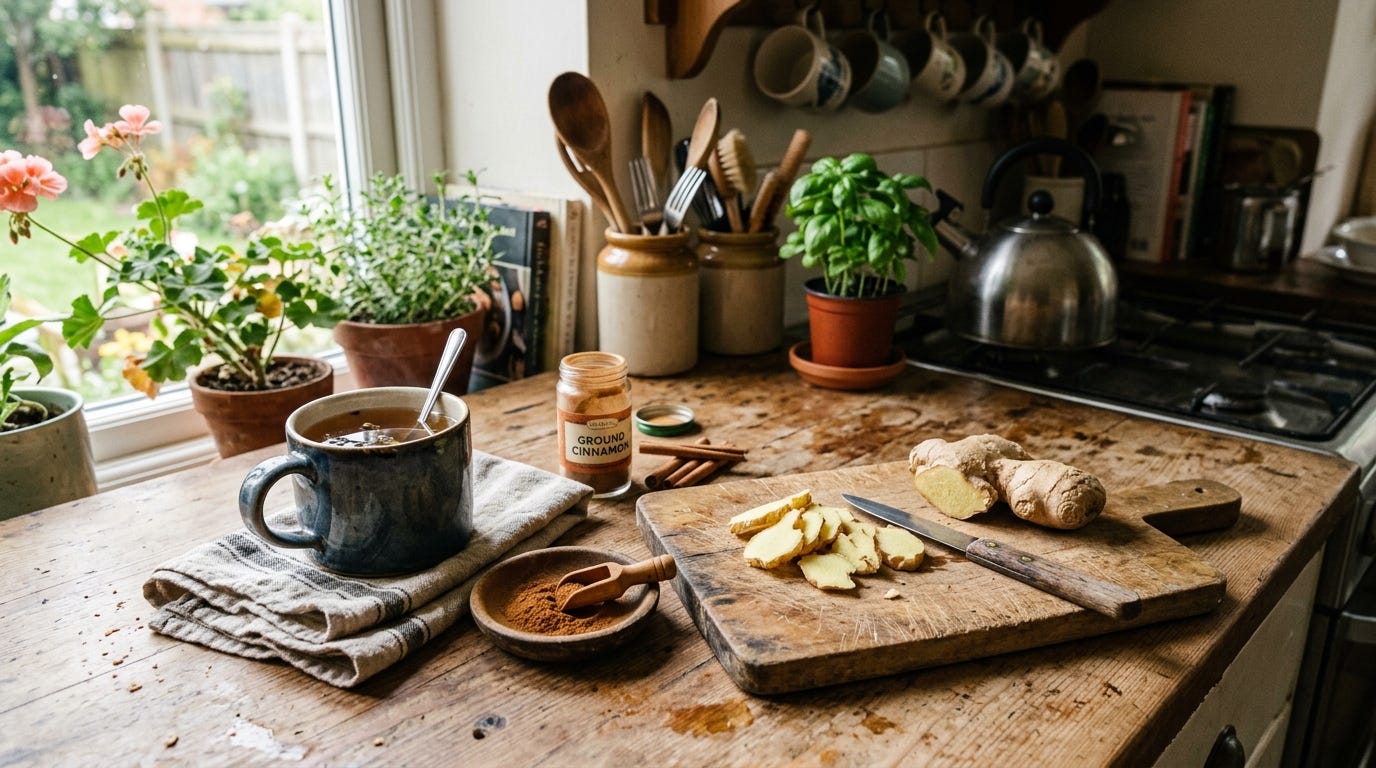
Herbs, spices, and teas show up in small amounts, but they show up often.
A pinch of cinnamon with a meal. Ginger added to food. A cup of tea in the evening.
Each one feels minor on its own.
Repeated daily, they create a steady influence on digestion, metabolism, inflammation, and recovery.
This is where they become more relevant than they first appear.
What’s repeated tends to matter more than what’s done occasionally.
They Add Another Layer to What You’re Already Doing
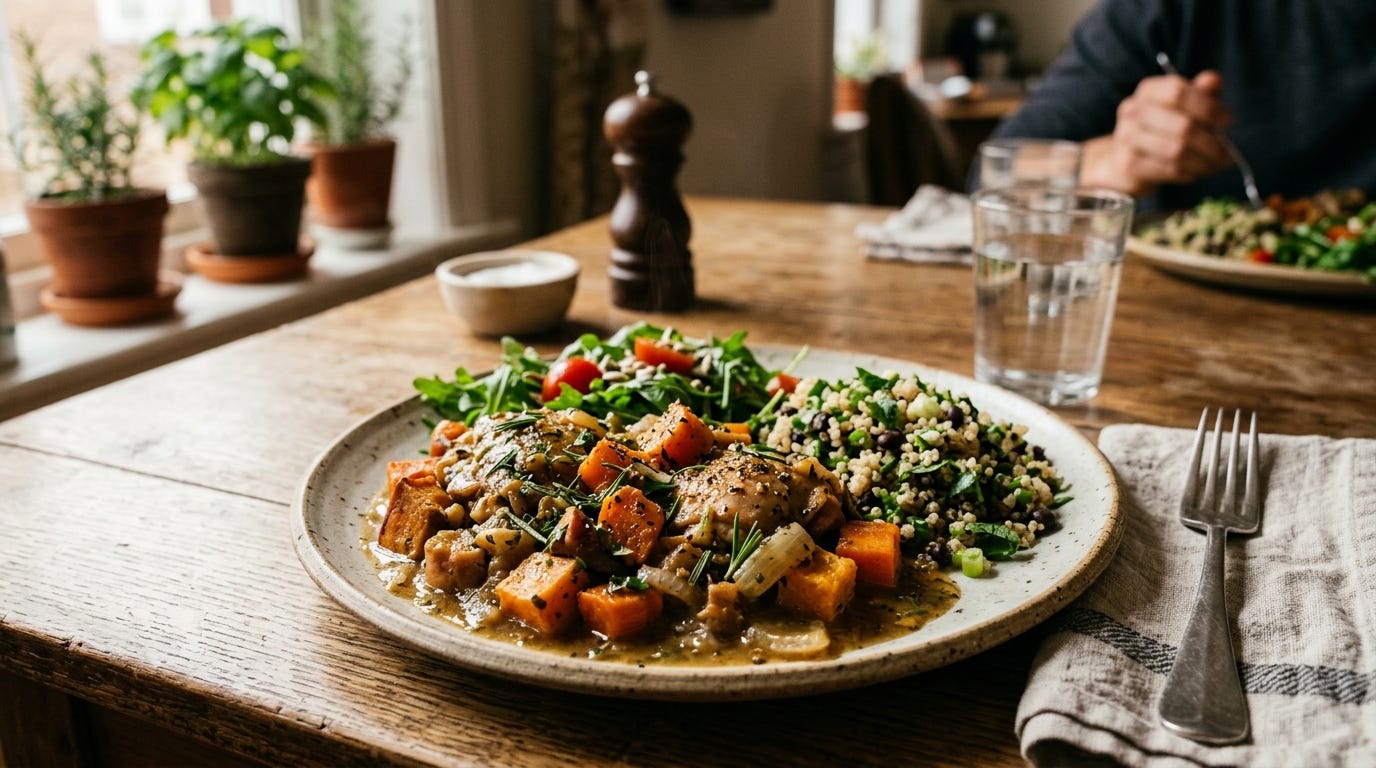
Whole foods provide the foundation.
Herbs, spices, and teas build on top of that without requiring major changes.
They integrate into meals, routines, and habits that are already in place.
This is often where small shifts begin to show up.
Digestion feels smoother. Blood sugar stays more even after meals. The body transitions into rest more easily at night.
Nothing extreme, but noticeable over time.
Longevity Is Built on What’s Repeated

Long-term health is shaped by what the body experiences every day.
Herbs, spices, and teas are part of that daily input.
They influence how the body responds, adapts, and recovers in small ways that accumulate.
You’re already eating and drinking throughout the day.
These are simple ways to make those inputs more supportive without adding complexity.
That’s the role they play.
II. The Pathways These Compounds Influence
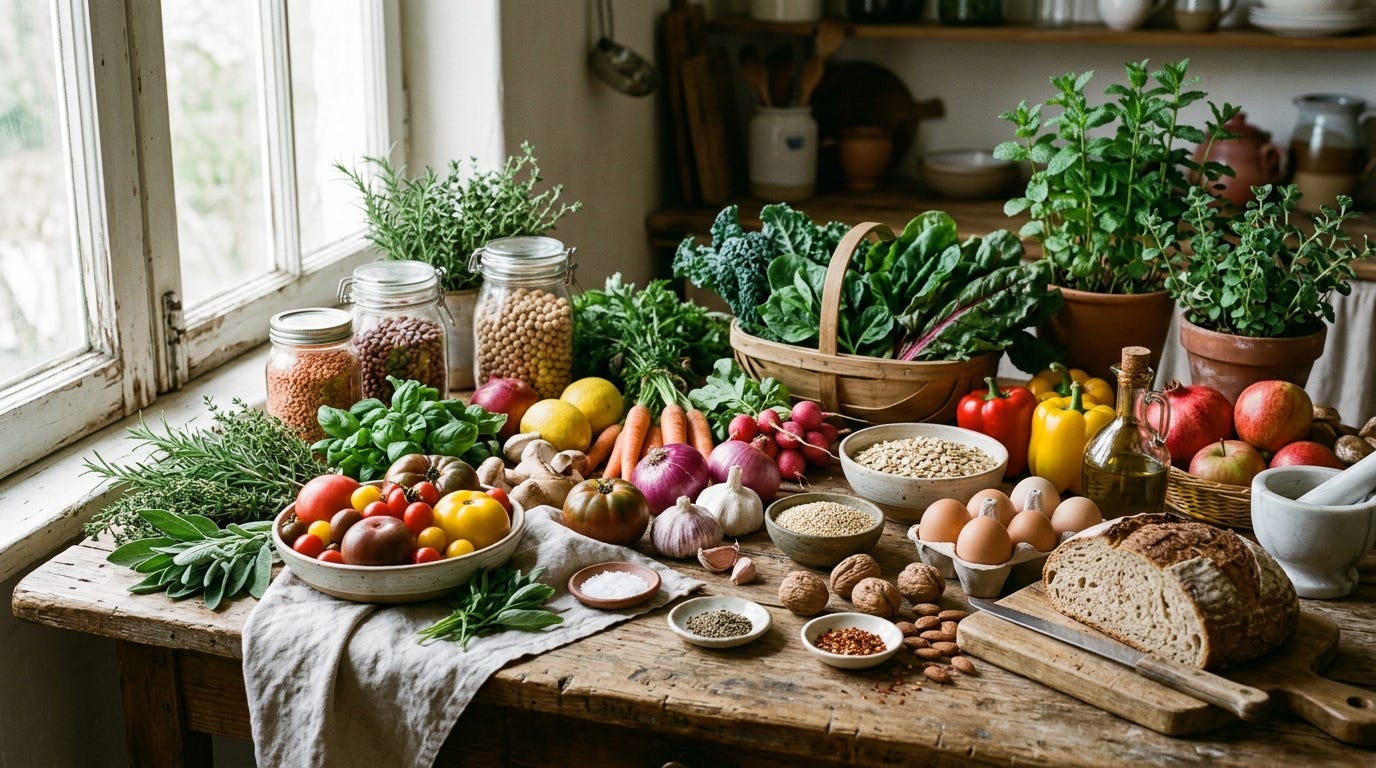
When herbs, spices, and teas are used regularly, their impact shows up through a few core systems in the body.
These aren’t isolated effects. Most of these compounds influence multiple pathways at once, which is why they tend to create broader shifts over time rather than one specific outcome.
Understanding these pathways makes it easier to use them with intention.
Inflammation Regulation
Low levels of inflammation are part of normal physiology. The issue comes when that signal stays elevated for too long and starts affecting tissues, digestion, and recovery.
Many herbs and spices contain compounds that help modulate this process.
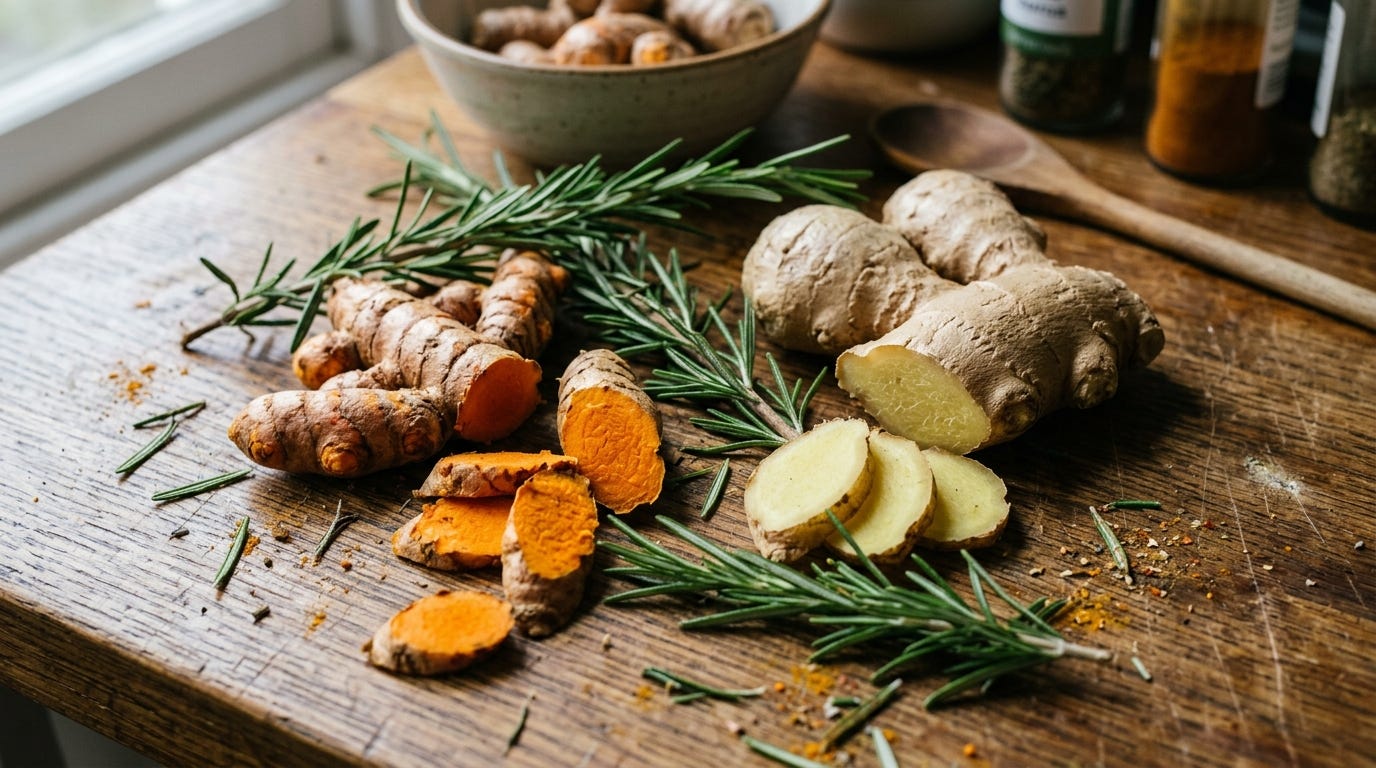
Turmeric, ginger, rosemary, and cloves are good examples. They contain polyphenols and other bioactive compounds that influence inflammatory signaling at the cellular level.
Used consistently, they can help reduce background inflammation that builds from diet, stress, and environmental exposure.
This often shows up as improved recovery, less stiffness, and more stable energy.
