


This 30-page guide is designed to be read from beginning to end for a full understanding. A one-page summary and actionable cheat sheet is included at the end for quick reference.
I. 30 TEAS AND WHAT THEY DO
Introduction
Tea is one of the most widely used plant-based inputs.
It is simple to prepare, easy to consume, and adaptable to different goals.
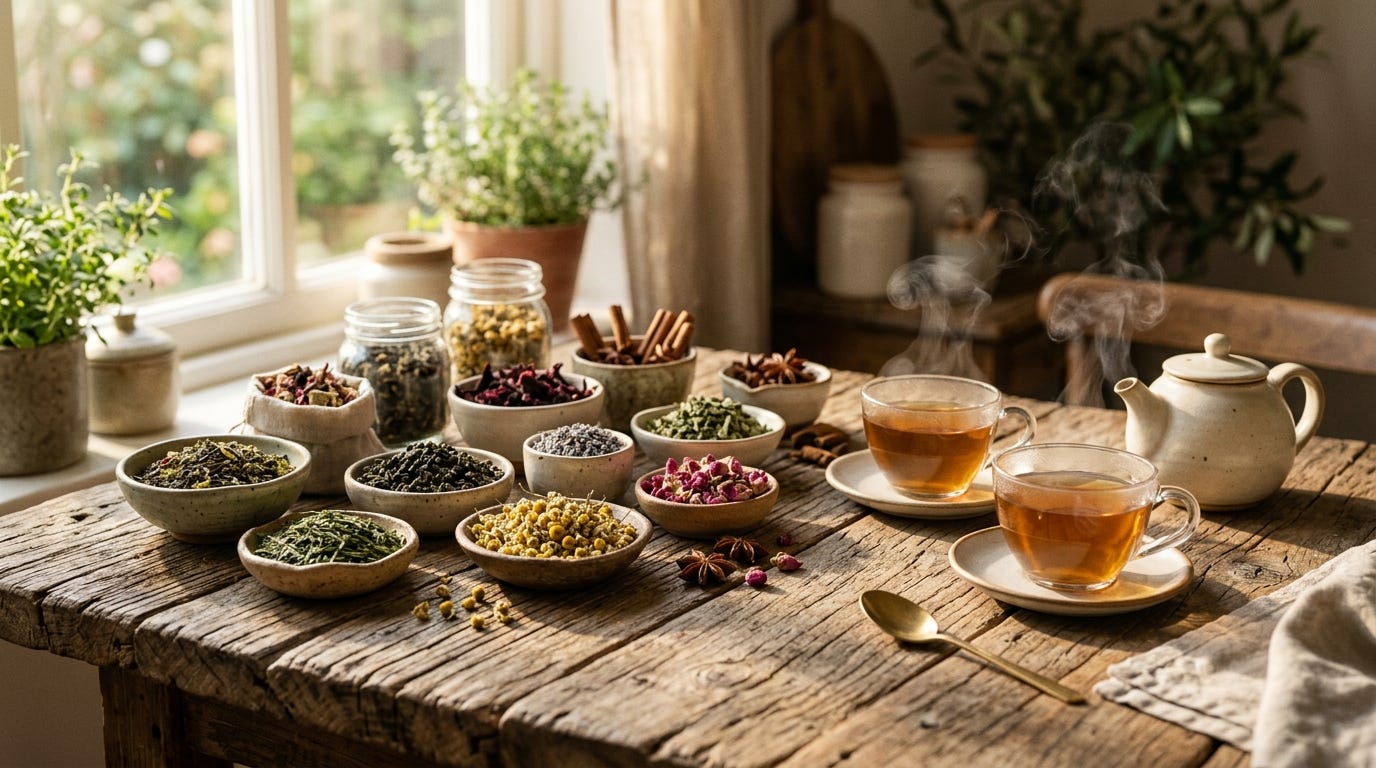
At a basic level, tea delivers plant compounds in a form the body can absorb gradually. These compounds interact with digestion, the nervous system, circulation, and metabolic processes.
Some teas stimulate.
Some calm.
Some support digestion or fluid balance.
The effect depends on the plant, the preparation, and the timing.
Tea is not a single category.
It is a delivery system.
How Tea Interacts with the Body
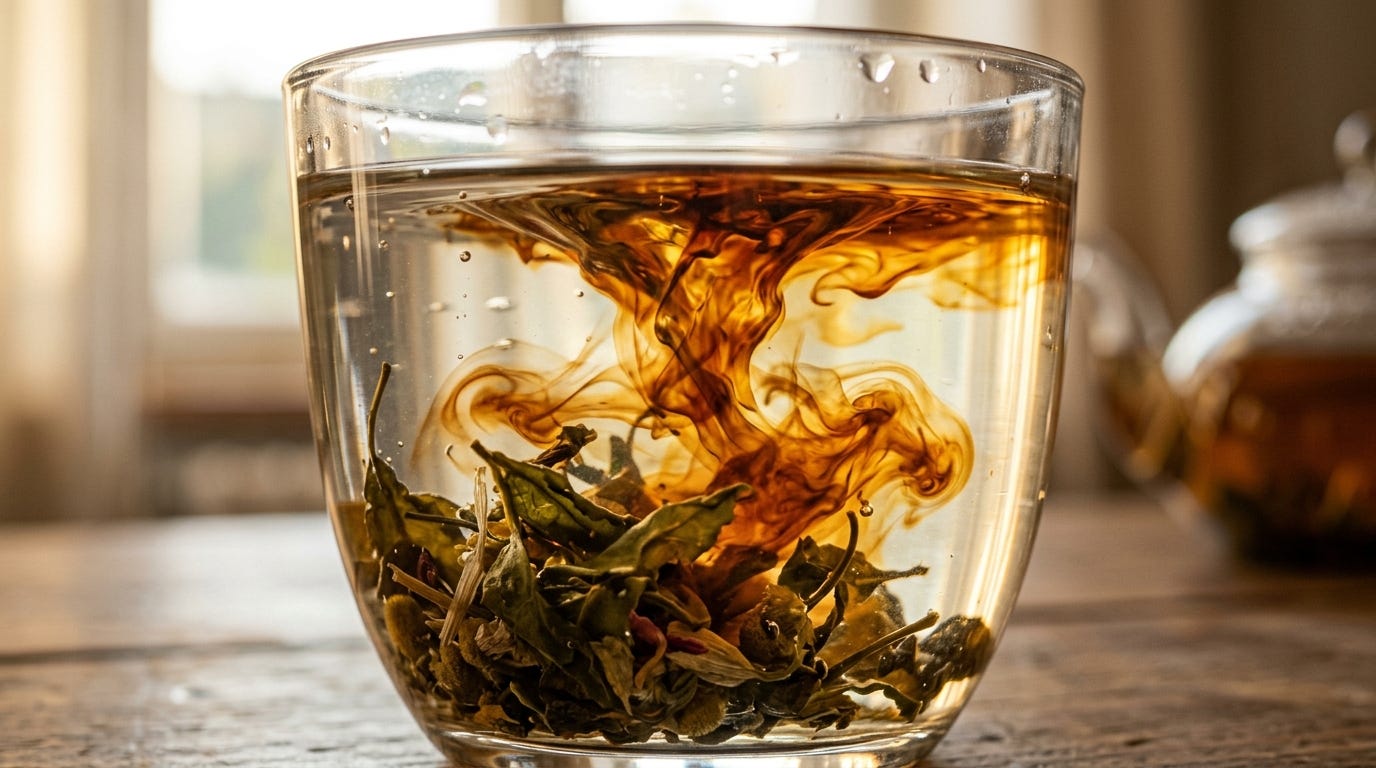
When tea is consumed, its compounds are absorbed through the digestive tract and begin interacting with different systems.
This includes:
polyphenols that influence oxidative processes
alkaloids like caffeine that affect alertness
volatile compounds that interact with the nervous system
minerals that support fluid and cellular balance
These compounds do not act in isolation.
They influence:
enzyme activity
receptor signaling
circulation
digestive processes
Because tea is consumed as a liquid, absorption is typically gradual.
This creates a more moderate effect compared to concentrated extracts.
True Tea vs Herbal Tea
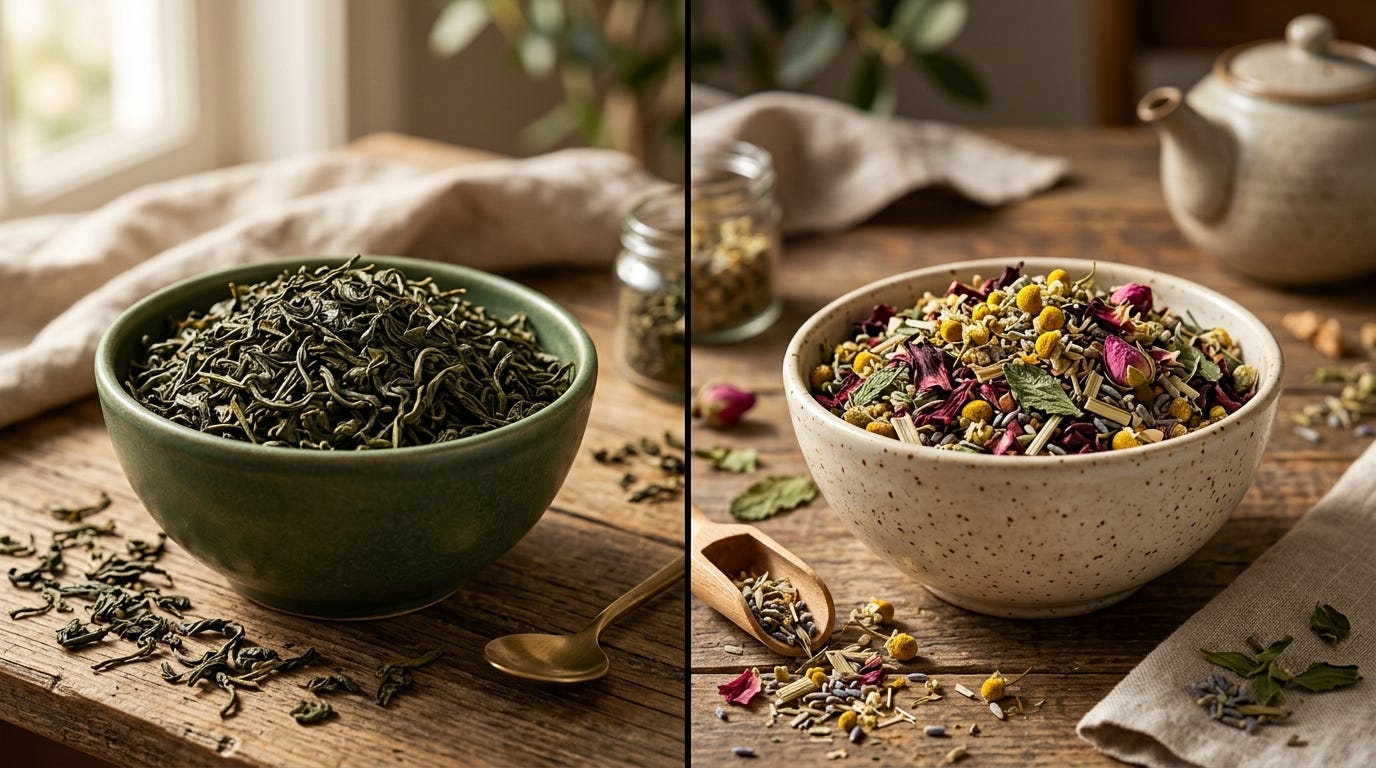
Not all teas are the same.
True tea comes from Camellia sinensis.
This includes:
green tea
black tea
white tea
oolong tea
pu-erh tea
These contain caffeine and a specific set of polyphenols.
Herbal teas are different.
They are infusions of:
leaves
roots
flowers
seeds
They do not come from the tea plant.
Their effects vary widely depending on the plant used.
Both categories are useful.
They simply function differently.
Why Temperature, Timing, and Form Matter

How tea is prepared changes how it behaves.
Hot water extracts compounds differently than cold water.
Longer steeping increases concentration.
Powdered forms deliver more of the plant directly.
Timing also matters.
Tea taken:
in the morning may influence alertness
around meals may influence digestion
in the evening may influence relaxation
The same tea can feel different depending on when and how it is used.
This is not because the tea changed.
It is because the context did.
