

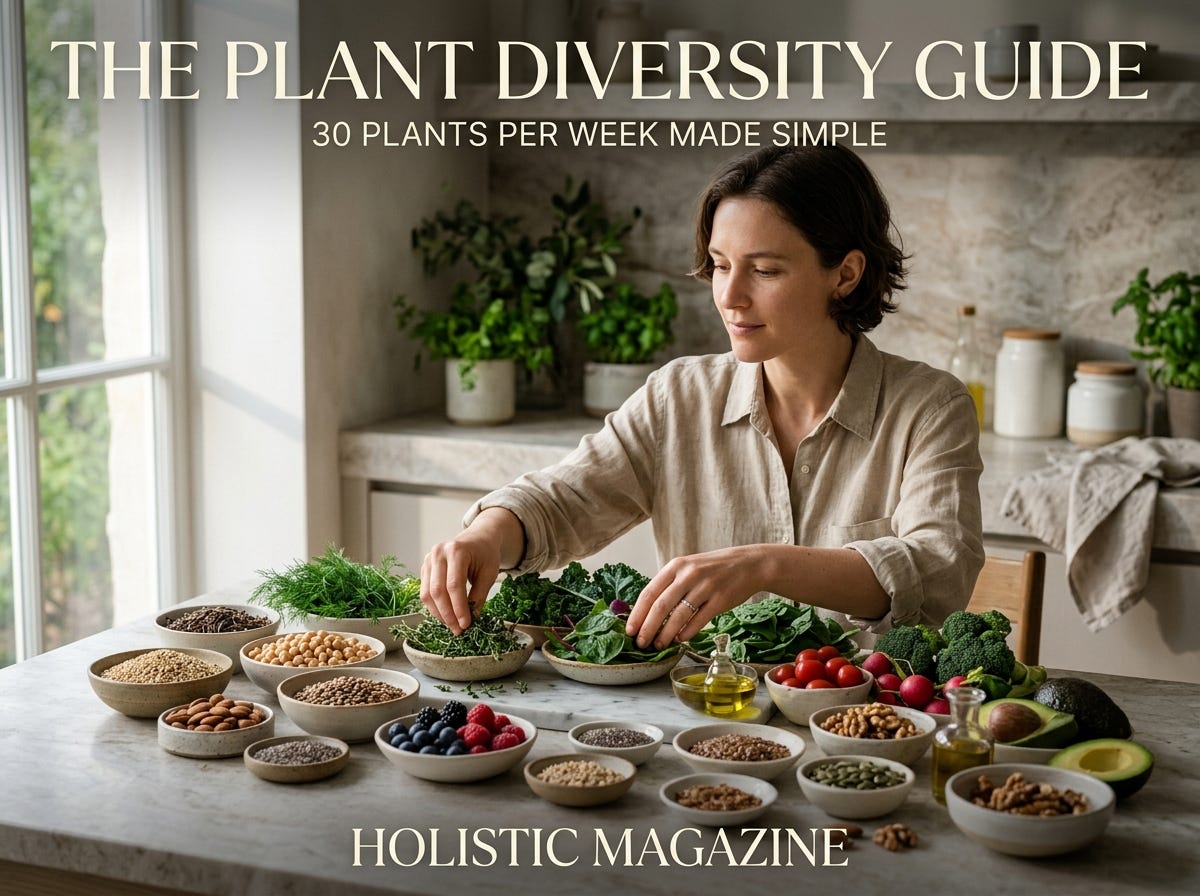
This 30-page guide is designed to be read from beginning to end for a full understanding. A one-page summary and actionable cheat sheet is included at the end for quick reference.
I. WHY PLANT VARIETY MATTERS MORE THAN PEOPLE REALIZE
Introduction
Most people focus on eating more vegetables.
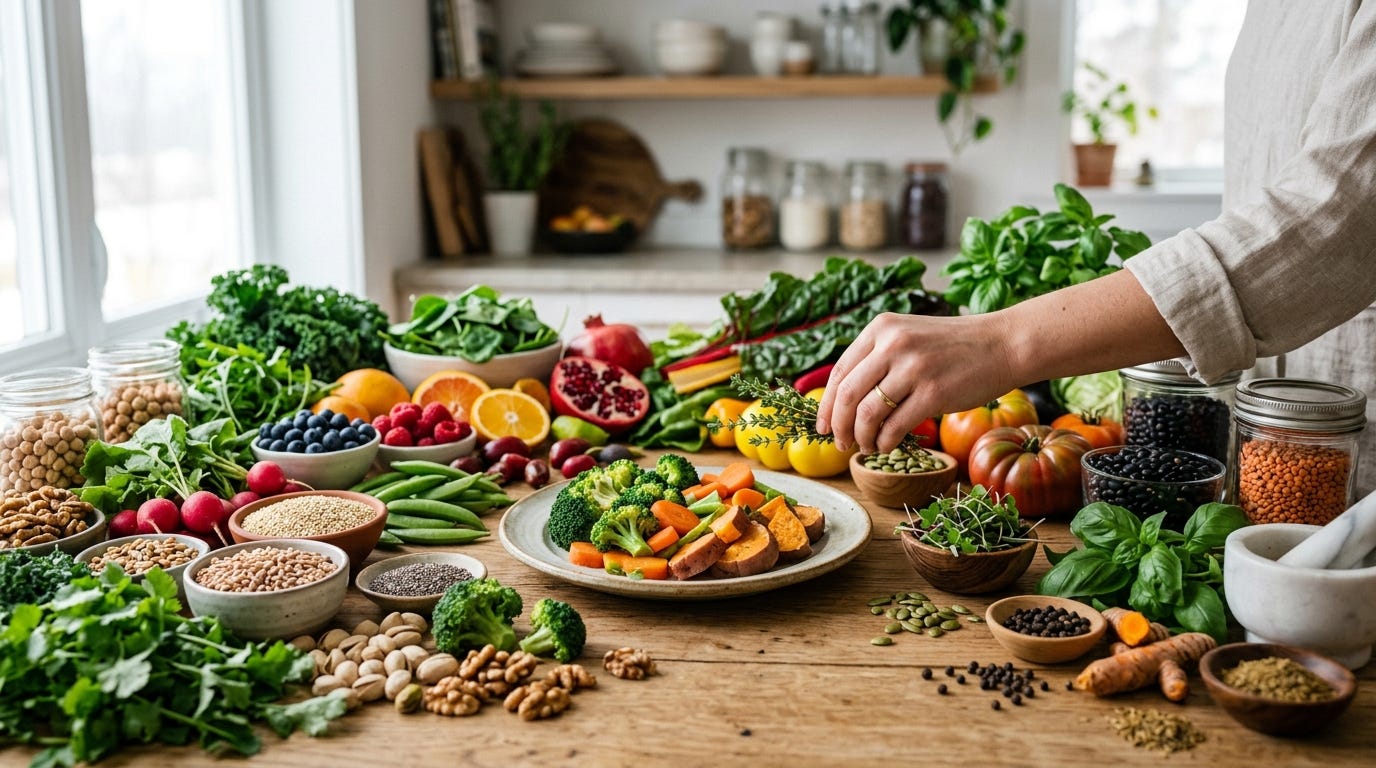
More greens
More salads
More “healthy foods”
That helps, but it doesn’t tell the full story.
What matters just as much is variety.
Different plants contain different fibers, polyphenols, and compounds that interact with the body in different ways.
These compounds are used by gut bacteria, which then produce substances that influence:
digestion
energy
inflammation
immune signaling
Eating the same few foods every day limits that range.
Even if those foods are considered healthy.
The goal is not just to eat well.
It is to expose the body to a wider range of inputs.
The 30 Plants Per Week Idea
The idea is simple.
Aim for around 30 different plant foods per week.
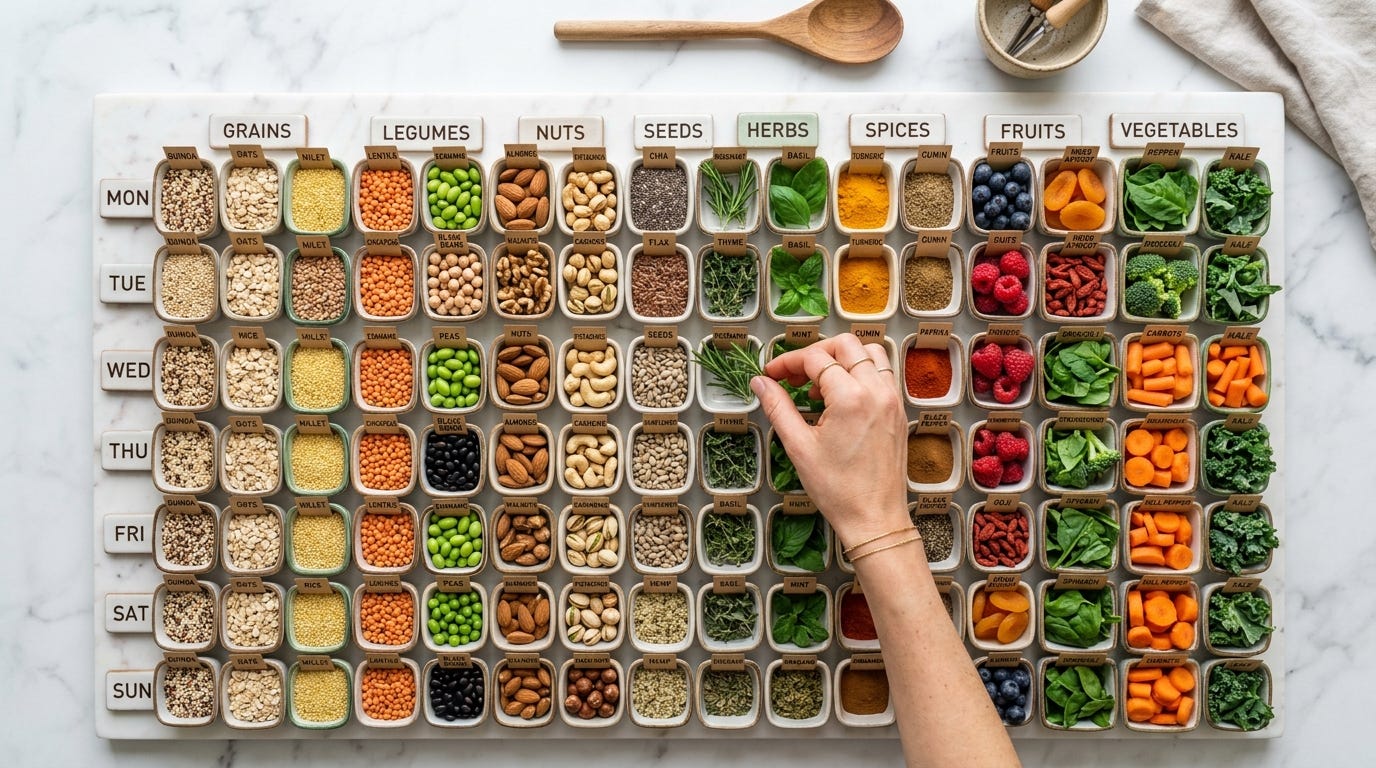
This includes more than vegetables.
It also includes:
fruits
herbs
spices
legumes
whole grains
nuts and seeds
Small amounts count.
A handful of herbs
A sprinkle of seeds
A side of vegetables
They all add up.
This is not about large portions.
It is about variety across the week.
Why Variety Changes Outcomes
Different plants feed different microbes.
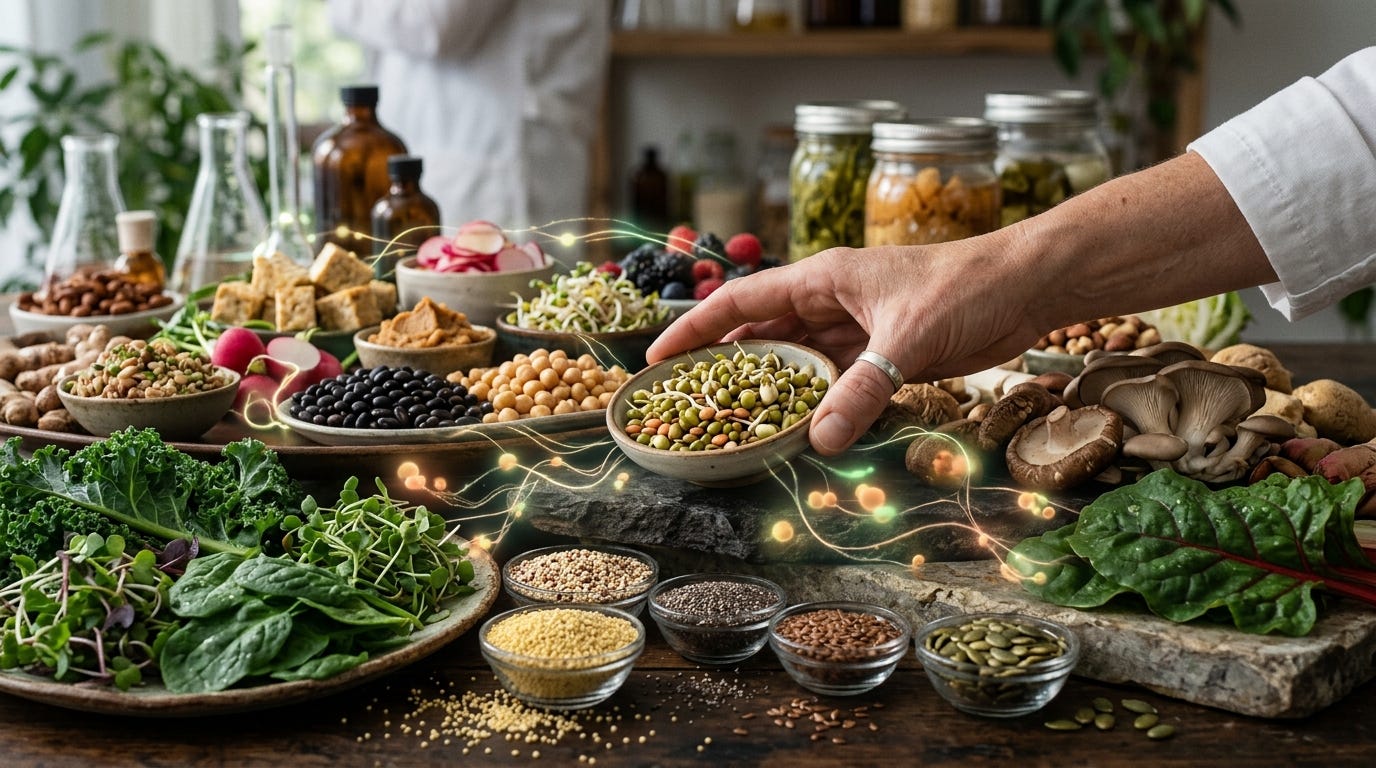
Some fibers support bacteria that produce short-chain fatty acids.
Others support bacteria involved in immune signaling.
Others influence how the body processes carbohydrates and fats.
A wider range of plants supports a more diverse microbiome.
This can influence:
digestion
stool consistency
energy levels
resilience to stress
The effect builds over time.
It is not about a single meal.
It is about repeated exposure.
What Counts as a “Plant”
Plant diversity is broader than most people expect.
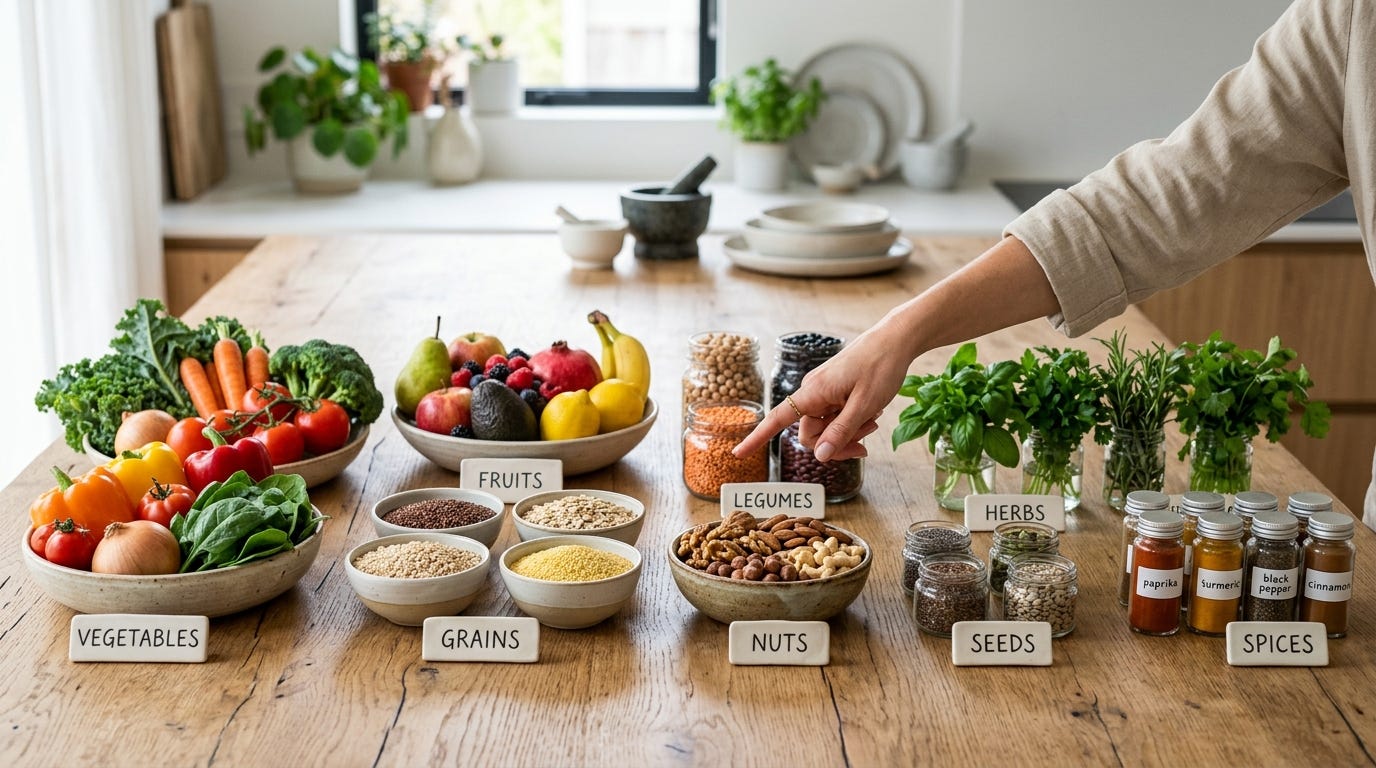
Examples include:
vegetables (spinach, carrots, broccoli)
fruits (berries, apples, citrus)
legumes (lentils, beans, chickpeas)
whole grains (rice, oats, quinoa)
nuts and seeds (almonds, flax, chia)
herbs and spices (parsley, cumin, turmeric)
Even small additions count.
A meal does not need to include many plants at once.
They can be spread across the day and the week.
